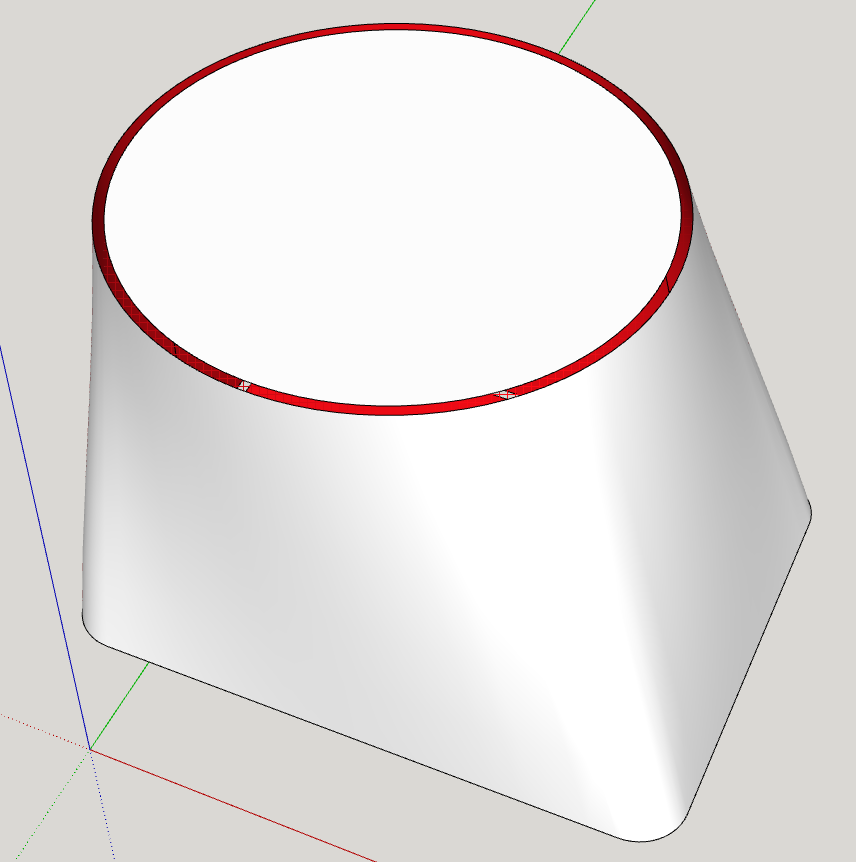
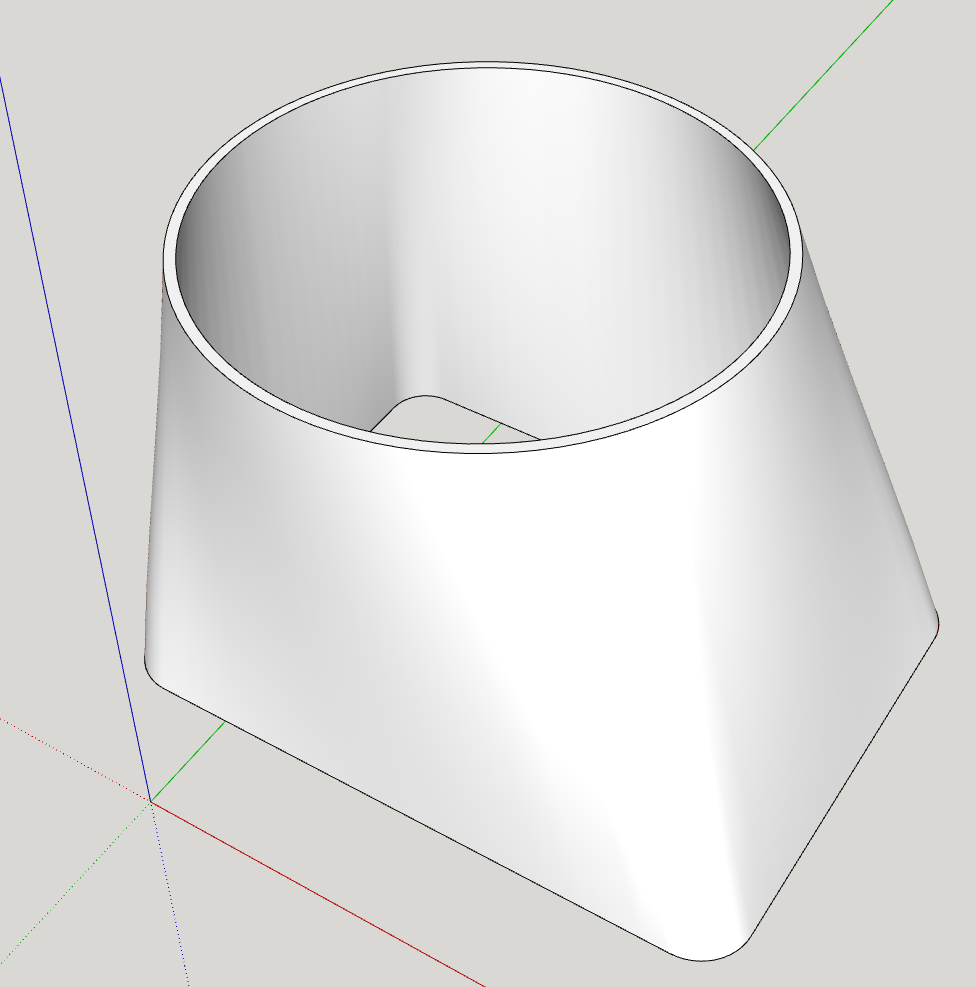
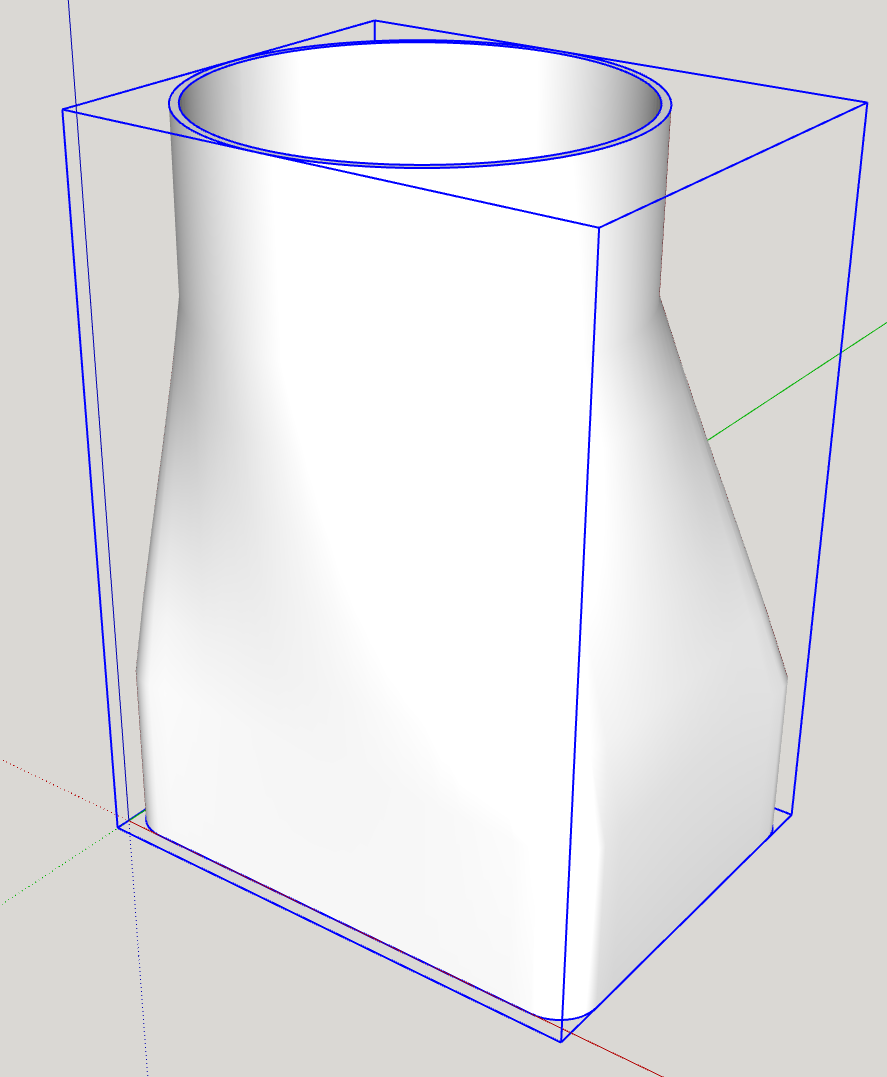
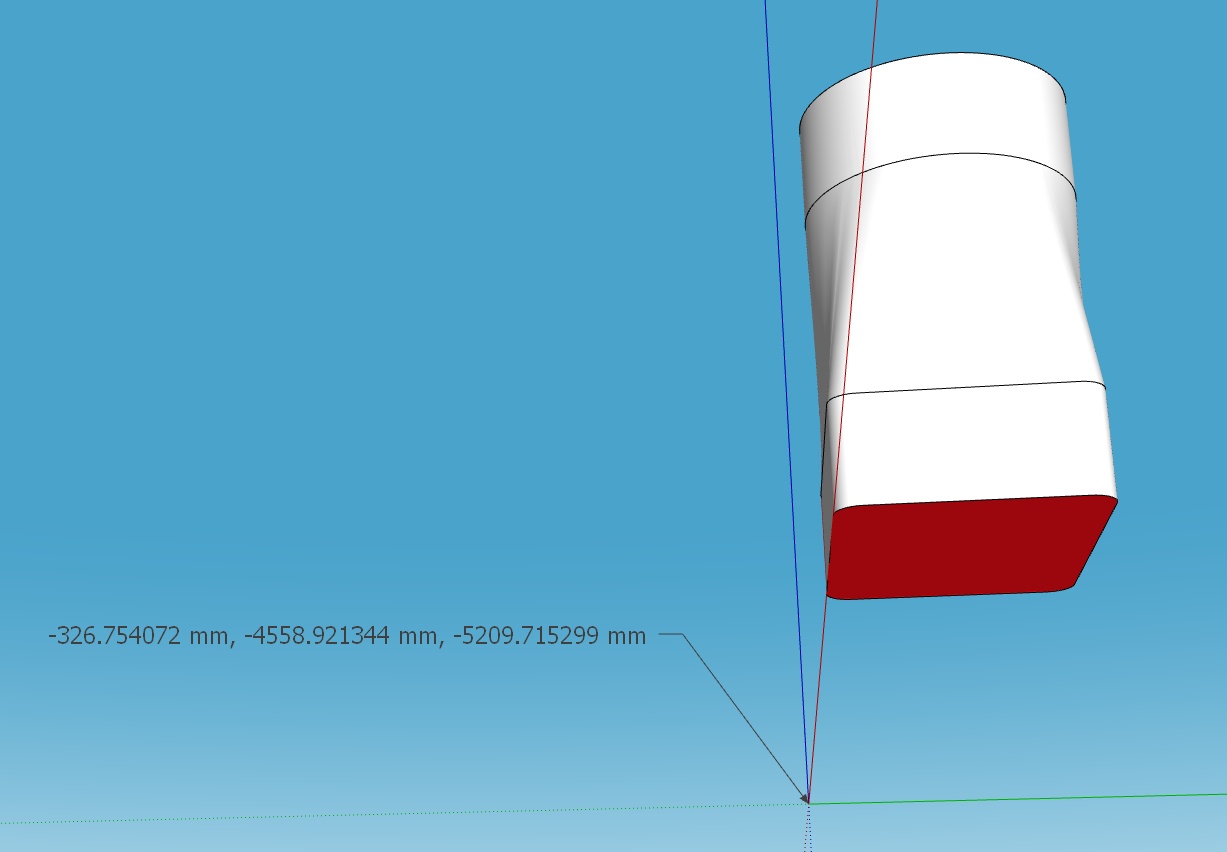
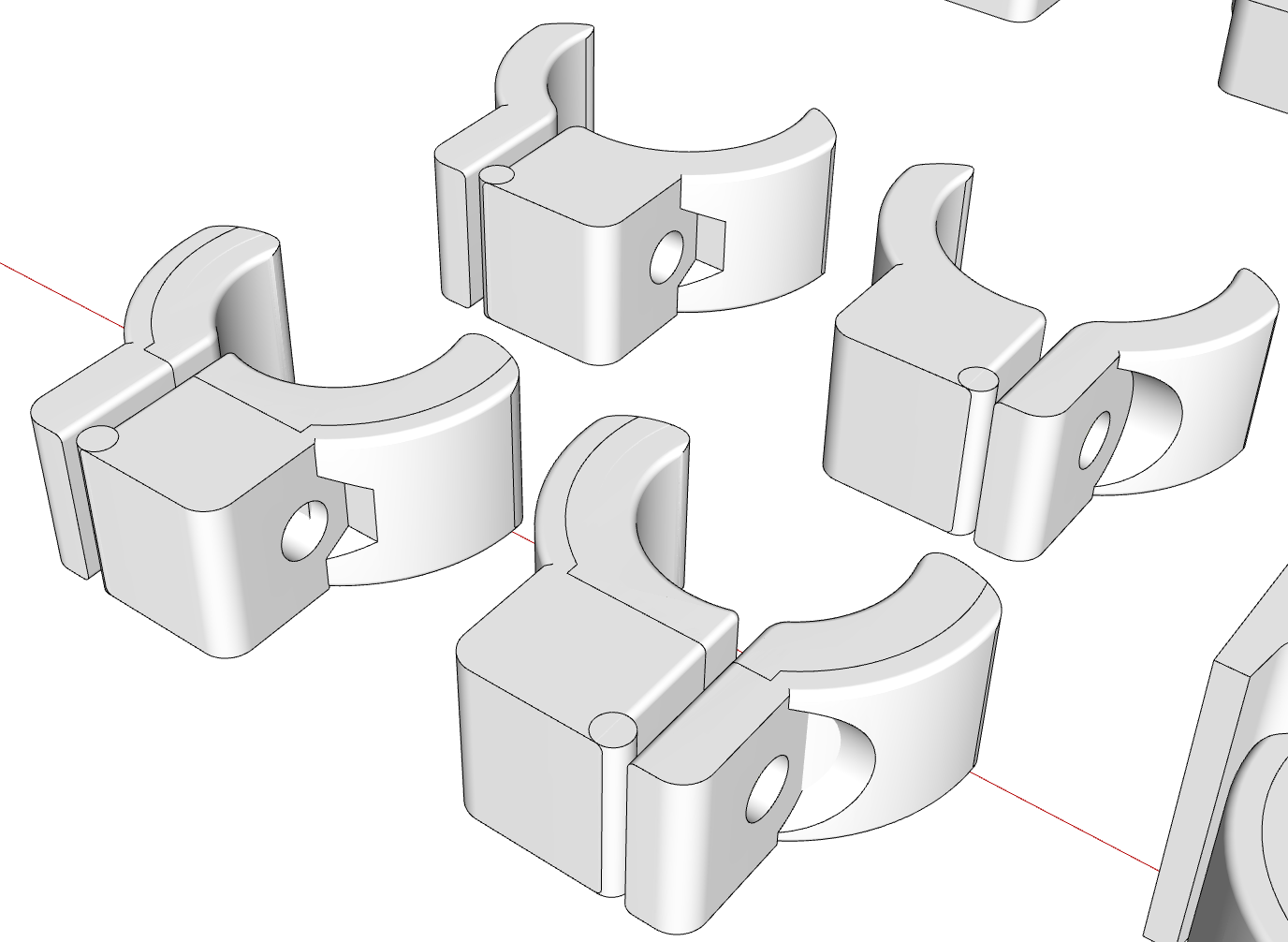
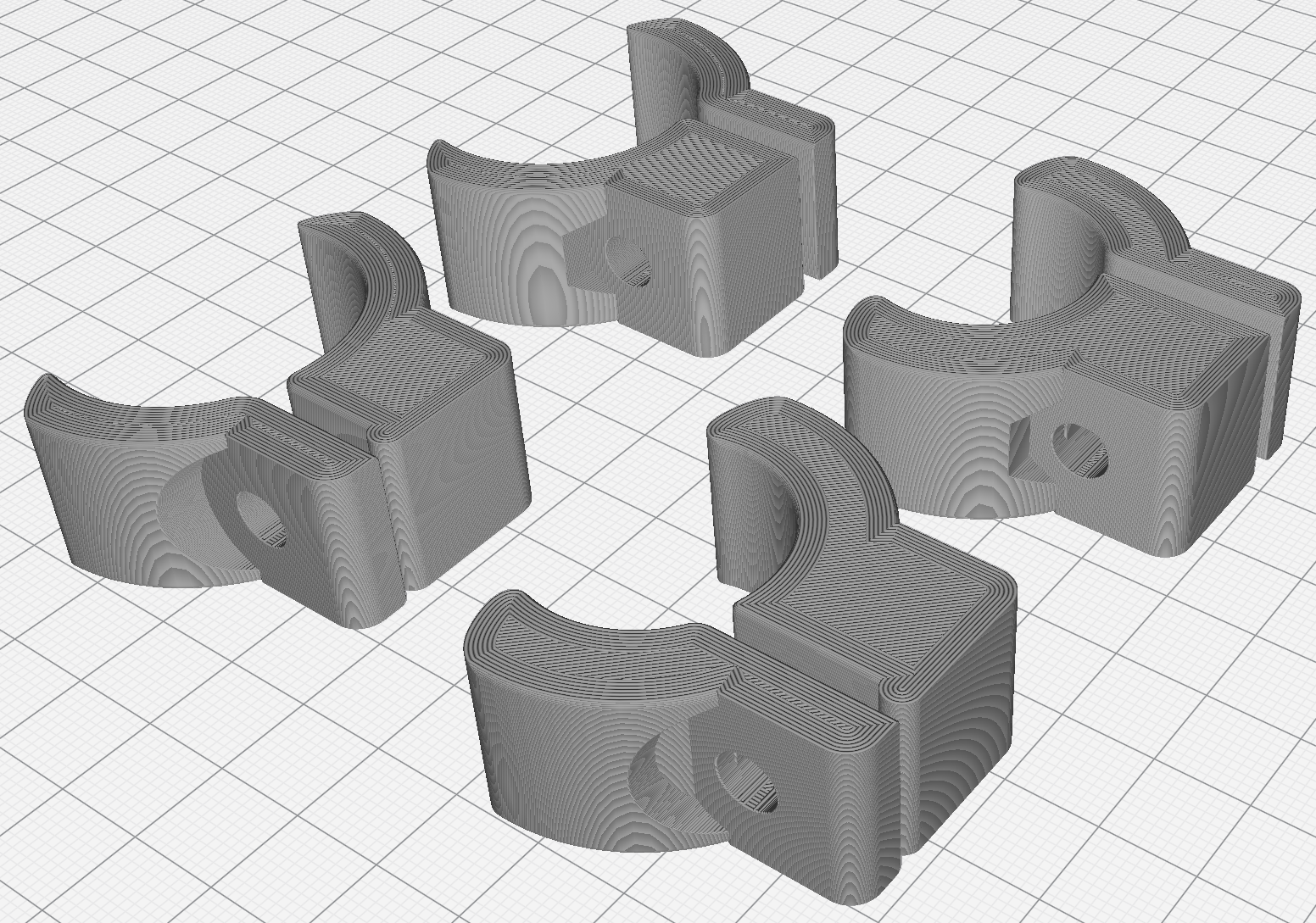
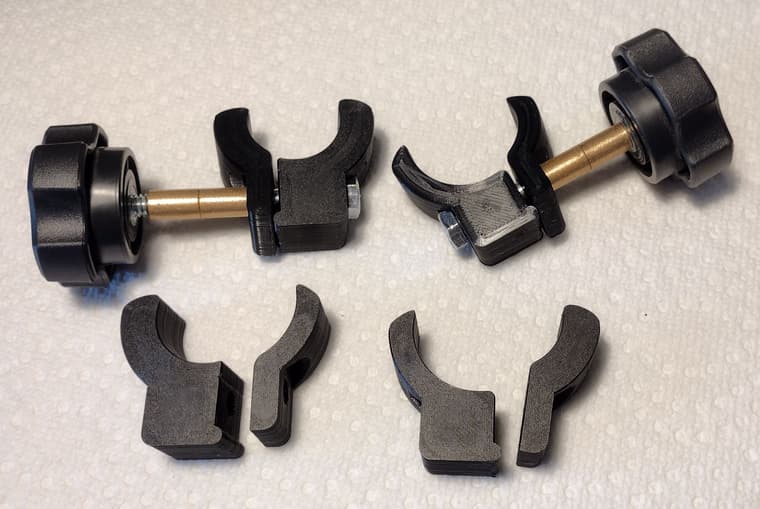
It's to prevent wear and damage to the anodizing on the chair's axle tube. The lift is designed to be very generic and so it's not really an incompatibility thing. The lift is intended to pick the chair up by the 19mm aluminum cross tube on the backrest but that's not a real strong part to hang the entire weight of the chair from, especially on rough roads. I designed and printed some hooks to lift and support the weight of the chair by the axle tube. In the picture here https://flic.kr/p/2peh56W, there's some white foam tape that was used temporarily. It's not very durable, though.
Posts
-
RE: A Recent 3D Printing Project
-
RE: A Recent 3D Printing Project
Another 3D printing project for a wheelchair. The tube was made of TPU and fits on the axle tube of a wheelchair to provide padding and protection from where a wheelchair lift picks the chair up. The rings clamp on either end of the tube and prevent the chair from shifting side to side. They were made of PETG.

The axle tube is indicated with the green arrow.

-
RE: [Plugin][$] RoundCorner - v3.4a - 31 Mar 24
@buzniak In many cases that's just the way Round Corner works. It's simple enough to delete the faces over the holes. FredoCorner, on the other hand doesn't seem to do that. I find it useful to have both extensions because one sometimes works better than the other depending on the situation.
-
RE: Another Machinist's Model of a Steam Engine.
BANG! :

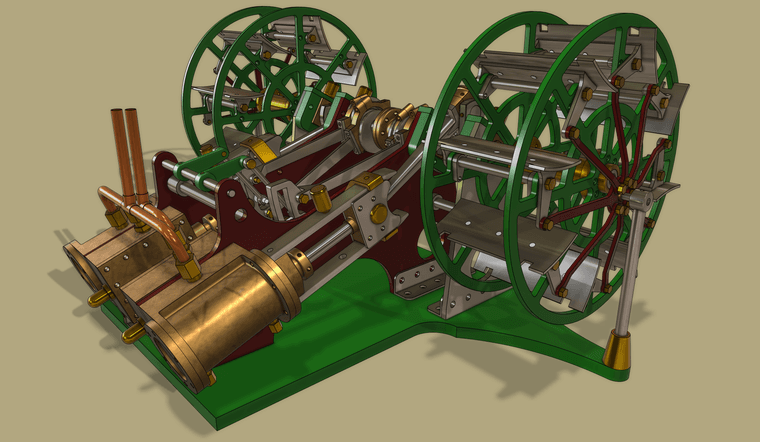
Actually that's the cap for the fuel tank. It's supposed to have knurling on it but I was getting bored. There's a nother cap on top of the boiler for adding water that needs the knurling and I have to add a spring and some other details.
-
RE: SCFLicense: Extension Licensing on Sketchucation
@aenc_randyc said in SCFLicense: Extension Licensing on Sketchucation:
I have FredoCorner from 2023.
Make sure you have installed the latest version of the Sketchucation ExtensionStore, FredoCorner, and LibFredo6.
-
RE: SCFLicense: Extension Licensing on Sketchucation
Are you sure you didn't purchase a license FredoCorner instead? Confusing Round Corner and Fredo Corner is the usual reason for the message you are seeing. Look closely at the license information you received.
-
RE: Another Machinist's Model of a Steam Engine.
Thank you!.
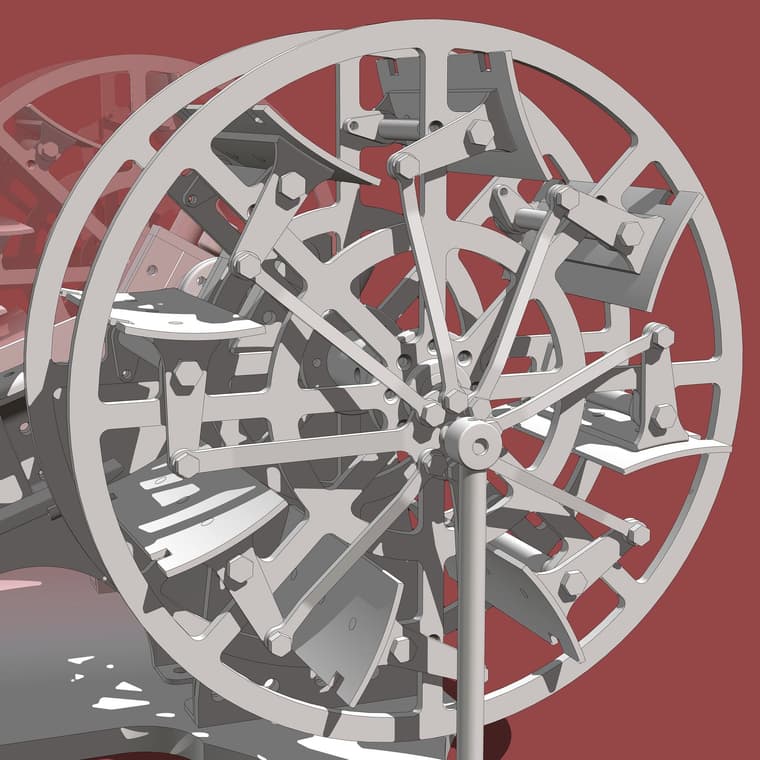
Here's an animation I did as an experiment with scenes, native materials, and Vray.
-
RE: Model for 3D print will not make solid (SU 2015)
You're welcome.
@jgb said in Model for 3D print will not make solid (SU 2015):
I never knew about using "tab" in Solid Inspector 2.
It's a good idea to check out the message line at the lower left of the model window whenver you start a tool.

@jgb said in Model for 3D print will not make solid (SU 2015):
Next model I will try using meters instead of centimetres. Just that 10:1 is easier to work with than 100:1 as I have to visualize the model against a ruler to get some sizing correct.
You misunderstand what I told you. There's no need to deal with 10:1 or 100:1 at all. Set the model units to meters. Read millimeters off your ruler and just enter them without doing any math at all. If you measure 15 millimeters on the ruler enter 15 in SketchUp. It'll go in as meters but you don't need to do anything with that. When you export the .stl export it with Model Units set to meters. When you open it in the slicer it'll be in millimeters and you don't have to do anything as far as the scale goes.
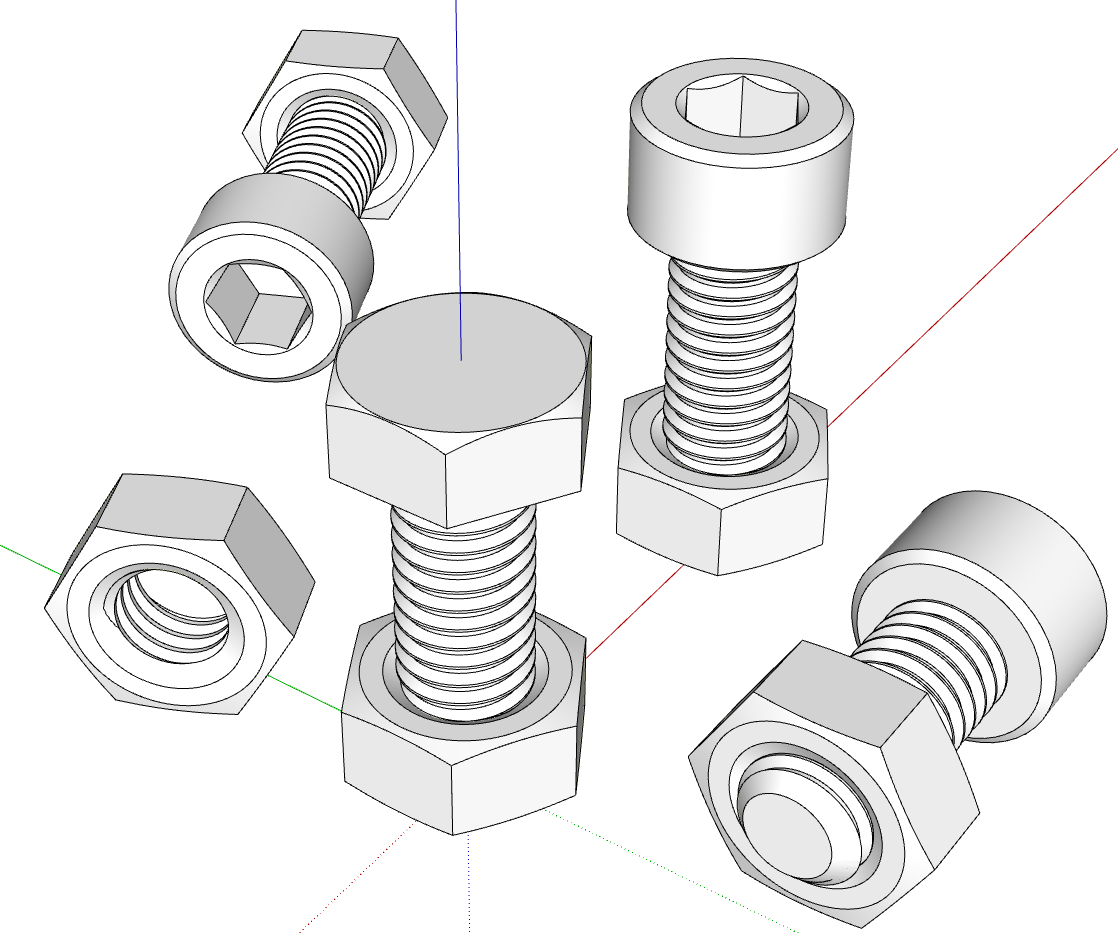
Here's another example. Model in SketchUp with units set to meters. The screws are M6 but the threaded part is modeled at a hair under 6 meters in diameter.

And the 3D printed parts.

The M6 screws fit into the tapped M6 holes just like their commercially made metal counterparts would.
@jgb said in Model for 3D print will not make solid (SU 2015):
Alternatively, just open the group or component and activate the tool. Saves you from jumping in and out of the object while editing.
Doesn't work for me. What am I missing here?
I guess you'd have to ask Thom Thom about that one.
-
RE: Model for 3D print will not make solid (SU 2015)
@jgb said in Model for 3D print will not make solid (SU 2015):
Solid Inspector never flagged those "overlapped circle" edges, and I never noticed them either.
Except for the two missing faces at the corners where the horizontal opening is, the other edges were not preventing the object from being solid so no reason for Solid Inspector or Solid Inspector 2 to identify them. The reason I mentioned them is there's no reason for those edges to exist in the first place and they could later cause you problems.
@jgb said in Model for 3D print will not make solid (SU 2015):
"Tab" doesn't work in SU 2015,
It should. Are you using Solid Inspector2?

@jgb said in Model for 3D print will not make solid (SU 2015):
As for model scaling, I draw in centimetres, print in millimetres (10:1).
Do whatever you want. Had you been modeling in meters you likely wouldn't have had any of the surfaces borders (missing faces) to fix in the first place.
@jgb said in Model for 3D print will not make solid (SU 2015):
Any idea on the surface borders and internal face edges?
I showed you where they are.
Here, again.


-
RE: Model for 3D print will not make solid (SU 2015)
@jgb said in Model for 3D print will not make solid (SU 2015):
I normally make front/back faces the same, as colour differences show up along edges.
That's OK for output but it leads to sloppy modeling if that's your working style.
@jgb said in Model for 3D print will not make solid (SU 2015):
Solid Inspector correctly orients the faces.
Sometimes it does. Sometimes it doesn't.
@jgb said in Model for 3D print will not make solid (SU 2015):
When I went back to the model, I cannot see any difference in front/back face colours. How did you see that? How can I fix that?
I selected a style with the default blue back face color.
@jgb said in Model for 3D print will not make solid (SU 2015):
But when I am in the throes of design I keep the part in default "no" colour both sides and if needed, just colour the component as a whole.
Personally I prefer to keep the file neat as I go even when I'm in the "throes of design." It's generally quicker and easier to deal with exposed backfaces when and if they occur. With the right work flow you should rarely need to stop and fix face orientation anyway.
-
RE: Model for 3D print will not make solid (SU 2015)
Poking around a little more I see you have set the back face color to match the front face color. That's a lousy workflow. It makes it more difficult for you to see holes (missing afaces) and it makes it impossible to detect incorrectly oriented faces. Face origintation is especially important for 3D printing because that tells the slicer which side of the face is the print media and which side is air. In your model you have a number of incorrectly oriented faces. Make the back face color significantly different from the front face color. If you have set the back face color to white for your template you should deal with it and create a new template.

-
RE: Model for 3D print will not make solid (SU 2015)
Highlight one of the error lines and tap Tab to zoom in to the error. Tap again to go to the next one. Rinse and repeat.
BTW, you should clean up your model a bit. Looks like you had overlapping circles on that large central hole.

When I model for 3D printing I model as if millimeters are meters with Model Units set to Meters. I export the .stl file with Export Units set to Meters and open in the slicer as Millimeters. No tiny face issues which is the reason for the errors on the edge of that large hole.
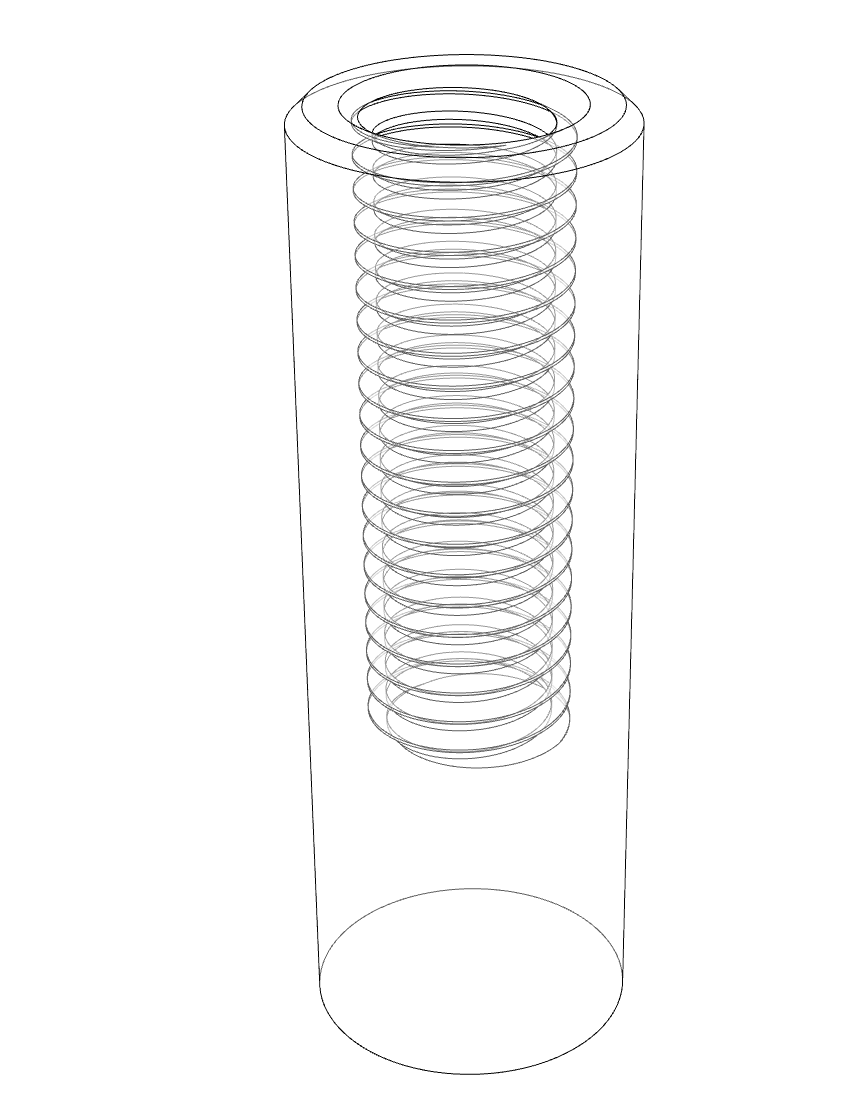
Example: This is the SketchUp model.

And the 3D print.

It snaps onto a 19mm diameter tube. -
RE: Strange corners
Hard to say from just a single image. What orientation was the model in on the bed? What material?
-
RE: Sketchup 2017 suddenly closes
@hannaconner said in Sketchup 2017 suddenly closes:
I use SU 2017 as a subscription doesn't make sense
You're right. That doesn't make sense since SketchUp 2017 was never available as a subscription. What kind of license do you really have?
@hannaconner said in Sketchup 2017 suddenly closes:
Anytime I try to do a cut and paste or other action that increases or adds to it, it suddenly crashes.
What operating system are you using? What are the specs on your computer? What is the graphics card? Most likely you have exceeded your computer's capability. It's also possible that you have a bad object (component or group) in the model.
You might try purging and otherwise cleaning up the model before trying to add more to it.
You could share the file with us so we can see if it can be fixed. Upload it to DropBox or We Transfer and share the link.
-
RE: Beveled corners without overlaps
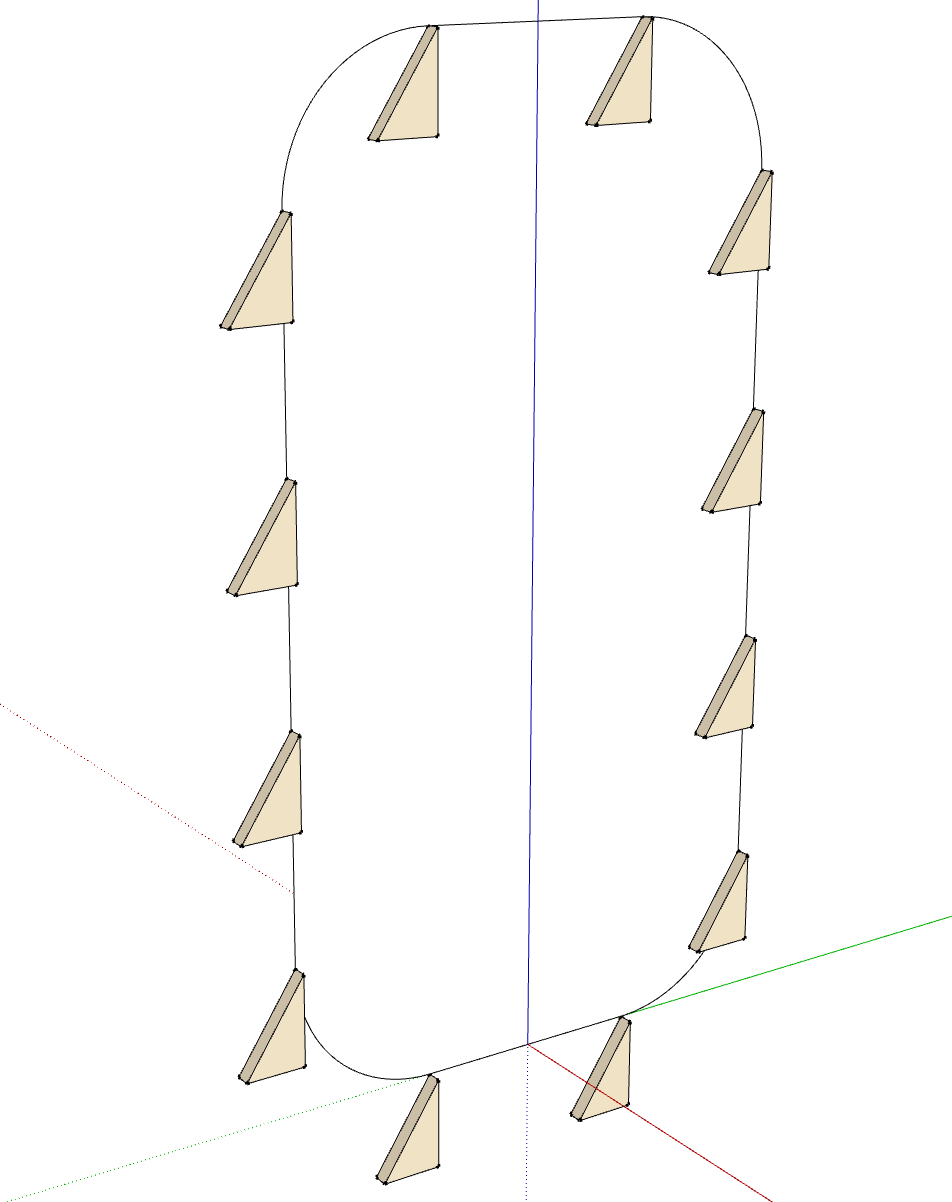
@sentur How about modeling it flat and then bending it withShape Bender?

-
RE: Beveled corners without overlaps
That's normal behavior for the method you are using. Easier approach to get the correct result would be to add the corner radius before cutting the large arcs.

-
RE: 3d dimensions visible for render
I don't believe there are any extensions to do that. You could use 3D text and drawn 3D dimension and extension lines to create the geometry. I find it's simper and faster to combine a couple of image exports; the render and a dimensions-only image direct from SketchUp. This is a quick 10 second render to show the idea.
The render:

The dimensions-only image export from SketchUp:

And after combining them in an image editor:

The layer for the dimensions is set to Multiply in the image editor. -
RE: Bevel Emboss or Whatever how can i make this in sketch up???
Did you look at the video on it's ExtensionStore page?
https://sketchucation.com/plugin/1103-extrudetoolsI still don't have time to do a video on the entire process but maybe this will help. I copied out the needed edges from the L I already made for this. Note that the straigh edges at the ends need to be divided into multiple segments and welded to make them curves. Two segments is enough, though. Going through the options I chose to no delete the original curves. Since the entire letter gets done in stages, you can't delete all of the edges after an extrusion because you'll need them for the neighboring steps.