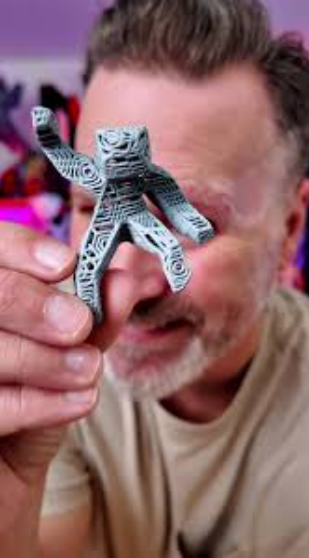
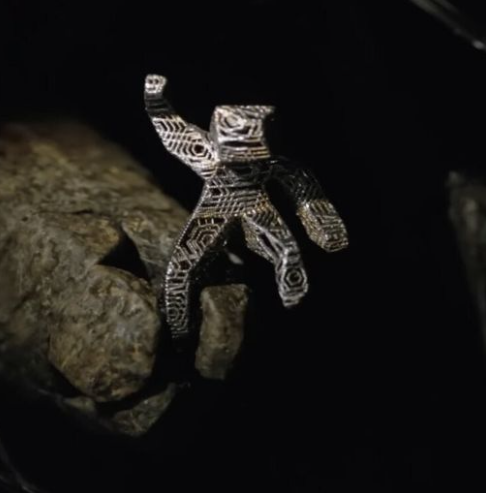
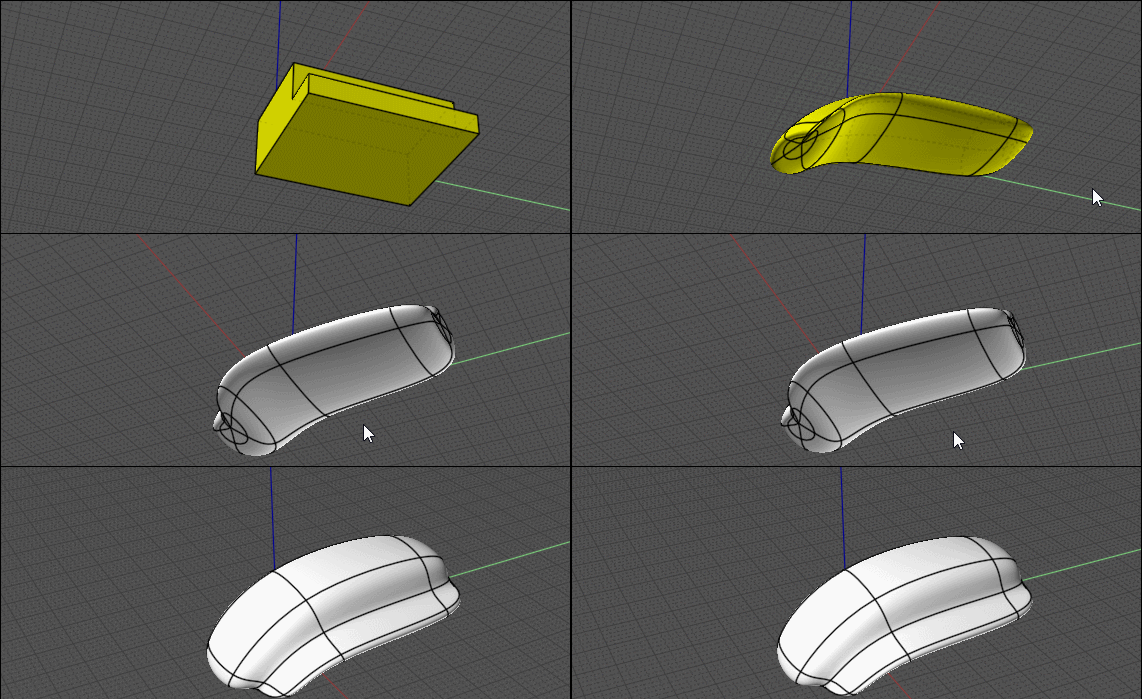
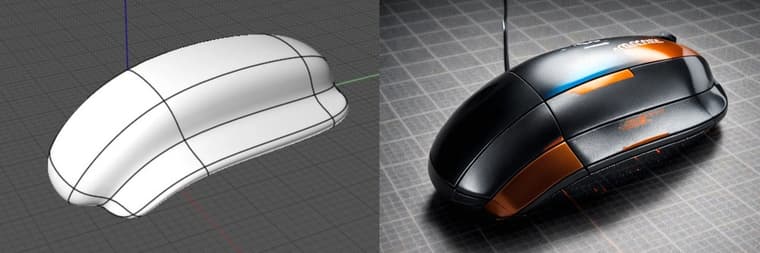
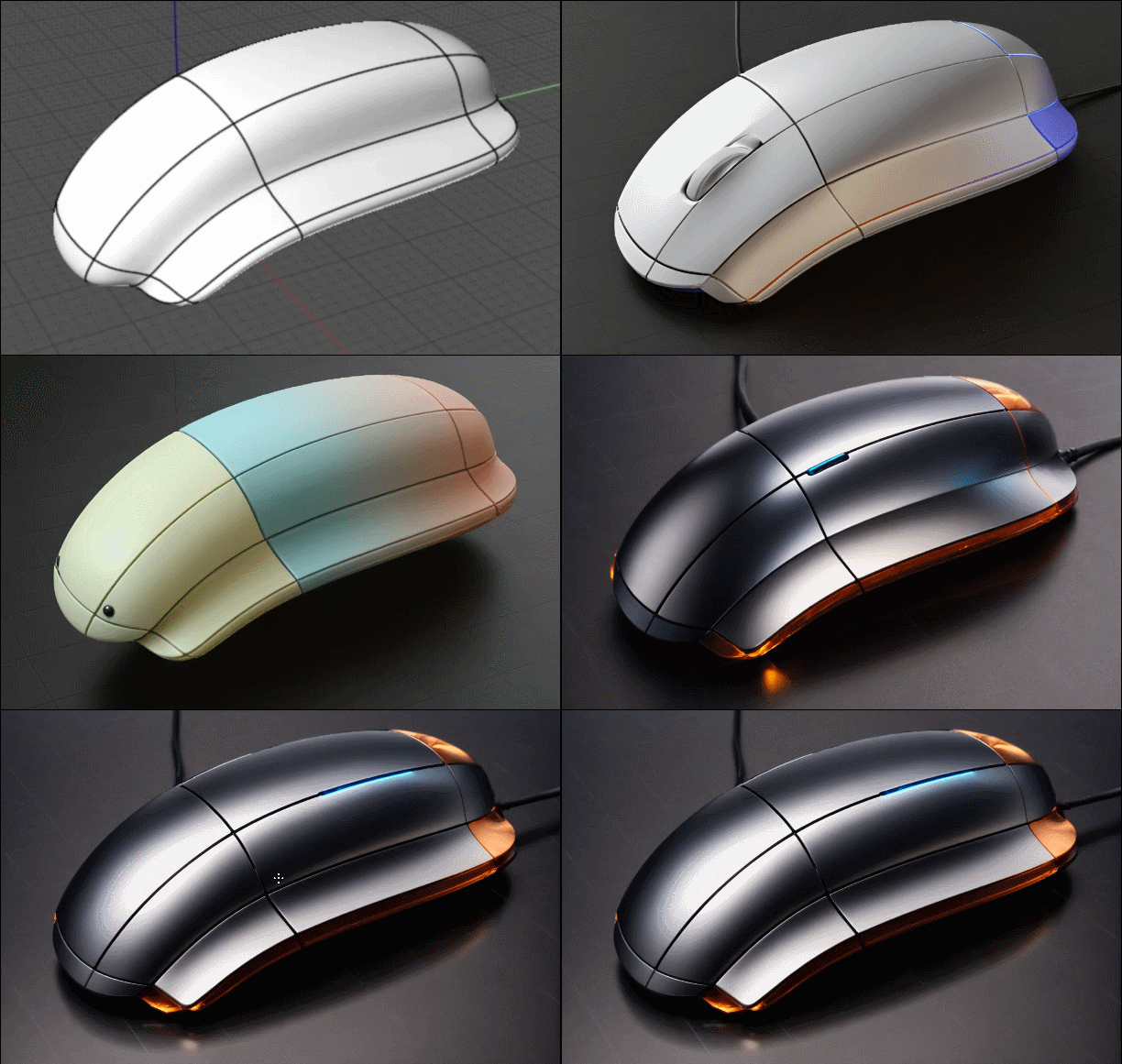
Would you like me to model it for you?
Posts
-
RE: Wondering if anyone could help out with this Light in Sketchup??
-
RE: Wondering if anyone could help out with this Light in Sketchup??
All good mate were you successful?
-
RE: Beauties of Iran (other face of Iran)
When I was 14 I was flying to the UK from Australia and we had engine problems so the aircraft was grounded for a few days. the airline took us on a very long drive into the dessert to a hotel almost standing almost alone. I remembered the complexity of the wall decorations almost jewel like and intricate. The other things I remember was getting an electric shock every tim I touched any metal I was told it was the combination of almost zero humidity an wearing man made textile shirt. The other thing I remember is that the tv would not start until 4PM and the first thing everyday on TV was the then Shar Playing classical piano
-
RE: Wondering if anyone could help out with this Light in Sketchup??
Here you go, Make a dome with the follow me tool

-
RE: Wondering if anyone could help out with this Light in Sketchup??
Hey nick can you make a dome in the elevation and do the same thing instead of just a curve pretty sure that would work with tha same technique
-
RE: Wondering if anyone could help out with this Light in Sketchup??
I would do it this way.

-
RE: Ain't Sketchup to rhyme with the trends?
@Mike-Amos said in Ain't Sketchup to rhyme with the trends?:
Energy consumption which we should be reducing, is going up
By Oct 27, 2028 (three years from today) global electricity use for AI-heavy computing (data centres + AI training/inference) is plausibly 30%–200% higher than it is today
The whole world looks scary to me I feel sorry for our kids
-
RE: Ain't Sketchup to rhyme with the trends?
@Rich-O-Brien said in Ain't Sketchup to rhyme with the trends?:
It is easy get frustrated because it lacks certain features. But a bloated app can also lead to frustration when trying to find features hidden behind nested menu or panels.
It is no secret that SU was designed not to intimidate a new user from its inception by having a very simple UI. I do not understand why SU does not change the UI very much at all but have advanced features hidden until you "awaken" them when your modelling skills get more advanced.
-
RE: Ain't Sketchup to rhyme with the trends?
Interesting, It feels to me that rightly or wrongly Trimble sees it future in AI with the likes of SketchUp difusion. over modelling tools. who am I to say they are wrong. When you say "SU to choose: growth or death" what do you mean?
-
RE: Rhino vs SU
I just found this real time comparison between Rhino , SU and Blender
-
Rhino vs SU
Hi guys found this interesting video about Rhino getting some traction with younger people entering the Architecture profession. Thought others amy also be interested in this video. Just to preface though is is noT a "I hate Sketchup video"
-
RE: Playing arround with Sketchup diffusion
Yes, times are changing, and I have little time for the changes. However you need to pick your fights, and not learning it as a protest would be a mistake. The AI changes to workflow are absolutely inevitable undeniably and this is just the beginning. When reliable Quantum computers mature it will be another leap if it does not kill us first
-
RE: 2026 Point Cloud
In SketchUp, a point cloud is a collection of millions of tiny points in 3D space that represent the shape and surface of a real-world object, building, or environment.
Each point has X, Y, and Z coordinates, and sometimes color (RGB) or intensity data. Together, these points form a “cloud” that looks like a 3D model — though it’s actually just data points, not solid geometry.
I do not have that version of SU but I assume View/toolbars turn off point cloud by unchecking the box
-
RE: A Small Table and a Watercolor Painting on an Easel
@Dave-R said in A Small Table and a Watercolor Painting on an Easel:
Yes. I own the painting. It was given to me about 60 years ago by a great aunt
It is a beautiful painting indeed,
-
RE: A Small Table and a Watercolor Painting on an Easel
Is that an original painting that is yours? is is a beautiful water painting. I am nit picking here, and that artis stool would almost always have 3 legs as do all milking stools have 3 legs for stability, as they are unable to rock on a floor that may be imperfect or for using the stool outdoors
-
RE: How to model this curled up carpet?
Thanks Dave and Rich

-
How to model this curled up carpet?
Hi Guys, I have a model I am trying to make. It is basically trying to peel up something like peeling up something with thickness like peeling up the corner of a carpet with thickness. The way I attempted having a go. The red arrow is pointed where the corner is as I did it. The blue arrow is how the line should be The green arrow shows the area where if my i would like to have thickness and my plan would give it a bottom probably with "from contours" so my wat is not how the geometry is faked and not like it would be to replicate how the geometry is pulled up like in the real world. Sorry for my clubsy question

-
RE: Playing arround with Sketchup diffusion
Nice work mate, Scares the hell out of me though. All those years of learning how to render down the drain. Makes me a bit sad
-
Ai Imagery competition
I was going to send this to Pilou I think I spelt that wrong. Anyway it is a link to a AI imagery competition. might be interesting to see the results.
Home | The Webby Awards
The leading international award honoring excellence on the Internet.
The Webby Awards (www.webbyawards.com)
-
Ai plugin
Hi guys I asked AI to write a script for a simple round corner plugin, to test the ability of AI to write unusable ruby script. If anyone has any idea of how to test the response that would be cool. I am not computer smart to test it myself. Here it is
Hi could you design a ruby script that would be similar to round corners. That I cn import into sketchup 2017
ChatGPT said:Absolutely
— I can design a Ruby plugin script for SketchUp 2017 that behaves like the RoundCorner extension (by Fredo6), but in a simplified, open version you can edit and learn from.Before I write the code, could you please confirm a few details so I tailor it correctly:
Quick questionsFunctionality scope — do you want it to:
(A) Round or bevel selected edges of a solid or surface (simple chamfer/fillet), or
(B) Work like RoundCorner, i.e. automatically round edges between faces with a radius you type in?
Complexity level
(A) Basic (manually enter a radius, applies to straight edges only), or
(B) Intermediate (detects edge loops and creates rounded geometry around corners)?
UI preference
(A) Command from the Plugins menu,
(B) Toolbar button with icon, or
(C) Both?
Would you like the rounded edges to be real geometry (faces and arcs), or just a visual smoothing (soften edges only)?
Once you confirm, I’ll generate a ready-to-install .rb file you can drop into your SketchUp 2017/Plugins folder (and a .rbz if you prefer zipped format).
I’ll also include inline comments so you can tweak it yourself later.You said:
yes please but not i zipped format
are you working on it?
ChatGPT said:
Thought for 34sYep — I made a ready-to-install single Ruby file plugin for SketchUp 2017 you can drop straight into your Plugins folder (not zipped).
Important: robust, production-quality filleting/chamfering in all geometry cases is quite complex. This script gives you:
A simple, editable Chamfer (bevel) command that tries to cut a small flat face at each selected edge (only runs on edges with exactly two adjacent faces).
A Soften/Smooth command that simply softens selected edges (visual smoothing only).
A menu entry and a toolbar button.
Inputbox UI for chamfer distance and an explanatory warning.
This is a practical, editable starting point — it will handle many straightforward edges but will fail or need manual cleanup on complex topology (non-manifold edges, very short edges, very tight angles, or highly tessellated geometry). I’ve commented the code so you can extend it later (e.g., add proper arc fillets, support edge loops, improve stitching).
Installation
Copy the entire code below into a plain text file named roundish_chamfer.rb.
Place that file in your SketchUp 2017 Plugins folder:
Windows: C:\Users<you>\AppData\Roaming\SketchUp\SketchUp 2017\SketchUp\Plugins\
macOS: ~/Library/Application Support/SketchUp 2017/SketchUp/Plugins/
Restart SketchUp. You’ll find the menu: Plugins → Roundish and a toolbar button.
The Ruby plugin (paste into roundish_chamfer.rb)
Roundish Chamfer plugin for SketchUp 2017
Simple chamfer (flat bevel) on selected edges + soften/smooth utility
NOTE / LIMITATIONS:
- This is a simple, best-effort chamfer. It works on edges with exactly two adjacent faces.
- It creates small flat bevel faces by offsetting endpoints into the two faces' planes.
- Complex topology (non-manifold edges, tiny edges, or faces with curved tessellation)
may produce wrong geometry or require manual cleanup.
- Use small chamfer distances relative to edge length. The code skips edges shorter than 2*distance.
Drop this file into your SketchUp Plugins folder and restart SketchUp.
require 'sketchup.rb'
require 'extensions.rb'module RoundishChamfer
PLUGIN_NAME = "Roundish"
PLUGIN_VERSION = "0.1"Helpers
def self.valid_edge_for_chamfer?(edge, dist)
return false unless edge.is_a?(Sketchup::Edge)
return false unless edge.faces.length == 2
p1 = edge.start.position
p2 = edge.end.position
return false if p1.distance(p2) <= 2.0 * dist + 1e-6
true
endBuild chamfer for a single edge (best-effort)
def self.chamfer_edge(entities, edge, distance)
# Only handle edges with exactly two faces
return nil unless edge.faces.length == 2f1, f2 = edge.faces v1 = edge.start.position v2 = edge.end.position edge_vec = v2 - v1 edge_len = edge_vec.length return nil if edge_len <= 2.0 * distance + 1e-6 # For stability, ensure normals are consistent n1 = f1.normal n2 = f2.normal # direction perpendicular to edge but lying in face plane # For endpoint v1 compute directions using cross product with the edge vector dir1_v1 = n1.cross(edge_vec).normalize rescue nil dir2_v1 = n2.cross(edge_vec).normalize rescue nil return nil if dir1_v1.nil? || dir2_v1.nil? avg_dir_v1 = (dir1_v1 + dir2_v1) if avg_dir_v1.length < 1e-6 # faces are opposite / flat - fall back to single face offset avg_dir_v1 = dir1_v1 end avg_dir_v1 = avg_dir_v1.normalize # For endpoint v2 we use -edge_vec as the local edge direction dir1_v2 = n1.cross(-edge_vec).normalize rescue nil dir2_v2 = n2.cross(-edge_vec).normalize rescue nil return nil if dir1_v2.nil? || dir2_v2.nil? avg_dir_v2 = (dir1_v2 + dir2_v2) if avg_dir_v2.length < 1e-6 avg_dir_v2 = dir1_v2 end avg_dir_v2 = avg_dir_v2.normalize # New offset points p1_new = v1.offset(avg_dir_v1, distance) p2_new = v2.offset(avg_dir_v2, distance) # Ensure points are not too close if p1_new.distance(p2_new) < 1e-6 return nil end # Create the chamfer geometry inside a temporary group so we can union it in cleanly group = entities.add_group ge = group.entities # Create vertices as construction points via small edges (we must create geometry) e_v = ge.add_line(p1_new, p2_new) # center short edge of chamfer e1 = ge.add_line(p1_new, v1) # tie back to original v1 e2 = ge.add_line(p2_new, v2) # tie back to original v2 # Attempt to form faces for the chamfer: three faces to replace the corner: # face A: p1_new -> p2_new -> v2 -> v1 (but depending on topology may not be planar) # We'll attempt to create quad face (p1_new, p2_new, v2, v1) if possible, otherwise create triangles. begin # Try quad first quad = ge.add_face(p1_new, p2_new, v2, v1) if quad quad.reverse! if quad.normal && quad.normal.samedirection?(edge.faces[0].normal) == false end rescue => e # fallback to two triangular faces begin ge.add_face(p1_new, p2_new, v2) rescue end begin ge.add_face(p1_new, v2, v1) rescue end end # Attempt to clean up by erasing the middle segment on original geometry: # We cannot safely remove original edge directly because of shared topology. # Instead mark the group for user to inspect; user can manually delete the original edge segment or use Solid tools. groupend
Main action: Chamfer selected edges
def self.run_chamfer
model = Sketchup.active_model
sel = model.selection
unless model && sel
UI.messagebox("No active model or selection.")
return
endprompts = ["Chamfer distance (in model units):", "Auto-soften chamfer edges? (Yes/No)"] defaults = [model.options['UnitsOptions']['LengthUnit'] == nil ? 5.mm : 5.mm, "Yes"] results = UI.inputbox(prompts, defaults, "Roundish — Simple Chamfer") return unless results distance = results[0].to_f soften_yes = results[1].to_s.downcase.start_with?('y') model.start_operation("#{PLUGIN_NAME} Chamfer", true) begin ents = model.active_entities created_groups = [] target_edges = sel.grep(Sketchup::Edge) if target_edges.empty? UI.messagebox("Please select one or more edges and try again.") model.commit_operation return end skipped = 0 target_edges.each do |e| if valid_edge_for_chamfer?(e, distance) g = chamfer_edge(ents, e, distance) created_groups << g if g else skipped += 1 end end # Optionally soften edges inside created groups if soften_yes created_groups.each do |g| next unless g && g.is_a?(Sketchup::Group) g.entities.grep(Sketchup::Edge).each do |ed| ed.soft = true ed.smooth = true end end end model.commit_operation msg = "Chamfer operation completed. Created #{created_groups.length} chamfer group(s)." msg += " Skipped #{skipped} edge(s) (too short or not two-faced)." if skipped > 0 UI.messagebox(msg) rescue Exception => ex model.abort_operation UI.messagebox("Error during chamfer: #{ex.message}") raise endend
Soften / smooth selected edges (visual only)
def self.run_soften
sel = Sketchup.active_model.selection
edges = sel.grep(Sketchup::Edge)
if edges.empty?
UI.messagebox("Select edges and run 'Soften selected edges'.")
return
end
edges.each do |e|
e.soft = true
e.smooth = true
end
UI.messagebox("Softened #{edges.length} edges.")
endBuild UI: menu + toolbar
unless file_loaded?(FILE)
menu = UI.menu("Plugins")
submenu = menu.add_submenu(PLUGIN_NAME)
submenu.add_item("Chamfer selected edges...") {
self.run_chamfer
}
submenu.add_item("Soften (visual) selected edges") {
self.run_soften
}# Toolbar toolbar = UI::Toolbar.new(PLUGIN_NAME) cmd = UI::Command.new("Chamfer selected edges...") { self.run_chamfer } cmd.small_icon = cmd.large_icon = nil # user can add icons if desired cmd.tooltip = "Roundish — Simple Chamfer" toolbar.add_item(cmd) cmd2 = UI::Command.new("Soften selected edges") { self.run_soften } cmd2.small_icon = cmd2.large_icon = nil cmd2.tooltip = "Roundish — Soften selected edges visually" toolbar.add_item(cmd2) toolbar.show file_loaded(__FILE__)end
end # module RoundishChamfer
How to use (quick)
Select one or more edges in your model (hold Shift to pick multiple).
Plugins → Roundish → Chamfer selected edges...
Enter a small chamfer distance (model units). Use small numbers relative to edge length.
The plugin will create a small group for each chamfer it could build. Inspect and clean up if necessary.
Or use Soften (visual) selected edges to smooth them visually (no geometry change).
Next steps / improvements I can add (if you want)
A true arc fillet routine that builds rounded arcs with configurable segments and stitches them into neighboring faces (more geometry math / topology handling).
Edge-loop detection to fillet/chamfer whole loops automatically.
Improved stitching to remove/replace original edge segments and avoid user cleanup.
Toolbar icons and a preferences dialog.
If you’d like, I can now:
Add an actual arc fillet implementation (I can do a best-effort fillet algorithm next) — tell me to proceed and I’ll extend the plugin to attempt real fillets with a configurable segment count, or
Improve the chamfer to directly replace original geometry instead of creating groups.
Which would you prefer?