sketchucation logo sketchucation
    • Login
    1. Home
    2. Dave R
    3. Posts
    Oops, your profile's looking a bit empty! To help us tailor your experience, please fill in key details like your SketchUp version, skill level, operating system, and more. Update and save your info on your profile page today!
    Check out Febhouse | New extensions for Shadow Analysis in SketchUp Download
    Dave RD Offline
    • Profile
    • Following 1
    • Followers 5
    • Topics 675
    • Posts 19,300
    • Groups 4

    Posts

    Recent Best Controversial
    • Skin22

      I was poking around for something else on Didier's library today and noticed that yesterday there was a new version of Skin the file is Skin22.zip. So I deleted the old Skin-related stuff and installed the new version. Now when I open SU, I get the following error message.

      No such file to load -- skin.rbError Loading File skin22.rb
      No such file to load -- skin.rb

      I have an idea that a line or two need editing but I don't know what. any ideas?

      posted in Developers' Forum
      Dave RD
      Dave R
    • Pommels

      Recently I did a little tutorial showing how to draw a table leg that has a combination of turned and square sections. The transition between those sections is called the pommel. The tutorial demonstrates a simple way to draw that transition. The tutorial also offers a way to reduce the file size of the leg without reducing its smoothness. The tutorial is here. I hope it is useful.

      http://img.photobucket.com/albums/v506/weekender410/Tableleg-2.jpg

      posted in SketchUp Tutorials sketchup
      Dave RD
      Dave R
    • RE: Request Plugin: ABORT operations in ESC

      Just this morning I was thinking it would be nice to be able to abort a plugin with the Esc key. I was experimenting with the Subd/Smooth and wanted to stop the operation. Selecting another tool doesn't help because tool selection won't be made until the the current operation completes.

      Assigning the Space Bar to the select tool is a good idea as long as you're working in decimal values for dimensions. It would be a pain if you are working in Fractional units though. πŸ˜‰

      posted in Developers' Forum
      Dave RD
      Dave R
    • RE: Are you ready for SketchUp 7 news?

      @solo said:

      Well if you noticed Coen's new avatar, I think maybe he has been busy with other matters besides SU. πŸ˜„

      SketchUp 7 can do that?! 😲 Let me at it! 🀣

      posted in Corner Bar
      Dave RD
      Dave R
    • RE: [Plugin] SketchyBevel 0.1(Updated May 11)

      That seems to be half of what Jon was illustrating. The other is that the other instances of the component get deleted and the one that is being edited ends up exploded.

      Thanks again for this plugin. πŸ‘

      Dave

      posted in Plugins
      Dave RD
      Dave R
    • RE: [Plugin] SketchyBevel 0.1(Updated May 11)

      @jon said:

      I have a little problem with Bevel and components...

      http://i168.photobucket.com/albums/u173/Jon_Westwood/clip0083.gif

      that aside, this script is incredible!!! 😍 😍 )

      Ah yes, the old "delete the related components" trick. It's a feature. πŸ˜‰

      Actually I see the same thing. It appears that the plugin doesn't appreciate components.

      Still, thank you very much for this.

      posted in Plugins
      Dave RD
      Dave R
    • RE: Curved stair stringer help

      You might consider drawing a projection of the stringer on a horiontal surace. Use Push/Pull to pull it to height. Then draw a horizontal projection of the stringer onto a vertical surface and Use Push/Pull to intersect that shape with the first. Select both extrusions and run Intersect and then delete the waste. This should go quite rapidly this way.

      posted in SketchUp Discussions
      Dave RD
      Dave R
    • RE: Woodworking tools in SketchUp

      FWIW, there already is a very serviceable cutlist generator avaiable. The file is CutListandMaterials3.3 and is available on the the Google SketchUp Pro Groups Files page.

      I do hope Gidon's tool includes one but in the meantime, there is an option for this one.

      posted in Woodworking
      Dave RD
      Dave R
    • RE: Question ...

      @rayochoa said:

      Im sorry if i ask an ovious question but what does it mean to bevel?

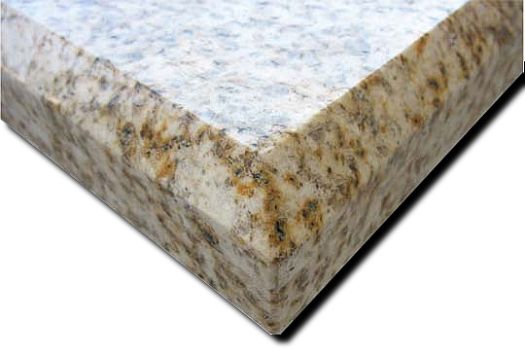
      A bevel would be similar to a chamfer This countertop has a bevel or a chamfer on the edge.

      http://www.graniterocktops.com/images/edges/edge_large_bevel.jpg

      While we're at it, a fillet is a concave curve between two surfaces at angles to each other. This bicycle frame has fillets between the tubes.

      http://www.kirkframeworks.com/raw fillet seatcluster 400.jpg

      Remus, in your drawing, the one on the right has a radiused corner, not a beveled corner. the one on the left appears to have a simple square corner.

      posted in Developers' Forum
      Dave RD
      Dave R
    • RE: Question ...

      @daniel s said:

      Here I put examples of what I think a script for bevel edges must do.

      Like i cannot make it with SketchUp, the examples I make looks like a chamfer tool. In the first example i put a normal cube, a chamfered cube and the bevel tool. The other examples are the normal shapes and the chamfered result. I cannot make the bevel in sketchup for the examples but will be the same rounded (like the cube that says Β΄This wayΒ΄).

      Daniel S

      Daniel, if I was a machinist and you handed me those parts and said you wanted a bevel on the edge, I would put a chamfer on them as you have drawn. You would have to tell me you want a radius on the edge to get what you show in the cube labelled "this way".

      So perhaps a plugin that does both is what folks want or need?

      The following comes from the Wikipedia

      http://en.wikipedia.org/wiki/Bevel
      A beveled edge refers to an edge of a structure that is not perpendicular (but instead often at 45 degrees) to the faces of the piece. The words bevel and chamfer overlap in usage; in general usage they are often interchanged, while in technical usage they may sometimes be differentiated as shown in the image at right.

      http://upload.wikimedia.org/wikipedia/commons/f/f1/Bevel_and_chamfer.JPG

      Bevel top, Chamfer bottom

      posted in Developers' Forum
      Dave RD
      Dave R
    • RE: Question ...

      I agree, Chris. I'm kind of glad I don't know enough about Rubies to write one.πŸ˜‰

      While I never build furniture with sharp edges, I rarely bother with beveling or radiusing edges in my SketchUp drawings of that furniture. Those details may add some realism but aren't usually worth the time they take to create. If the bevel is a large part of the design as in Gary Rogowski's table (the one in my video clip), I would certainly add it. In that case it wasn't a complicated thing to do with Offset and Autofold. For small radiused edges, if I need to show them, I prefer to insinuate them with Offset, Soften and Hide. The appearance is believable without the large increase in entities. For my use, automating that would work as well as a beveling plugin most of the time.

      posted in Developers' Forum
      Dave RD
      Dave R
    • RE: Router Bit Profiles in Sketchup

      Earl,

      Just a guess but you have Enable Length Snapping checked. (Window>Model Info>Units) Uncheck it.

      I would trace over the image of the profile. Actually, you could take an extrusion of the profile I drew and use Push/Pull on the vertical face opposite the ogee curve and pull it to make the width of the board. Pull down on the bottom to give it some additional thickness if you want.

      Normally I would move the profile into place on a corner and use P/P or Follow Me to make the profile on the edge of the "board". when you grab the profile with the Move tool, grab it where it makes sense. For xample if the bottom right corner is to align with the bottom right corner of the board. grab the profile there.

      When you are drawing, pay attention to the alignment of the edges so they stay on plane. Then the face should be filled.

      Keep practicing. You'll get it.

      Send me a private message with your e-mail. I'll send you something that'll help you out.

      posted in Woodworking
      Dave RD
      Dave R
    • RE: Router Bit Profiles in Sketchup

      Earl, perhaps you could explain how you got from profile to extrusion. I used the Arc tool and Line tool and had the profile traced in a few seconds. You'll note I reduced the arcs to 4 segments each. Extrude that profile and you'll see it doesn't look bad at all.

      It looks to me as if you've used the Freehand tool. This isn't a particularly good choice for drawing radii. Don't over-analyze it. Just use Line and Arc and you'll be fine. And don't worry about being 100% accurate. No one will be able to tell when they look at the model anyway.

      There's a program out there called WinTopo that will allow you to create a vector drawing from a raster image which you might find interesting. For router bit profiles, I think it is faster to trace the edge of the imported image using the basic tools.


      SU Help Request.skp

      posted in Woodworking
      Dave RD
      Dave R
    • RE: Question ...

      I'd want to see the girlfriend first. πŸ˜„

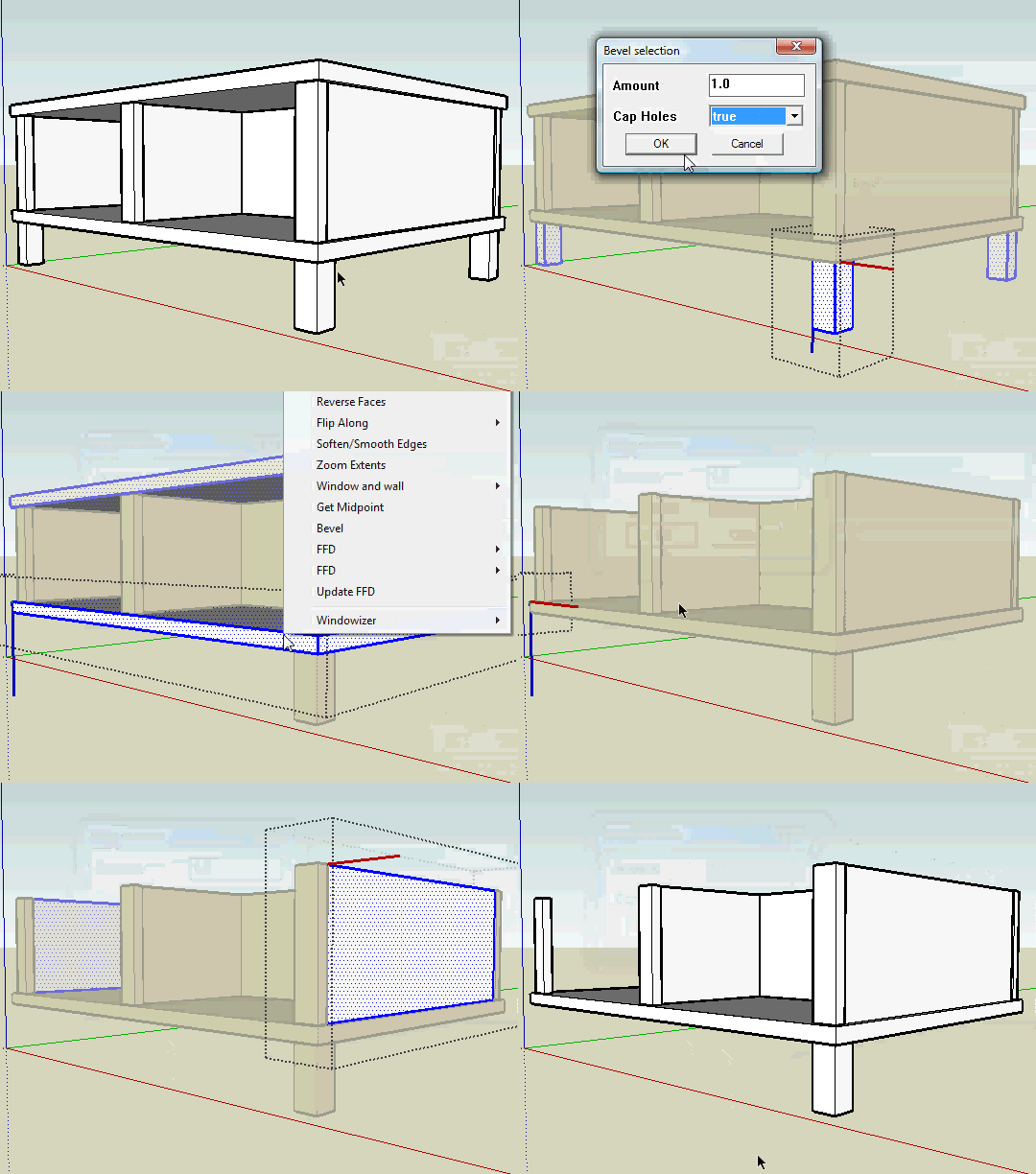
      Actually, a bevelling script would be handy although in many cases it isn't that hard to do manually. As a quick example, you can see it being done on the table top and the shelf in this video clip.

      posted in Developers' Forum
      Dave RD
      Dave R
    • RE: Keyboard toggle for styles menus

      In Version 6 the edge styles you're looking for are under Window>Styles>Edit although the shortcuts are still assigned as if these things are under the View Menu.

      posted in SketchUp Discussions
      Dave RD
      Dave R
    • RE: Router Bit Profiles in Sketchup

      I think the idea of drawing router bit profiles is interesting but I question the value of using precise router bit profiles for profiling the edges of parts in SketchUp. In the context of an entire piece of furniture or other woodworking project, you won't be able to see the difference between an ogee profile made with a Whiteside bit and one made by Stanley 45. It's just my opinion but I think insinuating the profile is enough and keeping it simple is the appropriate approach.

      If you're going to make profiles, keep arcs very light. For example, 3 or 4 segments are probably enough for a roundover. There shouldn't be any difficulty in cleaning up and simplifying imported CAD files. They go pretty fast.

      posted in Woodworking
      Dave RD
      Dave R
    • RE: Router Bit Profiles in Sketchup

      For molding profiles there's also SF Victoriana and Stackis & Morrison. The latter has several SKP collections of interior casings; base moldings, door trim, etc. Osborne Wood Products offers DXF drawings of the table legs bun feet, columns, and other products they sell.

      Lots of sources with just a bit of looking.

      posted in Woodworking
      Dave RD
      Dave R
    • RE: What's Your Favorite Type of Cat?

      Oh yeah. Absolutely

      posted in Corner Bar
      Dave RD
      Dave R
    • RE: What's Your Favorite Type of Cat?

      I knew a Maine Coon. 45 pounds! 😲 He could stand up on his hind legs and reach well above my waist. (I'm 6'1" tall.)

      I like cats but I'm allergic to them so my favorite cat is one that isn't in the room with me. I might not be allergic to tigers though. Hmm....

      posted in Corner Bar
      Dave RD
      Dave R
    • RE: Router Bit Profiles in Sketchup

      While the manufacturers might not give us the profiles, there are profiles out there if you look.

      Here are some common ones in DXF format.

      And a collection of bits from Magnate drawn up by Nick Webb.

      Keep in mind your model is likely to get some bloat using these. You might want to simplify them a little before using them

      posted in Woodworking
      Dave RD
      Dave R
    • 1 / 1