Update.
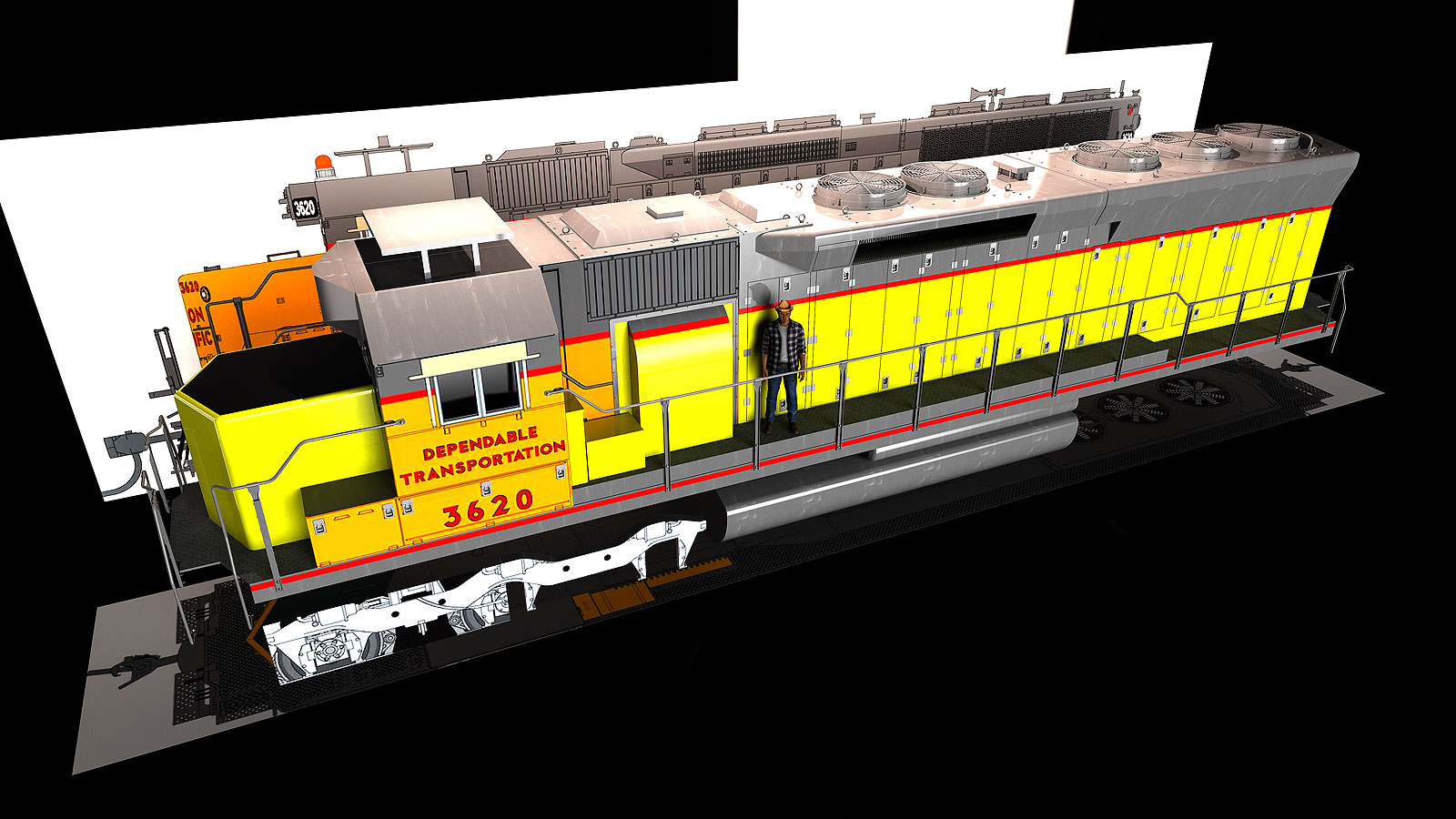
Added dynamic brake fans/exhausts, bolts, panels, panel latches, and panel hinges and misc.
Starting the trucks which is a little complicated. There's also a lot of cables and hoses, brake parts, etc.
 Offline
Update.
Added dynamic brake fans/exhausts, bolts, panels, panel latches, and panel hinges and misc.
Starting the trucks which is a little complicated. There's also a lot of cables and hoses, brake parts, etc.
@rich o brien said:
I think a few years back Massimo had a similar render in Thea. He has such an astute mind for rendering and the dark science behind it.
How are you calculating the power? Eyeballing it? On an old Kerkythea thread there was a discussion about tungsten filament, kelvin values and surface areas. Way above my head but it was super interesting to see people bang heads to recreate physically accurate bulbs in 3D.
I just eyeball it.
Thanks axeonalias. Just some renderings for now. I'm not really skilled in animation yet. Maybe I'll try it in D5 Render.
Started a Union Pacific EMD SD45 locomotive based on a Broadway Limited HO model and various other (growing references). They have some really high quality profile images there. It's possible I can do other railroads but that would require some tweaking since there's no real standard for the SD45 and railroads had them built with different specific requirements.
Nothing really difficult except for I have tendency to get bogged down in minute details which is a hindrance to progress. Perfectionism is an obstacle to art. I still have to finish the neck for the Fender Telecaster.


Some light bulb experiments involving emitters and caustics. The two on the left are a Poliigon model and the others are from 3D Warehouse. I'm working on my own light bulb but that can take an eternity. This is in D5 Render with the modeling done in Sketchup.



Hard to tell what caused it. I did a site plan which was just a quick tracing of an existing site plan and then made the mistake of plotting a PDF in perspective instead of parallel projection and the whole thing was off. A slight perspective view might throw things off. Any little object with a positive or negative z value.
I use flatten.lsp in Autocad to flatten all line work most of the time. This is especially useful when you're drawing over a survey with topography that can be thousands of feet above the ground plane. Even a 3D door will do the same when snapping lines. I'm still old school with Autocad using what's basically a modern version of Autocad 15 and 20 years old. Works great.
Non-planar faces in Sketchup can also create a mess.
Go to Extension Warehouse and search for "Eneroth Flatten to Plane." Use that. Just tested it and it work like a charm.
Try flattening it first. If you look at a side view of the plan in parallel projection you can see that the line work is in different elevations. I use Vertex Tools to flatten but I know there's other techniques which someone else around here can describe. Flatten then put it all back at Z = 0.
Looks real. What kind of renderer and/or post production do you use? There's a duplicate of the lady in the jacket.
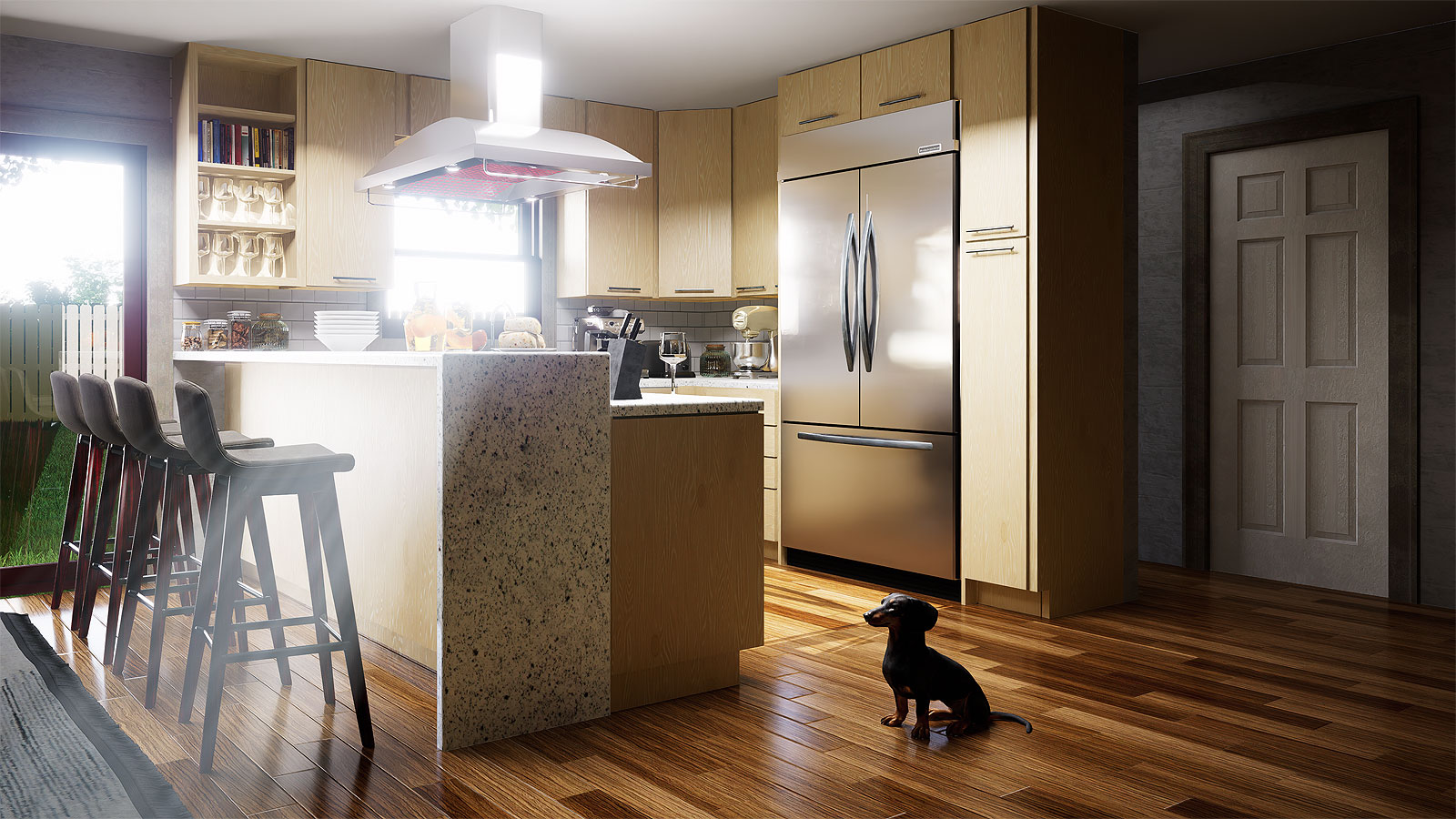
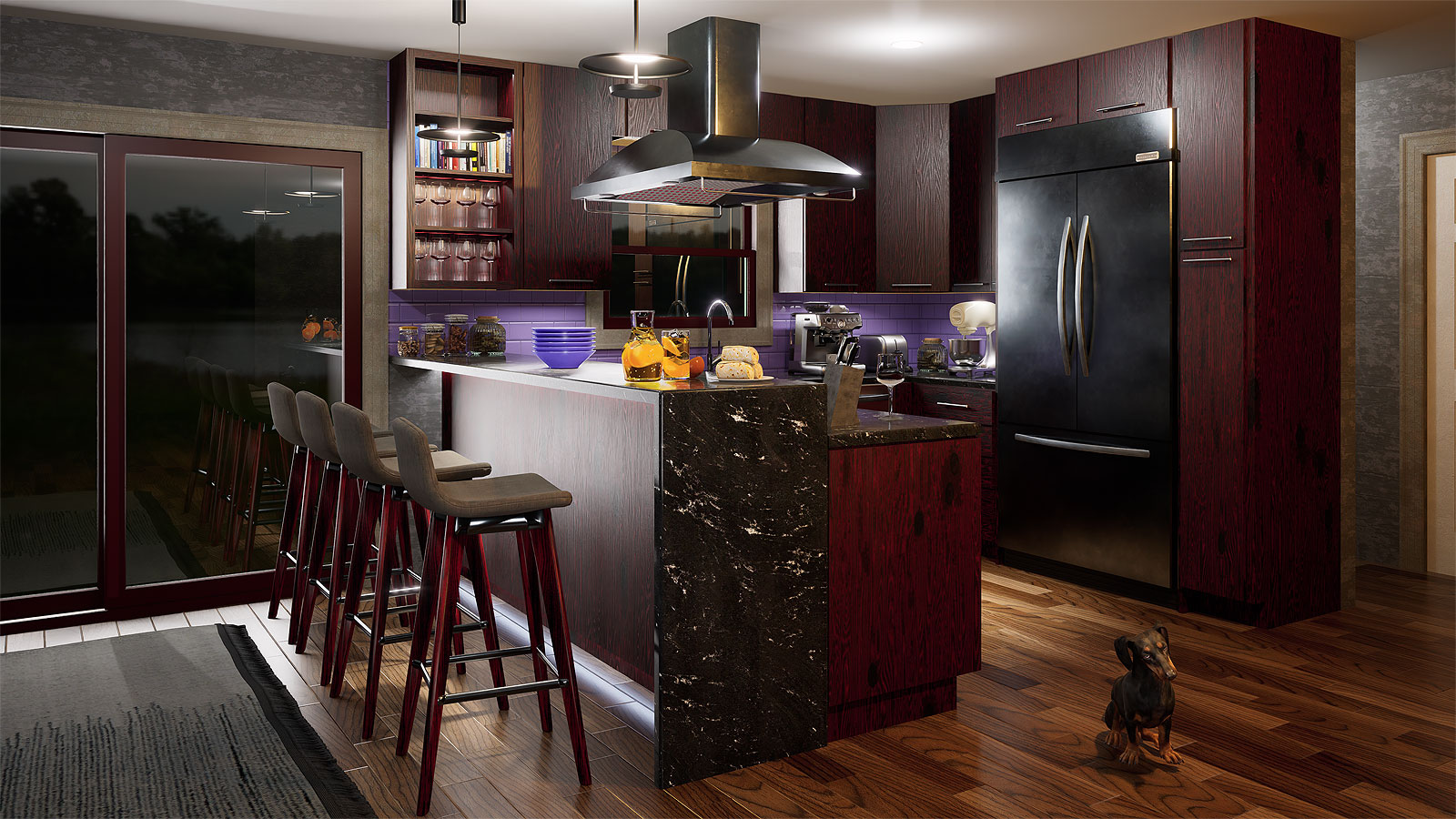
Designed another layout for the kitchen and added more bells and whistles. I rendered this at 8K. It really doesn't take very long.
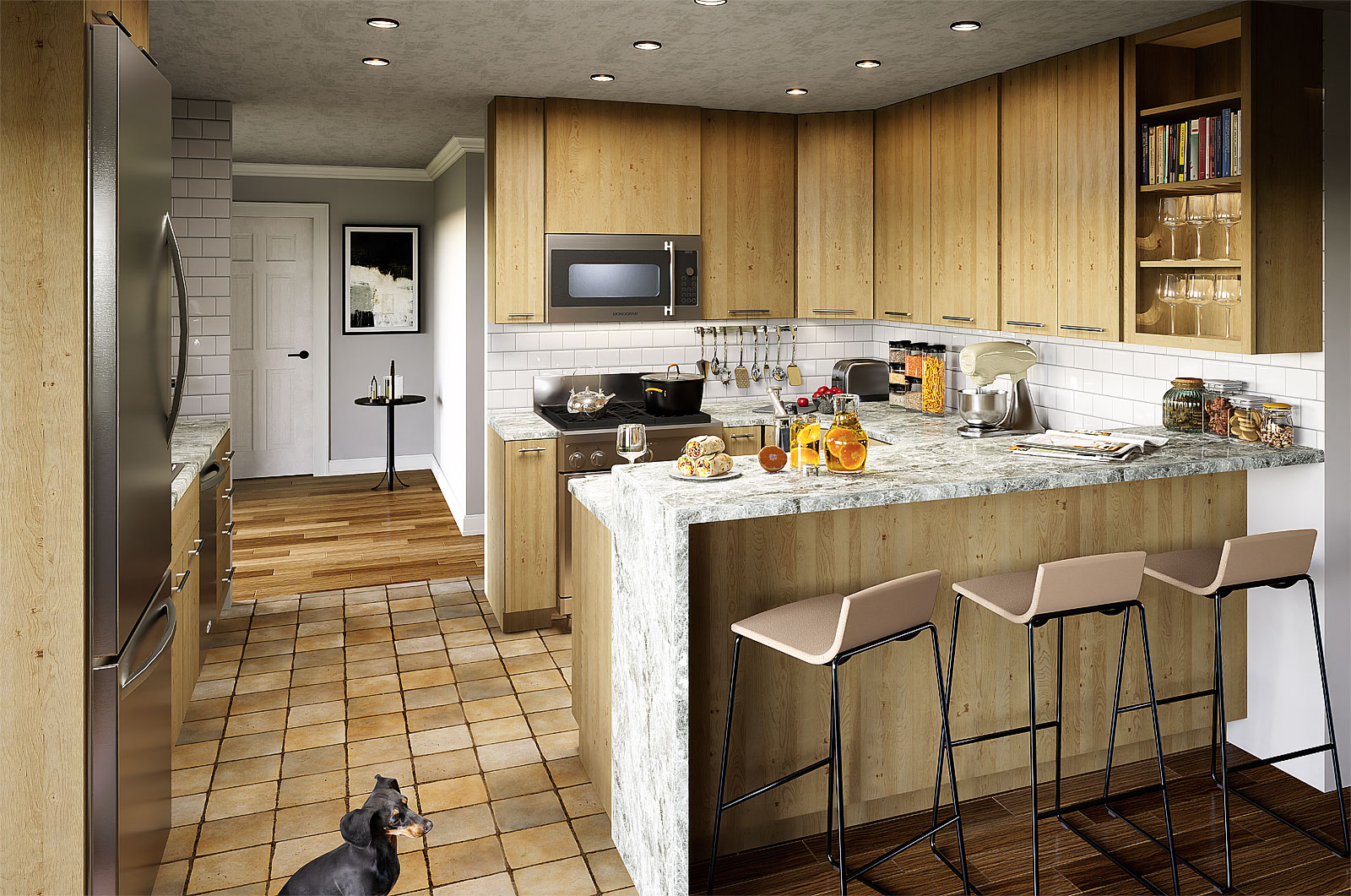
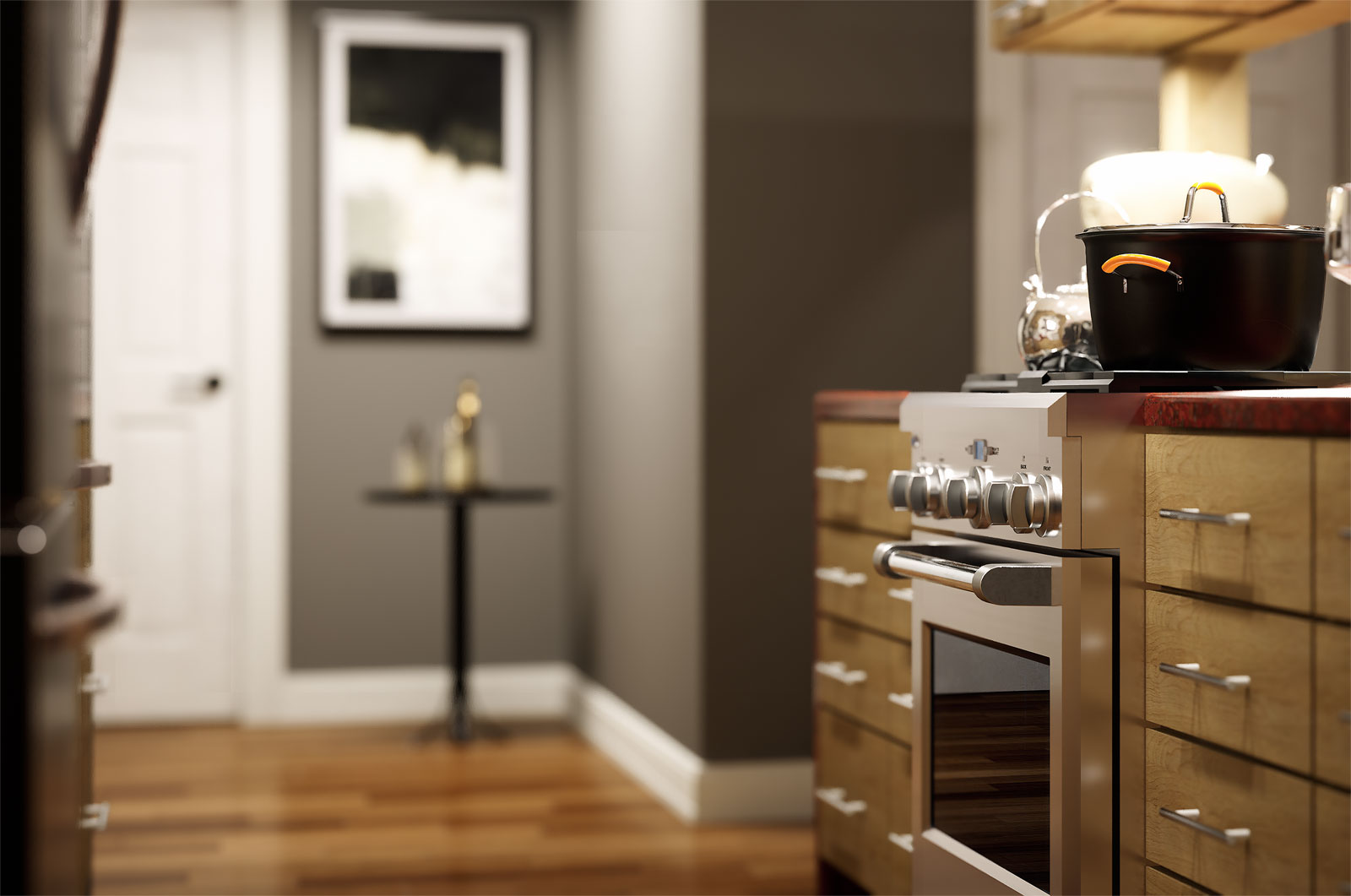
This is a cropped portion of the original 8K rendering which was a png output.

@ntxdave said:
@gus r said:
I knew Thea…… I like the materials editor and how it works with Skatter.
How do you do that. I use Twilight Render which I think is based on Thea and probably has a material editor that is much like I (do no know that for sure).
Twilight doesn't work with Skatter proxies. Don't remember if I tested it with non proxies but I can imagine the geometry would be overwhelming.
Rich, the plates can't budge since it's from their library and I don't know how to edit those. I was thinking about random placement of plates however. Obviously it's a simple fix.
I knew Thea might come up. I'll keep using Thea since it's a different kind of renderer. It has a lot of fine details you can't get in D5 Render and I like the materials editor and how it works with Skatter. I also feel kind of loyal to the original creator. However, they really need to do something about displacement that doesn't require triangulation or dividing surfaces and even then it doesn't work very well.
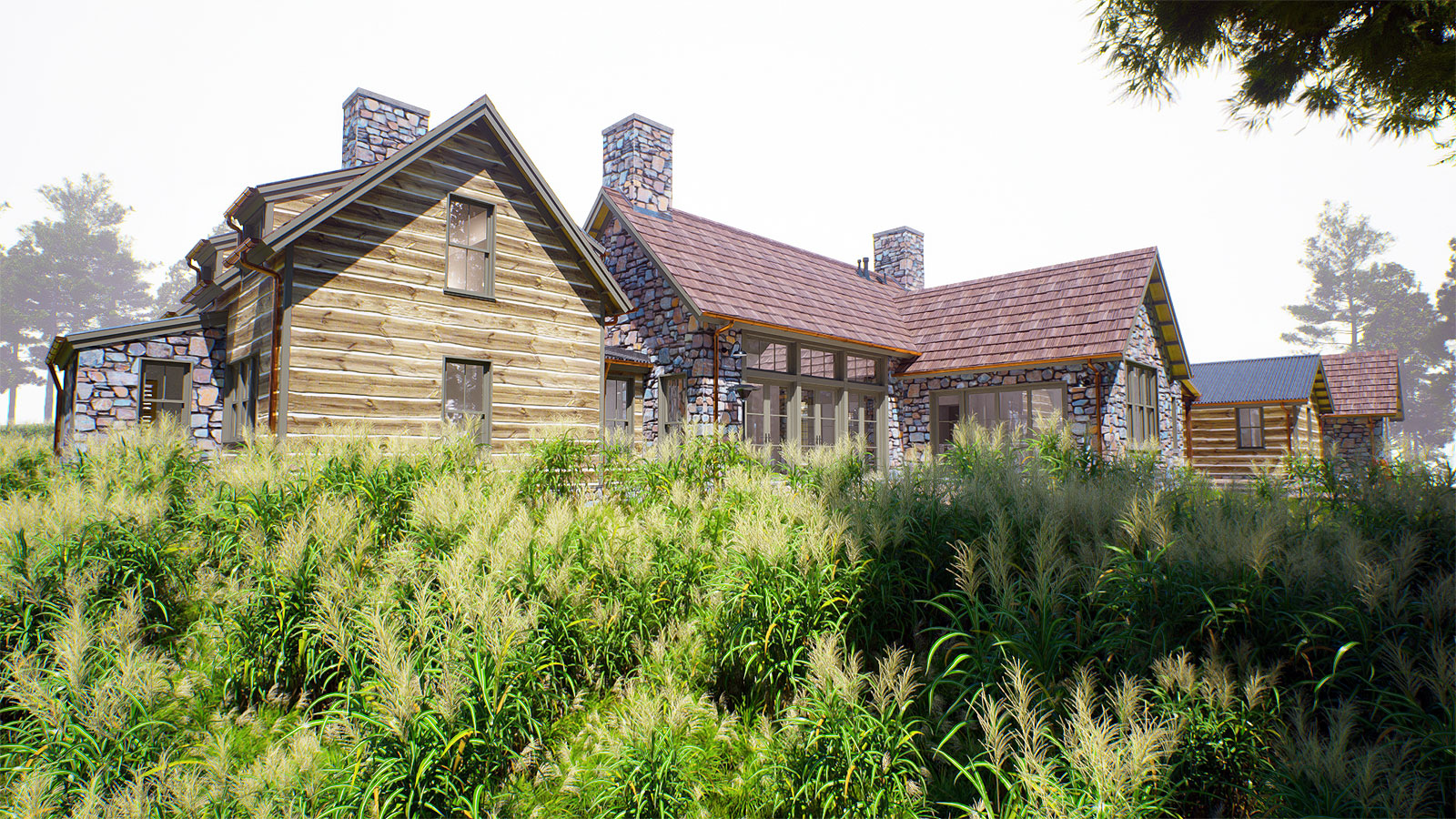
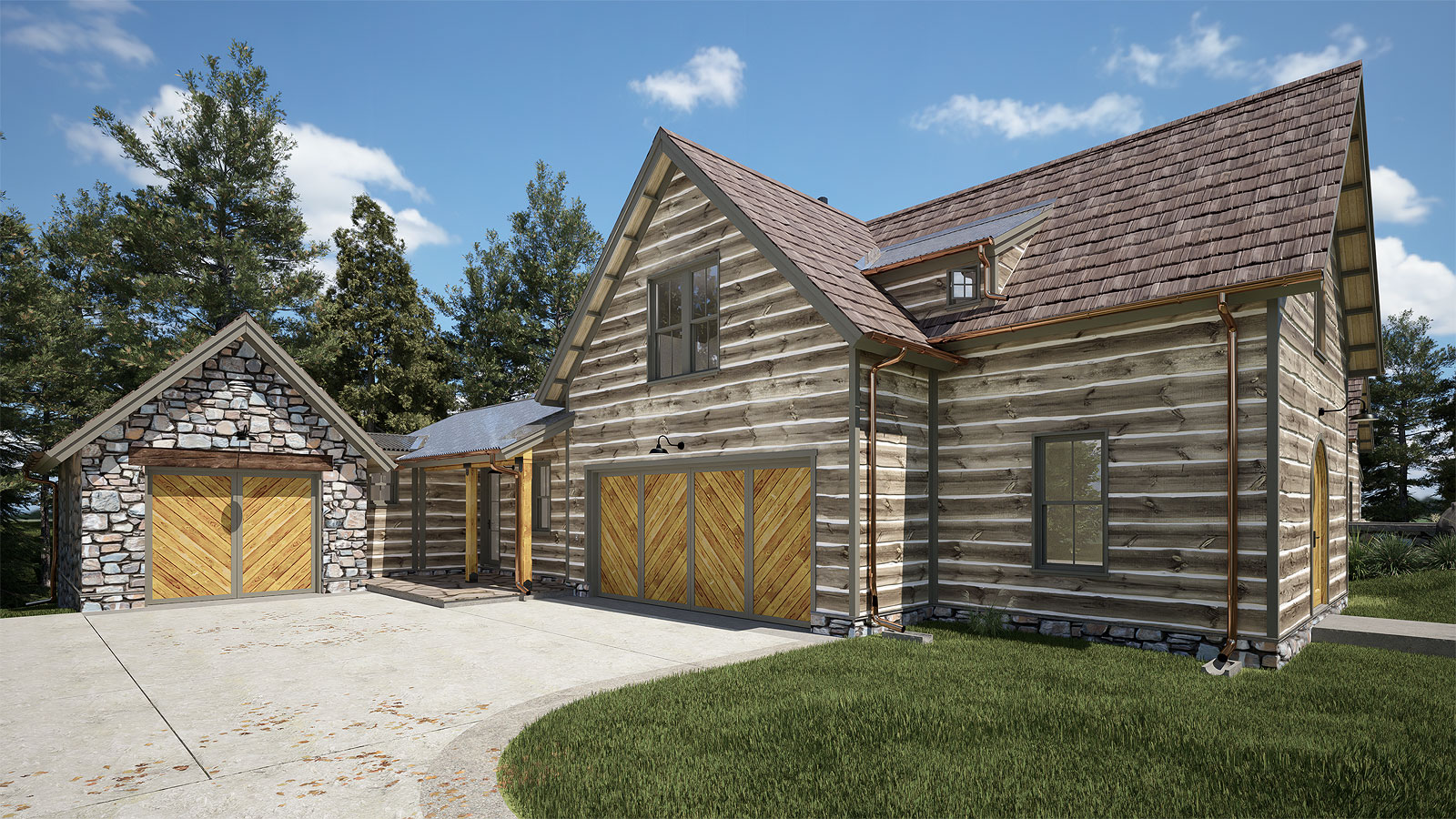
Very nice. What trees are those? I bit the bullet and spent almost $500 on a full package from Vizpark. It was tax deductible. I really like Globe Plants models.
@l i am said:
Your trajectory of your progress with rendering is impressive Gus and you have picked up the absolute importance of good materials
Thanks Liam! Materials are half the battle along with lighting and landscape models. I got the plank material from Poliigon which has great stuff. I also like Ambient CG which has free materials. Poliigon has great stuff and they're about $5 a pop. You can subscribe but I don't need it too often. I had to modify those planks because the client wanted white grout. He also wanted granite and white grout for the stone veneer. Clients think you can find this stuff at the push of a button and you just can't.
PBR materials and especially a good height map really makes a big difference. I started out late with this stuff. Started out with non photo real SU output and Kerkythea and recently Thea Render. Most art like music requires practice and wood shedding.