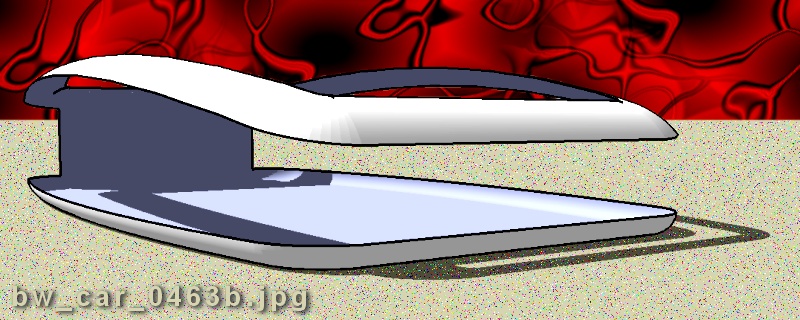
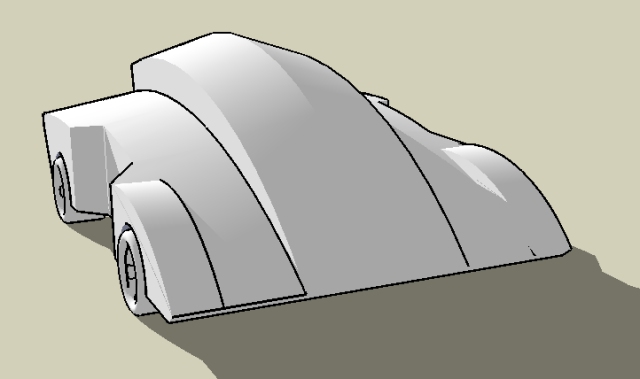
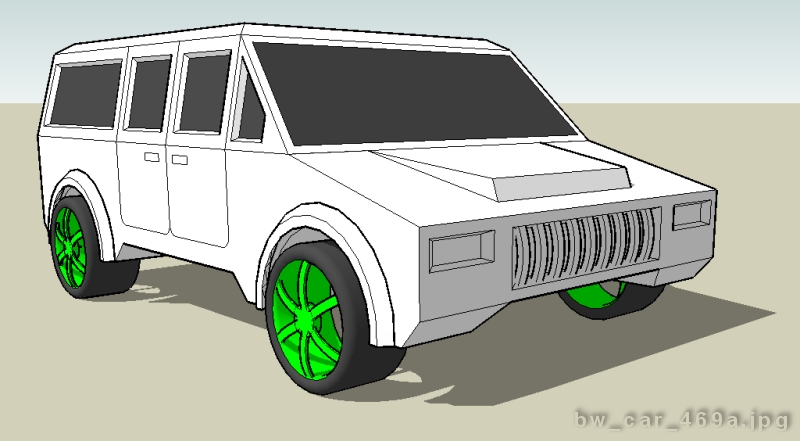
. . . daily fix of SU . . .
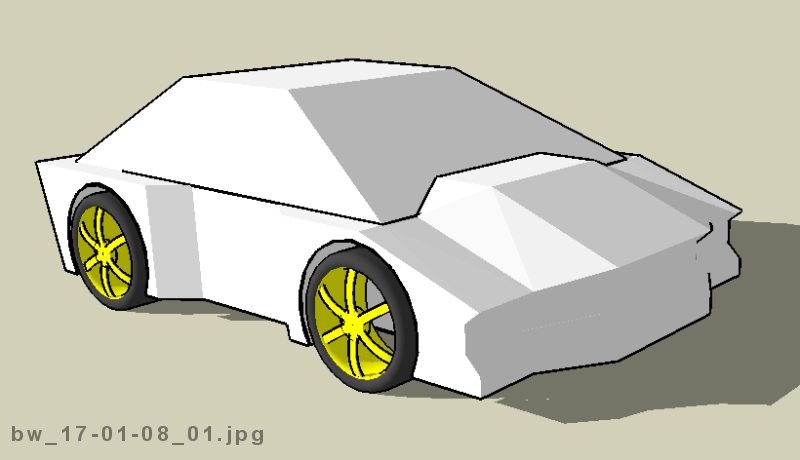
. . . thought I'd try something just a wee bit different . . .
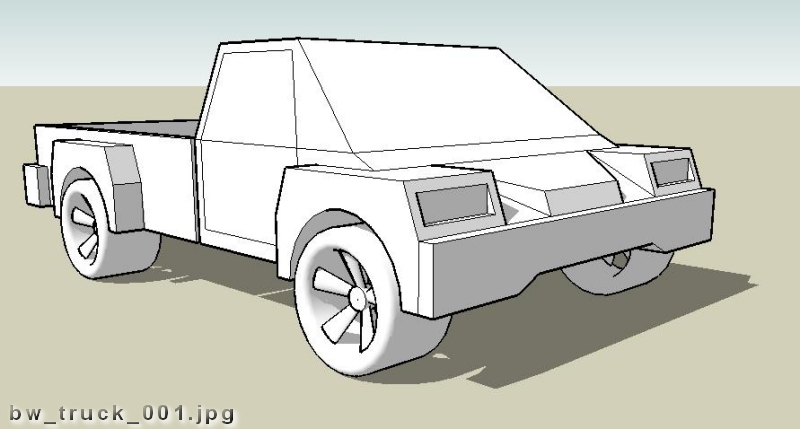
. . . don't like the roof but . . . another good learning experience I guess . . .
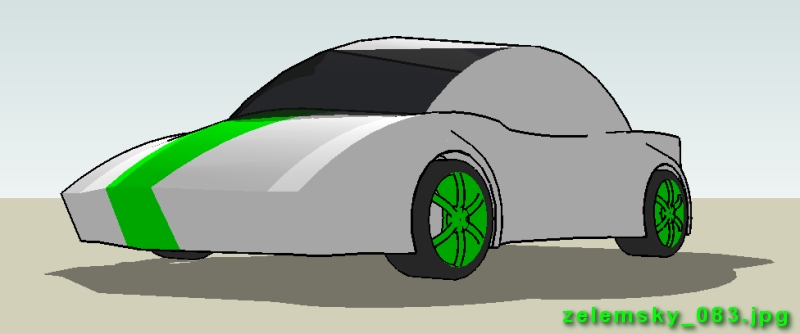
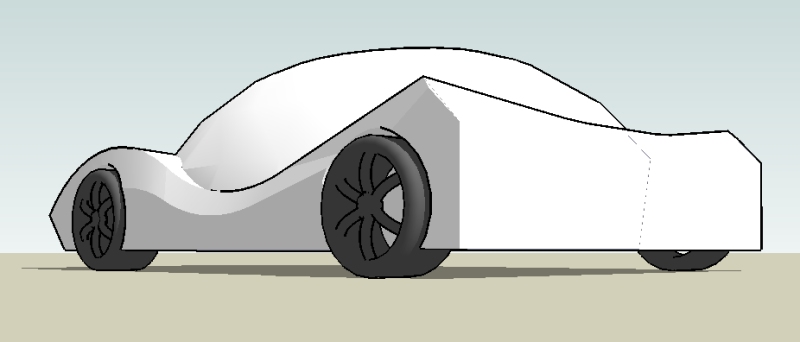
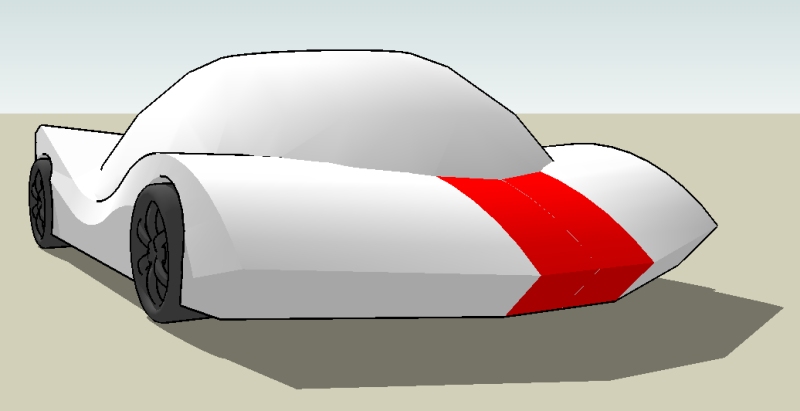
. . . today's car - trying the drape tool (?) which is fun . . .
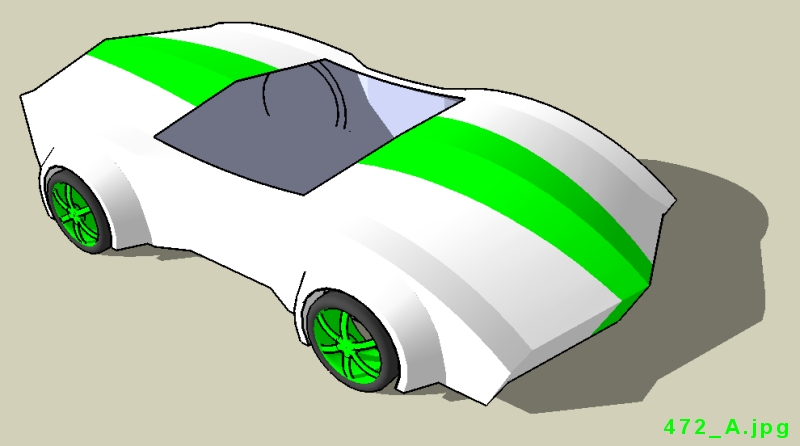
Yes - a good learning experience if they fall off - then the question & learning takes place: What was anticipated, how did it perform, what could have been done better?
. . . more options . . . food to inspire them rather than feed . . .
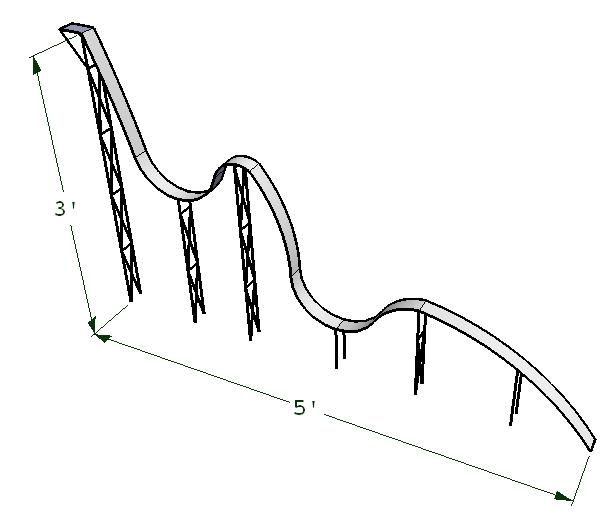
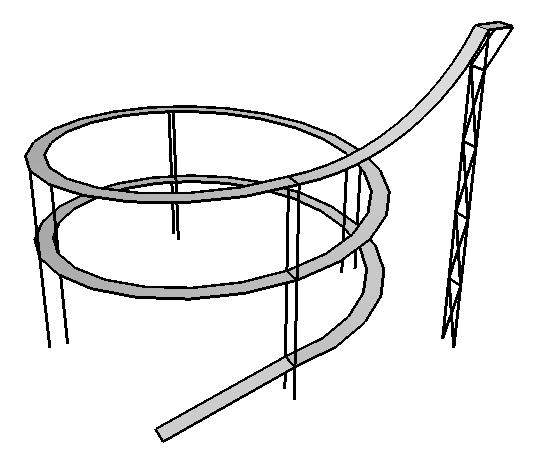
. . . I need a life . . . hard to tell probably, but I'm trying a simple new thing . . . I try to limit my time on these to ten minutes or less (importing wheels) . . .
@unknownuser said:
There are two "drawhelix.rb"s here.
MEGA-THANKS!!! Works great - I updated the loop drawing above.
. . . btw, does anyone know of a Ruby script that easily & reliably creates helical curves . . . ? . . .
Thanks,
Brad
Absolutely! SketchyPhysics will be part of it - I just have to figure out a little more about it. We already began learning about speed - the first of ten lessons which deal with roller coaster physics (attached below - my subscripts and delta symbols aren't displayed here, sorry). This may seem over-simple and ridiculous to be covering such a basic topic in high school, but many are surprised (including myself) how little these folks know about basic math, physics, et cetera:
%(#000080)[Understanding the Physics of Roller Coasters
speed = distance / time
if you travel distance s in a time t, your speed v is
v = s / t
The variable v really stands for velocity
True velocity has a direction associated with it (which speed does not) therefore velocity is a vector. Vectors have both a magnitude and a direction, so with velocity you not only know how fast you’re going, but also in what direction.
Speed is only a magnitude, so it’s represented with a v (not in bold).
v = x / t = (xf – xo) / (tf – to)
= change
xf = final position
xo = origin or starting point
tf = final time
tO = start time
v = average speed (supposed to be a hyphen over the "v" - write that in before printing or find the symbol)]
@unknownuser said:
Do you, dudes, have that in reality (really)???
No, like the Hot Wheels cars on a flexible plastic track - the Hot Wheels cars are pretty small, about 2 inches long?
Hello,
I'm a bit unsure where would be the best forum to post this . . . ?
Anyway, I'm going to give my high school students a project:
I have quickly put together some basic guidelines - surely these rules need to be altered. I wanted them to work in groups of 3. I was thinking of the following time restrictions (because some students would take six months to do this if allowed):
3 hours for creating the preliminary CAD model
4 1/2 hours to build the roller coaster
2 hoursto create the CAD model of what was built
1 hour to evaluate the models and follow up with what's been learned
%(#004080)[The Rules:
1 - Each group may select from one of three different roller coaster designs:
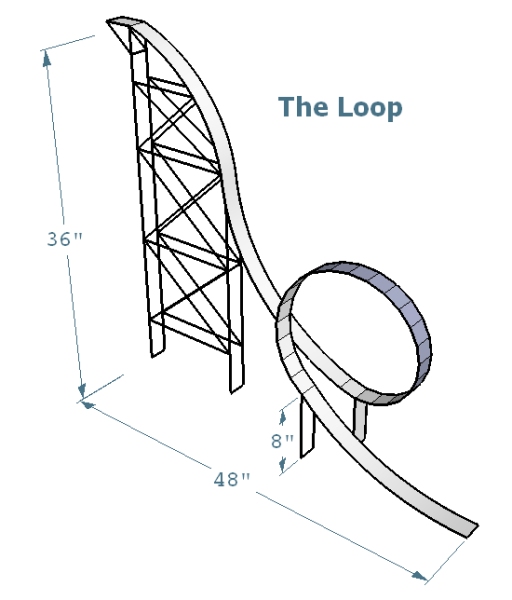
_Looping coaster --> Maximum points = 200/200
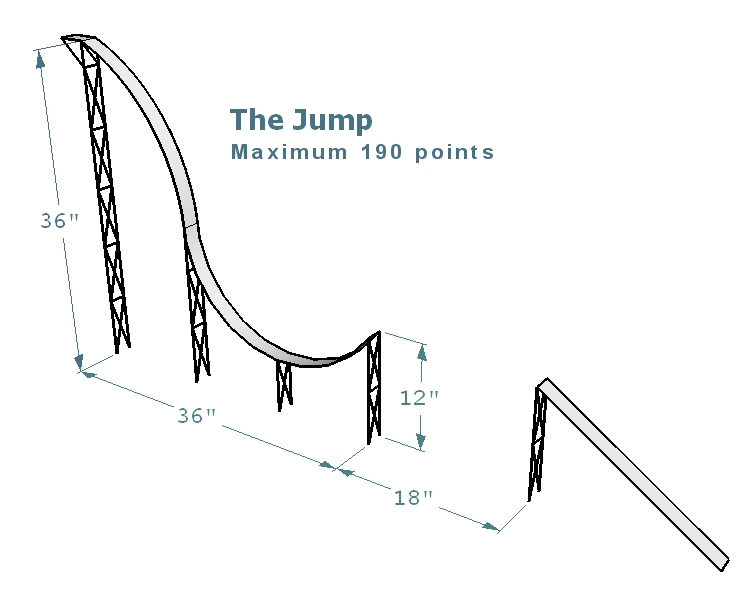
_Jumping coaster --> Maximum points = 190/200
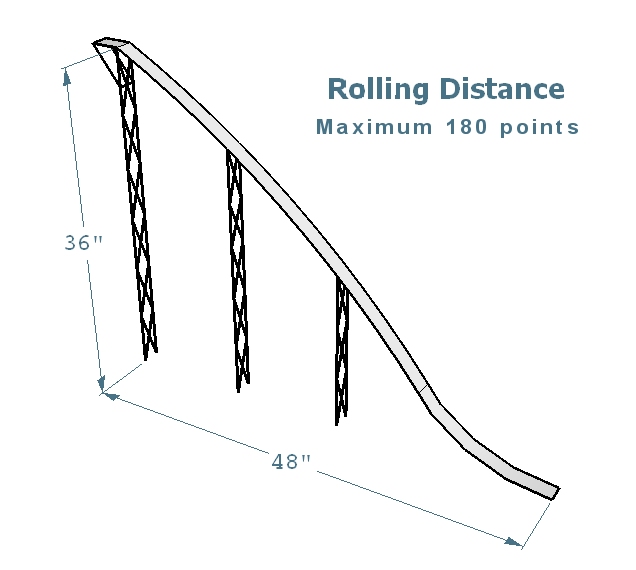
_Distance coaster --> Maximum points = 180/200
2 - Only the car provided by the instructor may be used with this project
3 - Any coaster which is not complete by the time period will receive a percentage grade for construction and CAD modeling - performance grade will equal zero
4 - Each roller coaster must have a 2" x 3" horizontal platform at the top
5 - Each roller coaster must be free standing - two textbooks are allowed
in construction but cannot be glued or damaged in any way
6 - total materials: 20 popsicle sticks, two sheets of ~24" x ~48" 0.22
pink foam insulation, "reasonable" amount of glue sticks
7 - Project is worth from 180 to 200 points:
 7.1 - CAD model of proposed roller coaster = 40 points

 7.2 - Construction of roller coaster =  50 points
Coaster is within dimension guidelines? 20 points
Coaster is freestanding?  20 points
Construction is neat?  10 points
*** Note:  excessive violations of these criteria will result in zero points earned, for example, if the roller coaster was only 20 inches tall the construction points would equal zero.

 7.3 - CAD Model of constructed roller coaster   =   60 points
Accurately includes all parts of coaster?  30 points
Dimensions are correct?  30 points

 7.4 - Roller coaster performance    =  30 to 50 points
_Looping coaster - maximum = 50 performance points
	___Did car remain on the coaster?  20 points
	___Did the car make the loop successfully? 30 points
_Jumping coaster - maximum = 40 performance points
	___Did the car clear the gap and remain on the coaster? --> 40 points
_Distance coaster - maximum = 30 performance points
	___Distance car coasted from end of coaster = 60" --> 30 points
	___Distance car coasted from end of coaster = 48" --> 20 points
	___Distance car coasted from end of coaster = 36" --> 10 points]
The illustrations are simply to convey concept and illustrate dimension constraints - I don't want to give them too many ideas.
Any suggestions for making this a successful project will be most appreciated! 
. . . last one tonight . . . (sound of me snoring) . . .
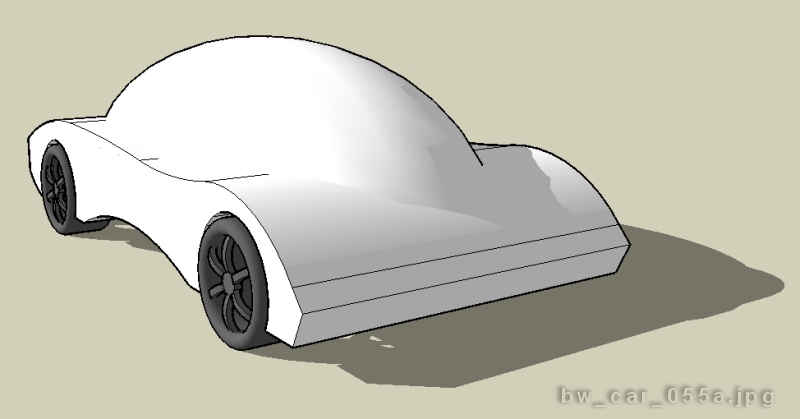
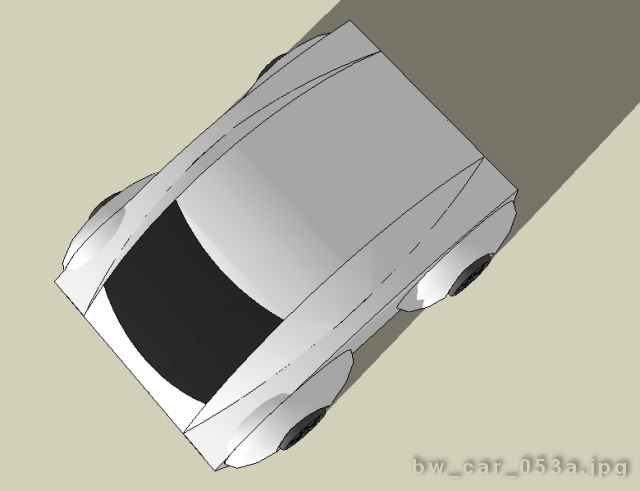
I discovered a new way to do sweeping edges --> roof uses an inverted triangle with the Follow Me tool - I like the way the roof turned out: sloped and curved.
@unknownuser said:
all of that looks amazing! great job!
Thanks but you should see what professionals do - my stuff is very elementary, simple and downright embarrassing when compared to many others.
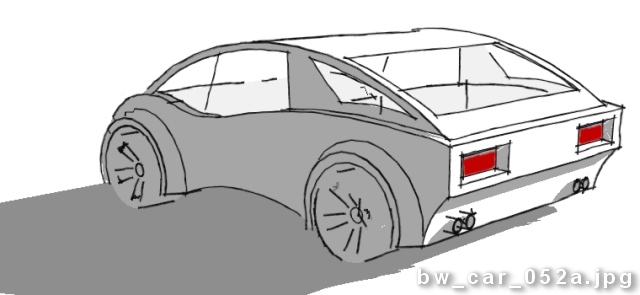
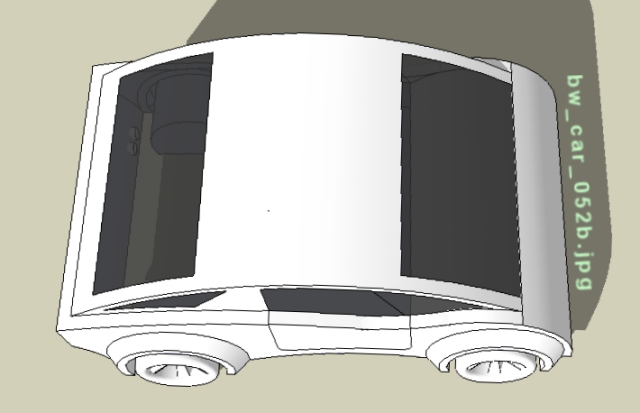
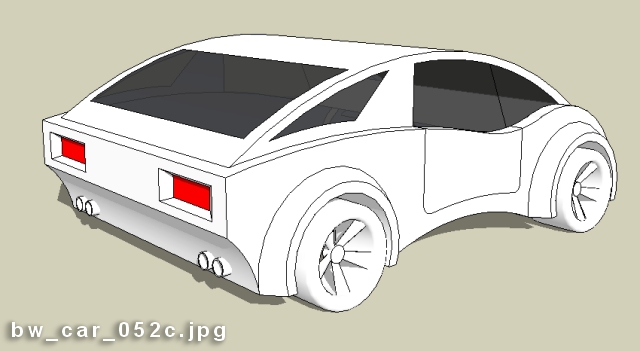
Here's another super quick model - more of the same "boring" technique, but fun and fast . . .
When this happens to me, I do a Zoom Extents and then all's well.
Unfortunately, my vacation comes to an end - this might be my last fun with SketchUp for a while . . . more playing around with some simple shapes . . . I'll try to get some more play time soon . . . thanks for all the encouragement - thanks for being patient with me - I'm slow but I'm happy.
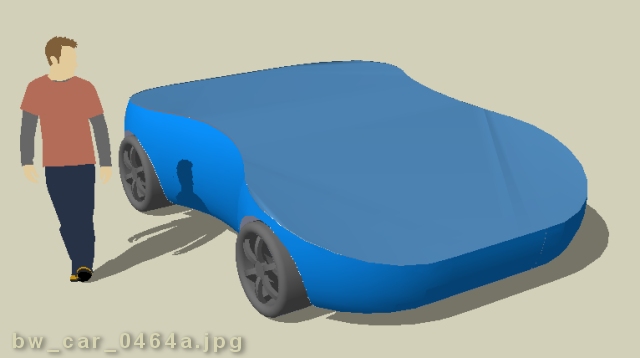
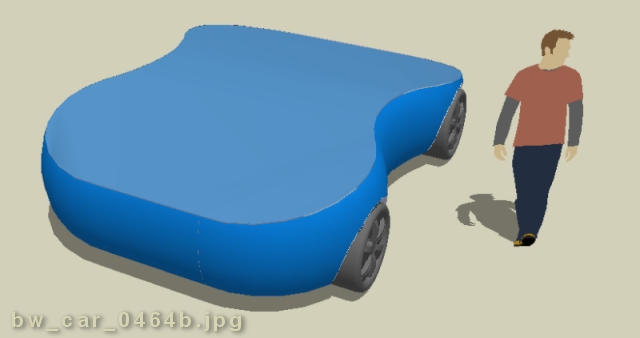
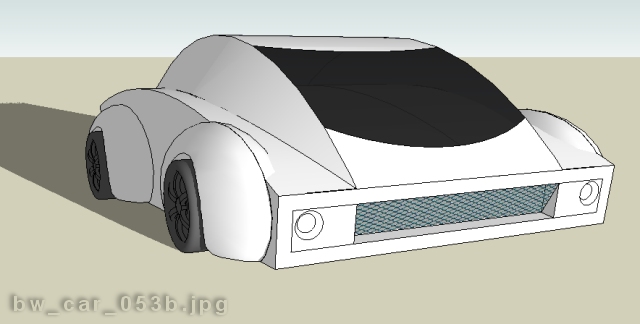
Here's another example of what you can do with the Follow Me tool . . . it's not just for planar (flat) applications, as illustrated in this image . . .