Not an assault rifle or a high capacity magazine, so should still be legal if the gun laws change in the US 

 D
Offline
D
Offline
Not an assault rifle or a high capacity magazine, so should still be legal if the gun laws change in the US
Well, I really think this image is worth the effort, and hope you continue on.
I am sure others, as well as myself, would love to know your workflow on this. What software was involved, and how much is post pro, etc?
Dale
There certainly is nothing wrong with the lap, and as Dave say's with the glues we now use there should be no problem.
However I would like to discuss why I think a shouldered tenon is a stronger joint. This would be and end grain to side grain joint, which is stronger than an end grain to end grain joint, but weaker than a side grain to side grain joint.
An end grain to side grain joint is quite strong in compression and tension. It's weakness lies under racking stresses. This is where a (well executed) shouldered tenon comes in and supplies the mechanical advantages needed to not allow the joint to rack.
On the other hand the 1/2 lap, although essentially a side grain to side grain joint except that in this situation the grains are running perpendicular to each other. According to my Hero Bruce Hoadley..."The conflict between dimensional change along the grain and across the grain (especially where tangential opposes longitudinal direction) may become more important than the stress/strength of the original joint. The potential self destructiveness of such joints should always be anticipated"
This is extreme, and most likely will not take place in the joint of the trestle table, but what may take place is the differences in the way the woods dimensional properties change in response to changing moisture conditions, may cause the joint to open up slightly because the legs will shrink more "across" their grain, than the feet will "along" their grain.
Sorry, don't want to take this too far sideways, but my cabinet making teacher, my father, pounded stuff like this into me.
I agree Andy, the more faces in a glue joint the stronger the joint. So if the mortise is shouldered, you have a potential 9 faces.
James
I will certainly be following your posts, as this is a really refreshing use of SketchUp.
I do have a critique though..
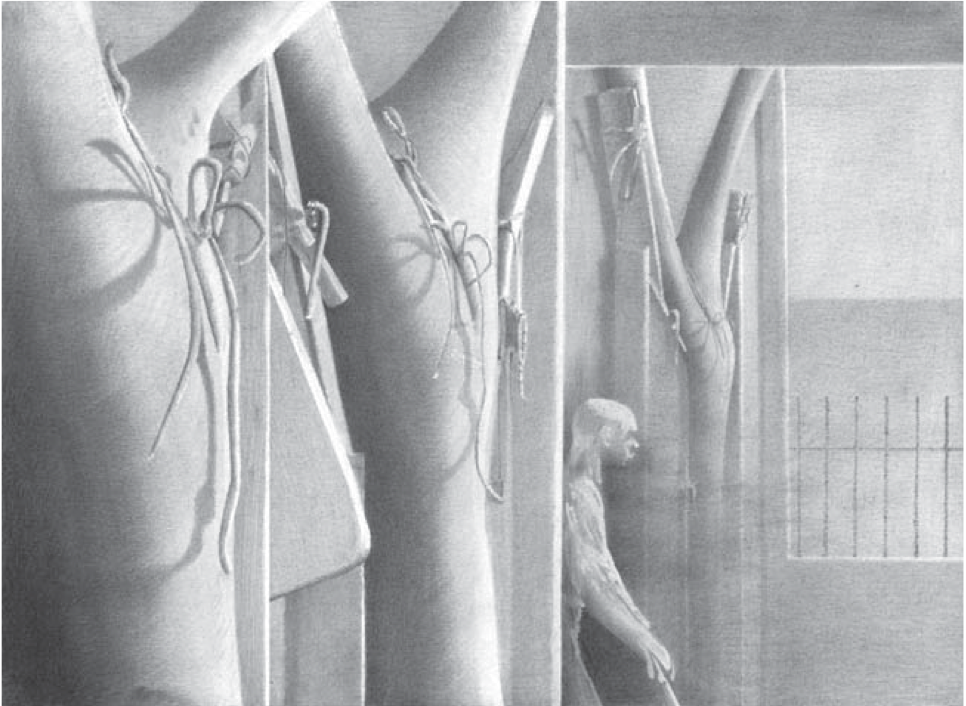
You have an image that can only, I feel, be discussed on its artistic merit, since the personal interpretation of the subject matter, is the essence of the work.
Artistically, you have created something with an almost Escher-ist flatness to it. In itself this is a really interesting "perspective". But because of the amount and complexity of the objects, (and within this flat terrain), I find my eye with not enough contrast, and this makes my eye 'skitterish", searching in the work for something to anchor it.
I feel therefore you need to devise a way to express to me what it is you would like me to take away from this image.
I recall a quote, and I cannot remember by whom, that " in regards to materials and sense, the artist can only do what structure allows".
If you could provoke mood, I keep wanting to say with the likes of chiaroscuro in its most literal sense, which is disambiguation, I think you could take this image from really good, to absolutely beautiful.
It will take a light and thoughtful touch though.
Any way, thanks for doing what art does best, stimulating my senses.
Cheers
Whenever I think of a trestle table, I always think of their ability to be knocked down.
You could do a real elegant job of this on this table by having the darker wood on the end of your stretcher mortised over the "v" legs. If the mortise were angled to match the "v", then as you pushed it down it would lock the legs in. Holes in both the stretcher end, and the leg could have pegs, and would really lock the them, particularly if the leg hole was slightly offset lower than a snug fitting stretcher.
Nice piece.
Claire, what a beautiful name. Congratulations for all the joy she will bring you.
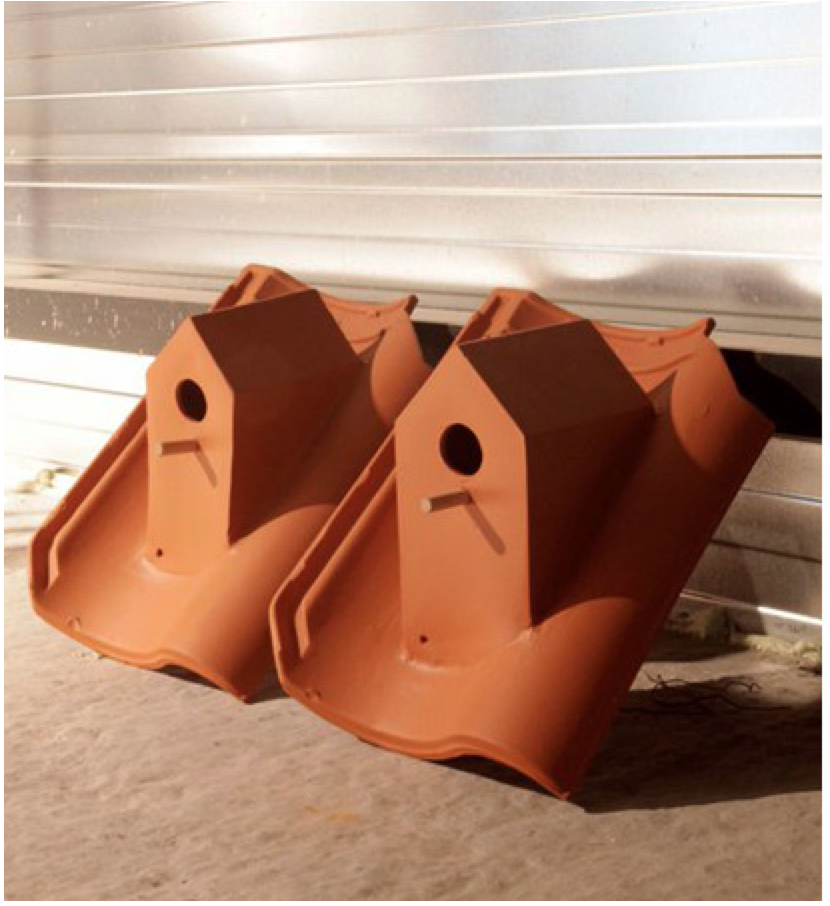
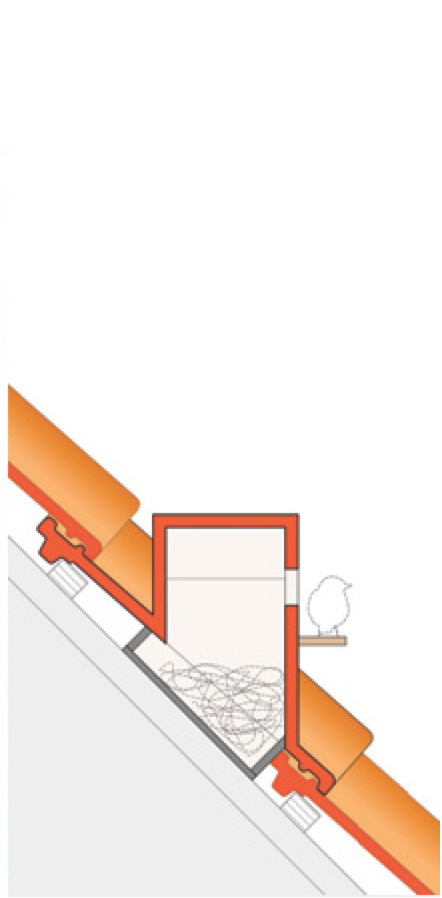
Well some designs are for the birds, and Baba Yaga's house did have bird feet.
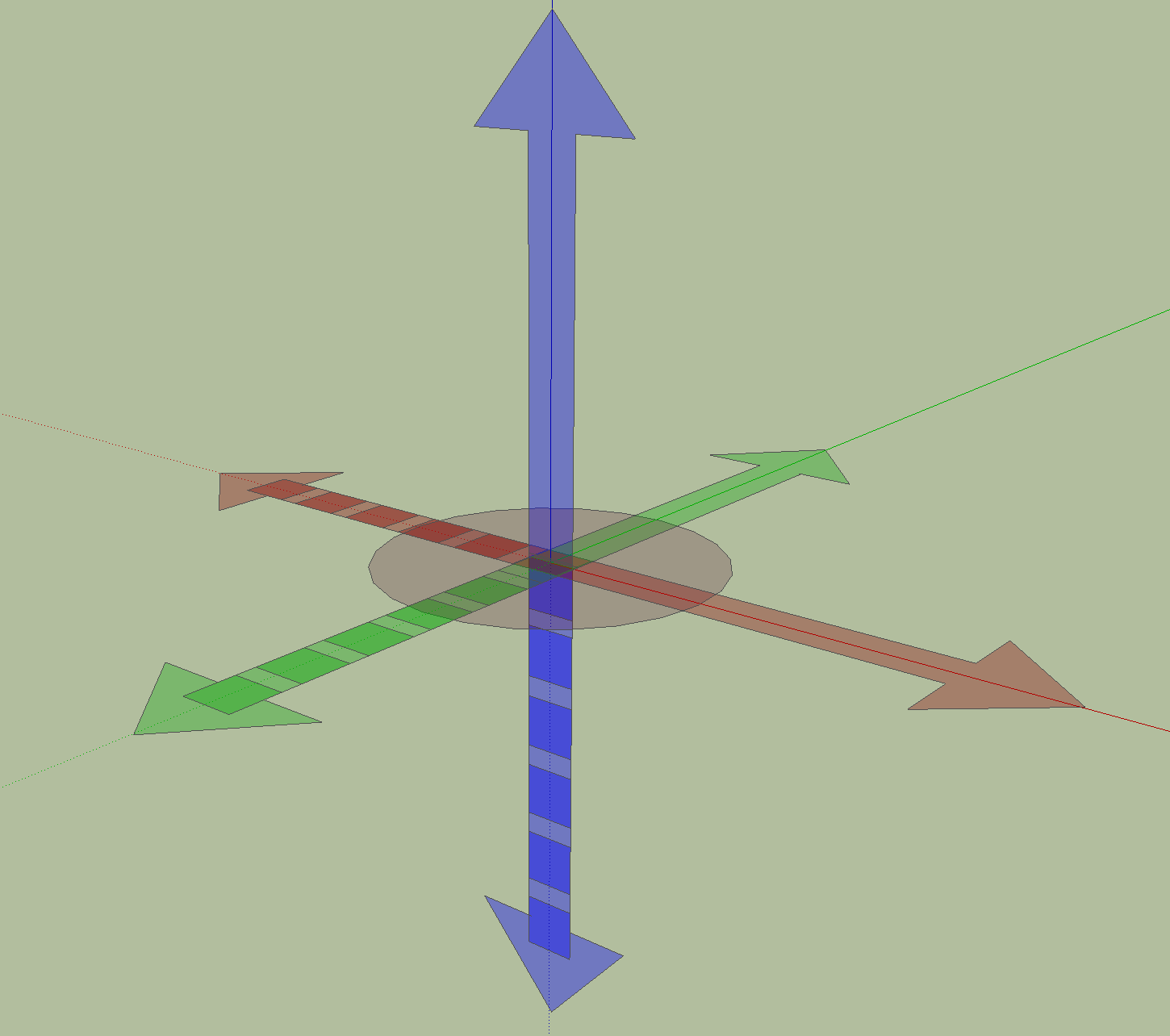
It is actually built in already although hard to see. If you look closely at the axes, you will see that on one side of the origin the line is dotted, and on the other it is solid.
Solid red - East
Dotted Red - West
Solid Green - North
Dotted Green - South
And of course the blue is obvious.
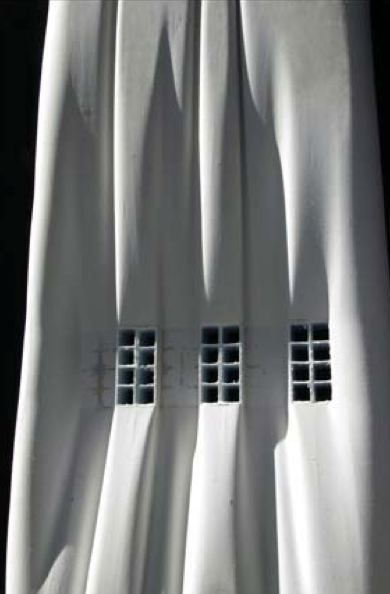
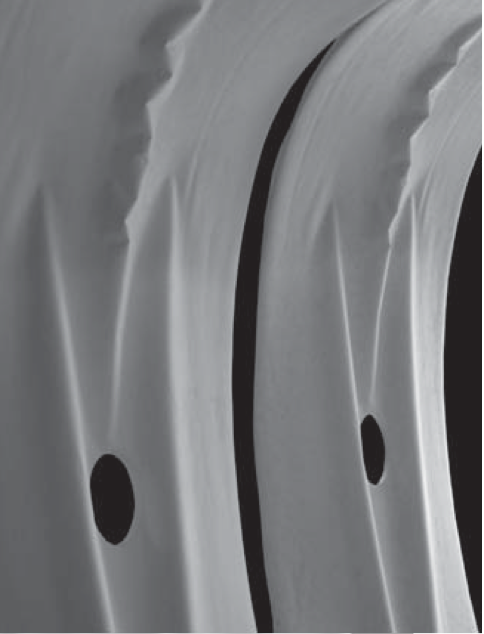
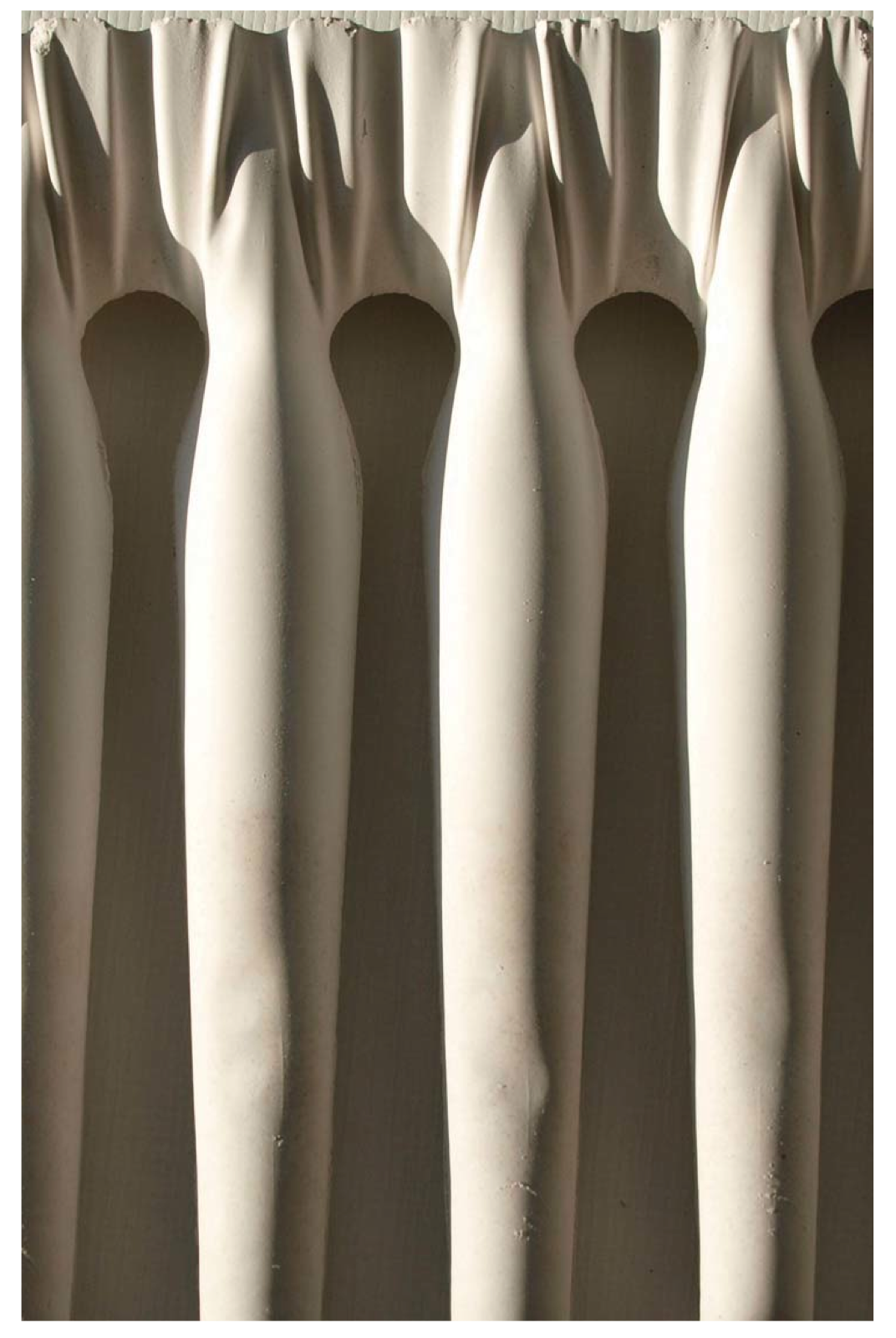
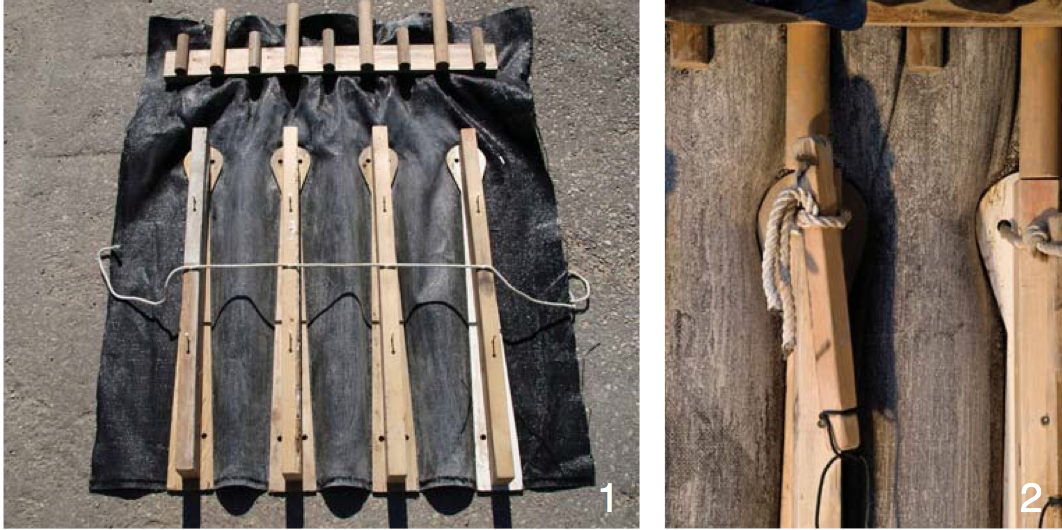
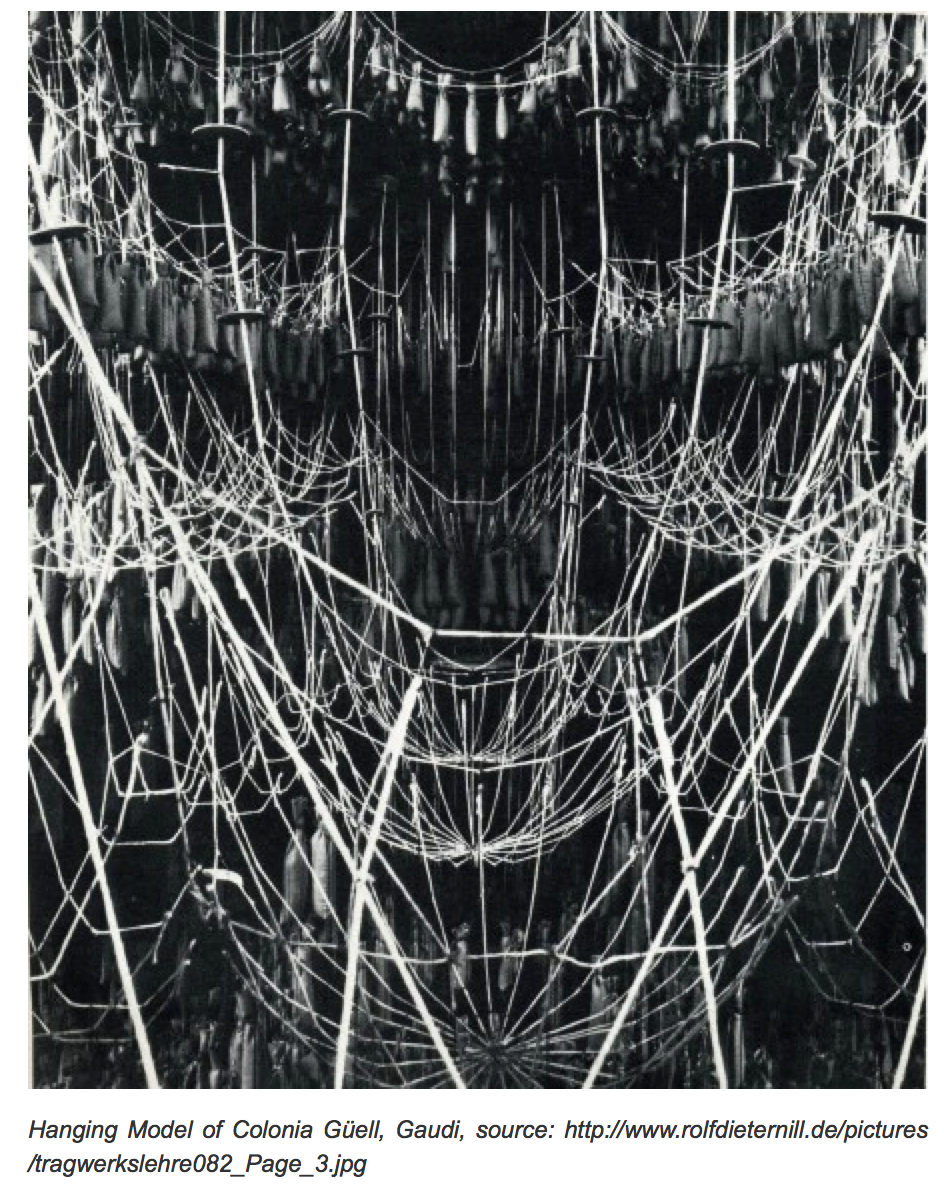
Ah Yes Gaudi.
Here is a photo of one of his string models. I read somewhere once that the models were 1:10 scale, and the weight placed on the strings was 1/10,000 the load they would carry.
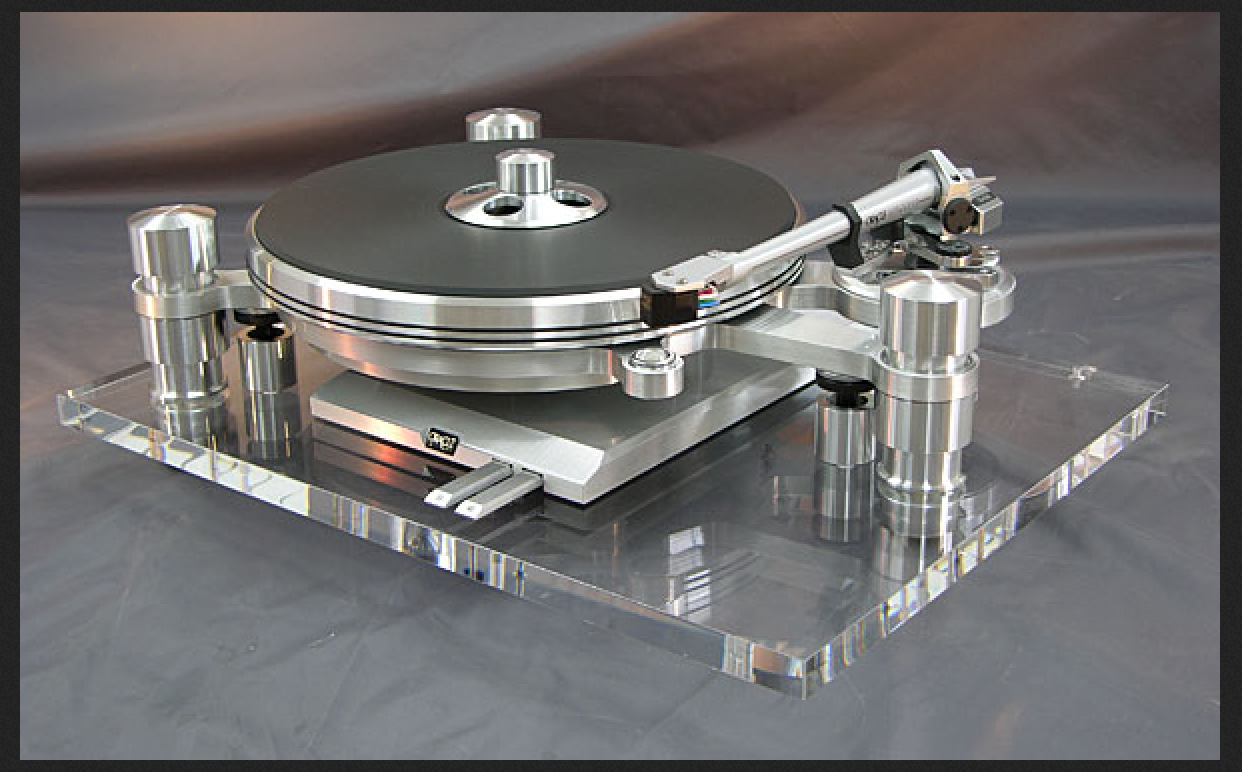
That's perfect. Now I really do want to spin some vinyl.
Got any Ideas for speakers?
Making me wish I didn't give up vinyl!
Oracle Delphi Mk VI
http://www.oracle-audio.com/?action=produit_show&id=1
I just love it when I see someone spend the time to create this level of detail. It also looks like it really fits the house. Great work.
As opposed to the neighbors...
@driven said:
hi,
I just did a test, which seems to work,
Don't use the line tool... at all.
I rotated your car onto the ground plane, and 'locked' it.
drew a circle roughly around the side view, exploded the edges, hid the face, and used scale to get an oval.
then using move tool, I roughed out the outline. when iI needed more points , I selected the nearest line and divided it.
once it was OK (for a test), I unhid the face and used paint dropper to paint the image on, the grouped that profile,While still 'unhidden' I made a second circle 'on-face', exploded it's edges, hid it's face , then hid the 'first profile' while I worked on the second 'detail', once done, I 'cut/pasted' it into the 'first profile' and the lines are all 'on plane'.
I hadn't tried this way before but found it really quite quick and fun... just don't 'pre-select anything before using move... and I'd probably leave the details grouped inside the 'first profile' until the end if doing it for real...
worth a try???
john
Sure this may work, but the chickens foot is way more fun.
Seriously, I'm paying special attention to this, cause I thought it was just me. 
Woah, is that a 59 Impala?