Super! 
Oops, your profile's looking a bit empty! To help us tailor your experience, please fill in key details like your SketchUp version, skill level, operating system, and more. Update and save your info on your profile page today!
Check out Febhouse | New extensions for Shadow Analysis in SketchUp Download
C
Offline
Posts
-
RE: Do humans have a free will?
@unknownuser said:
- Chango wrote:
“…the price of consistence is DOGMA (Bible quoting by our very own Cornel is one fine example).”
No, Chango,
it’s not a “dogma”, it’s just a ‘habit’. To be dogmatic, I have to be characterized by an authoritative, arrogant assertion of unproved or unprovable principles. I use The Word of God because it’s proved, trusted and unghangeable.
How are your words, Chango?! Tomorrow, with conventional large smile you are able to tell me: sorry Cornel, I changed my mind…!- Chango wrote:
“Jesus was the original non-conformist. A social revolutionary not willing to accept the status quo. This fact seem to be lost on the Christian Church who became the status quo. Cornel don't let some silly deciple of Jesus cloud your judgement about him. Ignore what they SAY look at what Jesus DID in his life. Its not hard to see he is closer to Che Guevara than the Pope.”
My questions: A) What was wrong in Jesus life?! B) Jesus must be closer to the Pope or vice-versa?!
- …because I ‘said’before:
“. Regarding Karen Armstrong she's superficial and tendentious! Her religious Books and speeches are ‘perfumed’ and loaded with traditionalism, ethics, and ecumenism. It’s a masked socialism, widely used in the strategy of globalization.”
Chango wrote:
“ Mike, Karen Armstrong is a fantastic scholar on World religion. I read her seminal book on Islam and She is able to contextualize origins of the religion without expressly making judgement better than anyone else I've come across …”Chango,
I read a lot, during many decenniums, about religion and philosophy. I recommend you to study complete works of at least an author sach as Mircea Eliade (thirty years as director of History of Religions department at the University of Chicago). Behold a partial list of his works:The Quest: History and Meaning in Religion;
A History of Religious Ideas, vol. I, From the Stone Age to the Eleusinian Mysteries;
A History of Religious Ideas, vol. II, From Gautama Buddha to the Triumph of Christianity;
The History of Religious Ideas, vol. III, From Muhammad to the Age of the Reforms;
Encyclopedia of Religion (seventeen volumes)
Patterns in Comparative Religion;
The Sacred and the Profane: The Nature of Religion;
Myths, Dreams and Mysteries: the Encounter between Contemporary Faiths and Archaic Realities;
Images and Symbols: Studies in Religious Symbolism;
Shamanism: Archaic Techniques of Ecstasy;Cornel
LOL Cornel here is a definition on dagma:
"Dogma (the plural is either dogmata or dogmas, Greek δόγμα, plural δόγματα) is the established belief or doctrine held by a religion, ideology or any kind of organization, thought to be authoritative and not to be disputed, doubted or diverged from."
That, I am affraid in my humble opinion is how your arguments tend to come across as the definition stated above. Do you dispute the fact that you think the Bible is authoritative?
-
Plenty of things were wrong in Jesus's life time, foreign occupation, social and political injustice, marginalisation of whole sector of society, corruption, misuse of power to name just a few.
-
Karen Armstrong may not be the most immaculate scholar on religion but her semi-insider status allows her to bridge the critical gap between academic theology and popular understanding. I don't have time for someone like Mircea Eliade because ultimately religion doesn't interest me that much. However that is not to say I don't appreciate the effort and scholarcism that went into such undertaking as the list you mentioned.
I have full respect to scholars such as Mircea Eliade and have come across Patterns in Comparative Religion in my reading (he is one of the founders of comparative Religious study). From you utterances I find it difficult to believe that you have read his body of work, infact any of it. In order to carry out any scholastic endeavour one need to have certain 'critical disjunction' from the subject matter at hand. Even the titles suggest a pan-historic and BROAD scope in his studies on religions and identification of common patterns in world religions. Your utterance betray an extremely narrow focus which anyone with knowledge endowed by reading someone like Mircea Eliad would not behave. One other thing. Many of Mircea Eliad's writing are quite out of date. Our understanding of world religions have moved a long way since 1950s in the days of anthropologists like Evans-Prichard used to rule the roost.
- Chango wrote:
-
RE: Do humans have a free will?
@mike lucey said:
“To be is to do”–Socrates.
“To do is to be”–Jean-Paul Sartre.
“Do be do be do”–Frank Sinatra.


-
RE: Do humans have a free will?
@plot-paris said:
wow, this thread progresses fast (took me the best part of an hour to catch up this morning
 )
)Chango: I have to thank you. two of your posts, firstly your clarification about your understanding of religion and secondly the excerpt of wikipedia's definition of "free will" were illuminating.
to describe your idea of religion in other words:
it is a way for us humans to comprehend the non-linear workings of the world with our linear minds. so basically it is like Vray - a biased renderer makes it possible to render an image faster than an unbiased render engine. and for our brain is not fast enough for unbiased, an engine like Vray (religion/philosophy) is a great solution. that means, it can help us getting a better image output with the hardware available and therefore can be a positive thing.the example of a chess game to understand the illusion of a free will, that arises when you create an 'unlimited'(too much for our comprehension) number possibilities with a limited set of rules, was very helpful and the final piece I needed to to understand.
thank very much again. at last I got a satisfying answer (and more important: explanation!) for the initial question of this thread!
I am really flattered that you find my thoughts useful. Interesting analogy with Vray! (very imaginative!) I do however think that Vray analogy is probably better applied to the scientific methodology as they are both mathematical models that can create approximations of the real world. Just like algorithms get better, so can scientific theory. Religion on the other hand, to expound from your analogy would be more like impressionist paintings. Impressionism doesn't hold accurate rendering of the world as a priority. It is an AESTHETIC INTERPRETATION of the world that creates it's own self-consistent value system of what is good or bad. Better impressionist painting is not dependent on creating more fedelity. To use a concept from system theory it would be described as a 'closed system' with and endogenous set of rules. Religion is not so different in this respect. I like to think of religion as an aesthetic and ontological interpretation of the world that doesn't really have much to offer when it comes to explaining the real world (material world where things obey rules) but has tremendous value when it comes to personal worlds (psychological).
-
RE: 1920s High School Auditorium Renovation
Wow I love the last one! Fantastic work!
-
RE: Do humans have a free will?
@unknownuser said:
Twisted definition Chango. Does it really have to be that complicated?
I can still understand it although it is in English and uses words I don't even use in my native language.
Let me try to simplify your definition - when I make a decision and think it is my own, it is just an option from multiple possibilities, which are limited? In your opinion, we just have an illusion of making a choice, in reality it is 'just' an option. It is what was a discussion in 'Matrix' between Neo and Architect, isn't it?I haven't read about determinism, but from what you have written, it doesn't bother me if the options are limited or not. Still decision is mine. All right, it can be somehow evaluated. You could easily predict what my choice would be, in a certain discussion, based on what you already know about me. I doesn't matter for me and it doesn't mean your prediction would be correct. Am I reading your definition right?
Is it not a false path, trying to enclose our behavior in very rigid frames? I bet in reality they can be broken, although do not expect a prove from me.
Like in 'The Matrix' Love can escape all probabilities, in the way it was not expected by the architect.
I think, in the same way, we can just predict what is happening at a subatomic level, while the Love can make it work as it wants. Changing a water into a wine, in this light, it is just a simple trick.
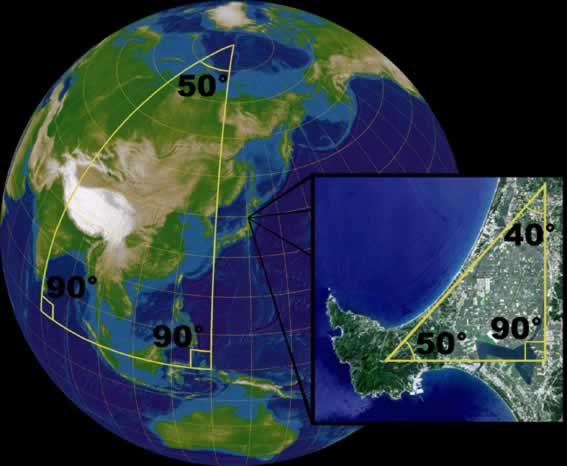
'Free Will' kinda reminds of the manifold where locally each point might resemble Euclidian geometry (i.e. 90 degree right angles) however the global structure can vary. Like on the globe if you draw a line 90 degree from the equator north then they meet with 50 degrees. The local behaviour of conform to Euclidian geometry BUT globally it is false. 'Free Will', just like the manifold may appear to be locally true at the individual level, you may feel you have 'Free Will' however when you look at the bigger picture it simply isn't true.
-
RE: Do humans have a free will?
@bellwells said:
OK, I should have read your previous posts before responding. For me, religion is a private and personal reverence for nature and the nature of things. As I said, I believe in God, but I'm not a fanatic about it. I believe in heaven and I believe I will "see" past loved ones there.
I have to admit I'm confused about the beginning of our universe. It's easier for me to believe in the Big Bang theory than it is for me to believe God waved his hand and....voila! This is where I get stuck. My belief in God cannot rectify or explain this dichotomy. I wonder if my belief system is more consistent with that of the Native American Indians.
The eminant 13th century theologian Thomas Aquinas whom many believe is the most important figure in laying the foundation of scientic enquiry in the West have a easy answer for you. He believes that God simply set in motion the chain of event that lead to our reality. He is the prime mover, and do not interfere in our lives. Aquinas believed that truth is known through reason (natural revelation) and faith (supernatural revelation). In the dark ages for Europe it was a beacon of light that inspired others to persue truth through reason. He was condemed for his belief in reason and was excommunicated posthumously. God as a prime mover might be interesting to you as that is not inconsistent with Big Bang, as science as of now have no means to speculate about the conditions before big bang and indeed if there is a 'before' (since time was supposed to have been created at the Big Bang).
-
RE: Do humans have a free will?
@bellwells said:
@chango70 said:
@bellwells said:
Pete, faith is not belief without knowledge, it is belief without proof. Subtle but critical distinction.
Ron, any knowledge thats worth two cents can be PROVED! Otherwise its speculation at best, hocus pocus at worst. Do you really think people should lay down their life for speculation? Where is the morality of that? There is this wonderful talk by Dan Dennett on Dangerious Memes http://www.ted.com/index.php/talks/dan_dennett_on_dangerous_memes.html which applies to all religions and ideologies. Religion is like a virus or parasite. To use a Deleuzian term, they have the same 'engineering diagram'.
Huh..where did this come from? I'm stating the definition faith. I believe in God, yet I cannot prove his existence. I don't need to. And you don't need to ridicule those who do believe in God. Arrogance and secularism are a virus or parasite.
Ron clearly you haven't read my later posts. And I happen to think viruses are marvelous things.
To Quote myself from earlier:
"I feel I need to clarify my position on religion in order not to engender further misunderstanding.
Religion to me is a self-consistent meaning system that generates its own 'equilibrium' through endogenous set of beliefs. Humans are 'meaning-machines' because our mind is trained through language to understand the world through often linear explainations or 'meanings'. The world we live in is however a 'non-linear and dynamic complex system' that produces emergent phenomena which linear causality cannont explain fully. It is actually only in the last century that science started to engage with nonlinear dynamic systems in any meaningful manner. Witness the rise of Complexity theory, System Theory, Emergence, Chaos Theory, Cybernetics, Cellular Automata, Ecology to name a few. We are beginning to understand how complex entities such consciousness might arise from simple physical constructs such as neurons through structural organization and inter-relation of the neural network. It is true that science actually explains very little of the things that give people meaning in life, however it is heading in that direction!
Religions have the benefit of giving people a consistent set of 'meanings' through which enable them to 'interpret' the world around them or act in a consistent manner. However, the price of consistence is DOGMA (Bible quoting by our very own Cornel is one fine example). It is dogma, and the power structure that arise from dogma that get in the ways of different (I.E. Alternatives Religious or Mystical Revelations) and better (more evidence based, i.e. science) systems of explaining the world and they do so often violently.
As such, I have little or no problems with religious belief or religious people. It is religious dogma and its varioius articulations that gets on my nerves."
-
RE: Do humans have a free will?
I found this great definition on wikipedia about the 'free will' in relation to concept of emergence.
'Determinism and emergent behaviour
In generative philosophy of cognitive sciences and evolutionary psychology, free will is assumed not to exist.[83][84] However, an illusion of free will is created, within this theoretical context, due to the generation of infinite or computationally complex behaviour from the interaction of a finite set of rules and parameters. Thus, the unpredictability of the emerging behaviour from deterministic processes leads to a perception of free will, even though free will as an ontological entity is assumed not to exist.[83][84] In this picture, even if the behavior could be computed ahead of time, no way of doing so will be simpler than just observing the outcome of the brain's own computations.[85]
As an illustration, some strategy board games have rigorous rules in which no information (such as cards' face values) is hidden from either player and no random events (such as dice rolling) occur in the game. Nevertheless, strategy games like chess and especially Go, with its simple deterministic rules, can have an extremely large number of unpredictable moves. By analogy, "emergentists" suggest that the experience of free will emerges from the interaction of finite rules and deterministic parameters that generate infinite and unpredictable behaviour. Yet, if all these events were accounted for, and there were a known way to evaluate these events, the seemingly unpredictable behavior would become predictable.[83][84]
Cellular automata and the generative sciences can model emergent processes of social behavior on this philosophy.[83]'
This is very close to my own thoughts on the subject.
-
RE: Rogue's W.I.P's!
Yep
I once tried to spin my sketchup render during a presentation. Highly embarrasing.

-
RE: Do humans have a free will?
What people mistunderstand about science is that science isn't a set of self-consistent dogmas or even methodologies (as many mistakenly belief). In fact Paul Feyerabend (most influential Philosopher of Science in later part of 20th Century) in his seminal 'Against Method: Outline of an Anarchistic Theory of Knowledge' holds that science works best when it doesn't operate in any rigid methodological framework and the best progress are made when old paradigms are discarded completely or partially (Relativity surpassing Newtonian Physics). Ironically Religious leaders tend to be the same. I don't know of any religious leader that didn't radically contravene the conventions of their own times and often lead to applying radical methodologies that transformed certain social formations as a result. They saw ways out of a stale impasse in society of their own time (Buddha, Jesus etc.). It is ironic that the institutions that claim to represent them and their ideas are so dogmatic and repressive.
-
RE: Do humans have a free will?
@unknownuser said:
@chango70 said:
Catholicsm, and Islam. Maybe you should watch it again. Hearing what you want to hear seems to be your problem too. I bet you $100 if you ask Dan Dennett or Richard Dawkins they will tell you religions are like viruses. Trust me, I met the man (Both Dan and Richard at different lectures).
Ok. I got the point, but have you noticed that he is also concerned about all cultures, languages and practices that are being wiped out by 'global thinking' - he mentioned beauty contests. I wonder how would you separate a culture and practices from beliefs of a given society? They are interlinked. Dan talks with a humour about a parasitic idea of Freedom - showing New Hampshire car plate - although is probably completely serious about it. His thinking is far from what Karen Armstrong presents, where she proves that religions can serve us and bring us closer instead of dividing.
You suggested that if I intend to stay with my beliefs I will simply be a fool. I won't say same thing about you, Dan and all who share his attitude. I have got much respect for all people even if they call my religion a parasite. There is some truth in it and it is an interesting point of view, that gives me better understanding of how agnostics think.
In 2000 I was given a chance to talk to all superiors of all convents in the Polish Catholic Church. It wasn't what they wanted to hear and I wasn't 'nice'. I was talking about old thinking - redemption through acts, instead of pure faith. Catholicism needs to be transformed, but is a different topic.
@chango70 said:
As such, I have little or no problems with religious belief or religious people. It is religious dogma and its various articulations that gets on my nerves.
Thanks for clarification @mike lucey said:
I viewed a few more talks on TED and can highly recommending listening to Karen Armstrong, ...
Thanks a lot Mike. It is probably a forum I was looking for!
Tomasz
I did not call you a fool, I said that to hold on to old belief in light of new evidence is to exercise bad intellect and perhaps irrational. I do, however, appreciate that intellect isn't the Modus Operanti of Religions so it was more out of irrate need to clarify my own position which I felt misunderstood than intended as an insult. Agnostics don't usually think like this however. Dan Dennett and Richard Dawkins belong to the 'Fundamentalist Atheist' camp, whom I have many bone to pick with.
Regarding Culture and Practice. Culture is the one that can be represented and sold. Practice cannot. Practice is always head-bangin' against local constraints and the context which it arose, whereas culture passes on much more freely through modern manufactured artifacts (consumer goods), images (Cosmopolitan) , internet (Youtube) etc. In the society of origin, culture and practice isn't separate. However when you commercially package culture into consumer units, such as Hollywood Blockbusters (on DVD and global transport logistics network) it can flow free of the constraints of cultural practice. I think it is liquification of the flow of culture, isolated from practice (i.e. real everyday context) and enabled by modern consumerism was what Dan Dennett warned against. On the plus side, I conceive of it as a new set of evolutionary constraints which cultures will have to adapt to. It has already produced many 'Novel' cultural, social and technological formations. It is this 'sublimation' of culture from 'solid' (place-oriented) into gaseous-like form that is one of the most-interesting aspect of Globalisation. For me it is not something people should be affraid of. It is just a part of the ebb and flow of the forces of history showing its hand.
-
RE: Do humans have a free will?
@unknownuser said:
@chango70 said:
I do, however, appreciate that intellect isn't the Modus Operanti of Religions so it was more out of irrate need to clarify my own position which I felt misunderstood than intended as an insult.
Ok. I understand. In fact the faith shouldn't discard intellect. You are right it is not based on it, but cannot deny it as it would lead to a nonsense. It is what I have written in 'Religion anyone?' thread. The faith and the reason can work together - in fact - only when the faith is truth, not an illusion.
Faith and reason are not mutually exclusive. I agree. Bible quoting and reason however is on more shaky ground. I love religious people who appreciated the mystries of the universe. I've had many conversations with religious people that are more inspiring than dogmatically scientific people. Through out history religious people have contributed to the progress of science as an innovative process.
However, faith for me is slightly problematic. Faith for me (I've been to sermons preaching faith at my friends invitation to a Taiwanese Pentacostal church) is a radical suspension of disblief. 'Truth' for me is NOT absolute but a process of discovery and innovation in thinking and action that leads to renewed understanding based on the best evidence available (i.e. it is a on-going historic process). Disblief, is a critical aspect getting to 'Truth'. In this sense I feel the two are incompatible.
Absolute truth is an 'immmaculate conception'. A timeless priori which can only exist in something as misguided as the human mind. It is for me more useful as a political tool for the manipulation of the masses than explaining anything useful.
-
RE: Do humans have a free will?
@mike lucey said:
Why would anyone come to the conclusion that Cornel is a good
Christian? I have seen no evidence of this in all the time that
he has been here!I will admit that he is somewhat polite (to a certain extent)
but I see no Christian Spirit in the way he just keeps posting
Bible quotes time after time. He is not even prepared to tolerate
another person's beliefs let alone agree that they have a right
to have their own opinions / free will.I suppose he may think he lives by the Golden Rule,'Do unto others
as you would wish them to do unto you' or words to that effect.
In his case this would mean that he would wish everyone to be of
the same religious beliefs as he. This would mean that a very
large percentage of the human race could never be acceptable!I think he should closely examine the teachings of Jesus Christ.
Let him without sin cast the fist stone! Acceptance and Tolerance
are true Christian values NOT robotically quoting the Bible.He should try listening to Karen Armstrong (on TED) closely as it
might open his eyes about how a true Christian might go about things!
The best way to bring people to your beliefs is by example NOT
pushing them down their throats...... robotically
He seems to be a highly intelligent man but alas I'm afraid he
is not using his intelligence.Mike
Mike Karen Armstrong is a fantastic scholar on World religion. I read her seminal book on Islam and She is able to contextualize origins of the religion without expressly making judgement better than anyone else I've come across without being too academic. Best part for me is how she is able to bring about non-judemental understanding of the rise of Islamic Extremism and interweave the narrative of Colonialism and rise of Wahabism effortlessly. Even more remarkable was the fact it was written before 9/11. Very engaging reading.
Amazing talk also! Thanks for pointing it out!
-
RE: Do humans have a free will?
@plot-paris said:
ah, I see. didn't realise that earlier.
by the way: "Justice" could be the next explosive topic here. but not for the next 10 pages...
I feel I need to clarify my position on religion in order not to engender further misunderstanding.
Religion to me is a self-consistent meaning system that generates its own 'equilibrium' through endogenous set of beliefs. Humans are 'meaning-machines' because our mind is trained through language to understand the world through often linear explainations or 'meanings'. The world we live in is however a 'non-linear and dynamic complex system' that produces emergent phenomena which linear causality cannont explain fully. It is actually only in the last century that science started to engage with nonlinear dynamic systems in any meaningful manner. Witness the rise of Complexity theory, System Theory, Emergence, Chaos Theory, Cybernetics, Cellular Automata, Ecology to name a few. We are beginning to understand how complex entities such consciousness might arise from simple physical constructs such as neurons through structural organization and inter-relation of the neural network. It is true that science actually explains very little of the things that give people meaning in life, however it is heading in that direction!
Religions have the benefit of giving people a consistent set of 'meanings' through which enable them to 'interpret' the world around them or act in a consistent manner. However, the price of consistence is DOGMA (Bible quoting by our very own Cornel is one fine example). It is dogma, and the power structure that arise from dogma that get in the ways of different (I.E. Alternatives Religious or Mystical Revelations) and better (more evidence based, i.e. science) systems of explaining the world and they do so often violently.
As such, I have little or no problems with religious belief or religious people. It is religious dogma and its varioius articulations that gets on my nerves.
-
RE: Do humans have a free will?
I realise that, thats why I included other values like Justice, Democracy, Communism etc. In reality I am much more neutral to the debate. I like the idea of NOMA (Nonoverlapping Magisteria) advocated by Stephen Jay Gould and in real life I consider my self an Agnostic. However due to the extremity of some of the comments coming from the religious camp I feel obliged to play the 'devil's advocate' as it where and stir things up a little.
-
RE: Strip mall
Great work! One niggling thing though. The signage looks slightly unrealistic. Can they be tweaked somehow?
-
RE: Do humans have a free will?
@unknownuser said:
Chango & Mike,
- At first, the ‘spiritual world’ determines the ‘material world’.
Look to life of Jesus Christ! Continuously, spirituals were first, and materials were resulted…
There isn’t a true liberty, without a spiritual freedom going before it!
A person which knows ABOUT God isn’t a spiritual one. To be spiritual a person must know God, must be intimate with God, must communicate with God!
- Regarding Karen Armstrong she's superficial and tendentious! Her religious Books and speeches are ‘perfumed’ and loaded with traditionalism, ethics, and ecumenism. It’s a masked socialism, widely used in the strategy of globalization.
Do you know Jesus Christ position about traditionalism?!
Voila an example:
“… Thus you nullify the word of God for the sake of your tradition..” (Matthew 15:6).
(See also other locations such as: Matthew 15:2-3; Mark 7:5, 7:8-9; Galatians 1:14; Colossians 2:8.)Cornel
Jesus was the original non-conformist. A social revolutionary not willing to accept the status quo. This fact seem to be lost on the Christian Church who became the status quo. Cornel don't let some silly deciple of Jesus cloud your judgement about him. Ignore what they SAY look at what Jesus DID in his life. Its not hard to see he is closer to Che Guevara than the Pope.
- At first, the ‘spiritual world’ determines the ‘material world’.
-
RE: Politics Explained
I LOVE the coin!
Only Roman emperors look pretty serious on coins. -
RE: Do humans have a free will?
Cornel
Explain to me how religious people such as your good self exercise their 'free will'? And in what way would Bible quoting be more 'free' than not believing in a supreme deity?