Robo Toolbar
-
Who's the author of this extension / plugin? The extension / plugin works well for me, well done!
Apart from extensions that take long to load (because of licensing checks running, or the like) and subsequently isn't loaded in time to be included in created toolbars, it seems to be pretty stable. I've had issues with manually creating custom toolbars (both in SU and LOTT) getting messed up (tools not loading, icons not showing, even tools getting placed in toolbars they were never originally placed in) between reloads / startups, but it needs crucial additional functions - saving and loading.
Can you include a function to save toolbars (created with the tool) to external files so that the settings can be backed up and loaded again to recreate the toolbar without having to spend time to manually recreate it?
It will make this tool something to keep in my toolbelt!
Save the Earth, it's the only planet with chocolate.
-
@juju that's @alexpacio2013
Download the free D'oh Book for SketchUp 📖
-
@juju Hi. I had already created the feature for saving and reimporting toolbars, but then I removed it. I’m making some changes to it now. Of course, if you load the toolbars in another version of SketchUp or on another computer, you’ll also need the icons and plugins they’re linked to; otherwise, they won’t work. In any case, over the past few days I’ve made some further changes, partly thanks to your suggestions. I’ll publish them tomorrow along with the toolbar save/import feature, and then I’ll add the link as well.
-
I’ve made some changes to make it even more sophisticated, but I’ve had to create two versions because Extension Warehouse’s rules don’t allow some of the features described below. It’s worth noting that I’ve never published anything on Trimble’s website, only on SketchUcation. I’ve published the standard version on SketchUcation, but I’d like to publish the full version too. I’m doing some tests to see what I can do to resolve these issues. If any of you know more about this than I do, please speak up. Thanks.
Robo Toolbar: differences between the standard and Full versions
Both versions are the same plugin. The Full version includes two additional features, and those are the reason Extension Warehouse might not accept it.
What they have in common
Both versions let you build your own toolbars by dragging and dropping commands, choose custom icons, create key buttons that press a key combination, and add separators. You can rename buttons and export or import toolbar backups, including icons, key buttons, and names. They include Help and section explanations in five languages, and work on both Windows and Mac.
What the Full version adds
- It can also detect items in the Extensions menu that some plugins create without a real command behind them. The standard version cannot detect these and displays only actual commands.
- It includes Ruby Script buttons: buttons that run Ruby code you write.
- It can also import Ruby scripts from a backup, but only after displaying a warning. An imported script runs only after the user has read its code and clicked “Approve and Run.” The standard version never imports code.
- The standard version is distributed through Extension Warehouse and SketchUcation; the Full version is available only from the Robo Tools website.
Why the Full version doesn’t comply with Extension Warehouse’s rules
-
It changes how SketchUp works. To find Extensions menu items that were created without a command, the Full version hooks into SketchUp’s menu system and modifies it. This changes how SketchUp behaves for all installed extensions, not just Robo Toolbar. Trimble’s rules prohibit modifying Ruby or SketchUp components used by all plugins, because one plugin could cause others to stop working.
-
It runs code supplied as text. Ruby Script buttons turn text into code and run it with all of SketchUp’s permissions. That code could change the model and read, modify, or delete files. Extension Warehouse’s rules prohibit this kind of code execution (Ruby’s “eval” function), because it is a simple way to run unchecked code, especially if it comes from someone else’s backup.
-
It can also detect items in the Extensions menu that some plugins create without a real command behind them. The standard version cannot detect these and displays only actual commands.
This here, if I understand it correctly, can link to a custom button (with your own defined image?) to extensions (scripts) that can be executed but never received a graphical launch interface. This might actually be quite useful. All the other features are seemingly power user (or programmer level) functions, which I would think most users may not be interested in. This is useful as there are (from memory) some extensions that do not have a "button" and you need to go look for it in the menus somewhere.
Robo Tools website? I have obviously missed it. Kindly provide a link so people can visit.
Here's another thought, it comes from how traditional CAD software works. Main (primary) menus and fly-out (secondary) menus. Being able to group/nest certain toolbars under a main tool button, you activate the primary button and the secondary appears and you can select from the functions you grouped under that. The primary toolbar remains on screen and the secondary only appears when the primary is activated, and only gets replaced when another primary button is selected. This will help free up even more screen real estate. Have I missed these type of extensions or do they simply not exist?
Save the Earth, it's the only planet with chocolate.
-
@juju do you find it a more solid and stable than LOTT? I so tired of fighting it
-
@juju do you find it a more solid and stable than LOTT? I so tired of fighting it
My default was for LOTT as I'm wanting to maximise the available screen real estate and I know Fredo does a great job from his other extensions, however I kept on getting strange behaviour and looked around some more, I even tried creating custom toolbars with SU's native toolbar editing functionality and experienced the same strange behaviour. I was chalking it up to some extensions clashing.
I then noticed Robo Toolbar and decided to give it a whirl. I seem to have some measure of success with this extension, apart from tools that take long to load (due to license checking, or such - which was also the case with the other two methods anyway) it seems to be quite reliable at delivering the custom toolbars I created in the positions I left them. It's been a few days since I installed it and created some "tester" toolbars, so far so good!
-
It can also detect items in the Extensions menu that some plugins create without a real command behind them. The standard version cannot detect these and displays only actual commands.
![My intention was to create not just a toolbar with buttons for existing plugin icons, but also one that could be used with plugins that don’t have a button and are only accessible from the Extensions menu. That’s why I created two new buttons: one to assign a keyboard shortcut to a button, and another to create a button that runs a Ruby script. However, the latter isn’t accepted under the Extension Warehouse’s security rules because they say it could run a malicious script. I don’t think that’s fair, though. I want to write to Trimble because the Ruby Console can also run a harmful script, and connecting an AI that follows commands in SketchUp could also introduce malicious commands. That’s why I made two versions: a simpler one where the button for running Ruby scripts doesn’t work.])
This here, if I understand it correctly, can link to a custom button (with your own defined image?) to extensions (scripts) that can be executed but never received a graphical launch interface. This might actually be quite useful. All the other features are seemingly power user (or programmer level) functions, which I would think most users may not be interested in. This is useful as there are (from memory) some extensions that do not have a "button" and you need to go look for it in the menus somewhere.Robo Tools website? I have obviously missed it. Kindly provide a link so people can visit.
Robo Tools — Plugin per SketchUp
Robo Tools: diciassette plugin per SketchUp che semplificano modellazione, distribuzione di oggetti, ottimizzazione e produttività.

(roboorto2018.github.io)
Here's another thought, it comes from how traditional CAD software works. Main (primary) menus and fly-out (secondary) menus. Being able to group/nest certain toolbars under a main tool button, you activate the primary button and the secondary appears and you can select from the functions you grouped under that. The primary toolbar remains on screen and the secondary only appears when the primary is activated, and only gets replaced when another primary button is selected. This will help free up even more screen real estate. Have I missed these type of extensions or do they simply not exist?
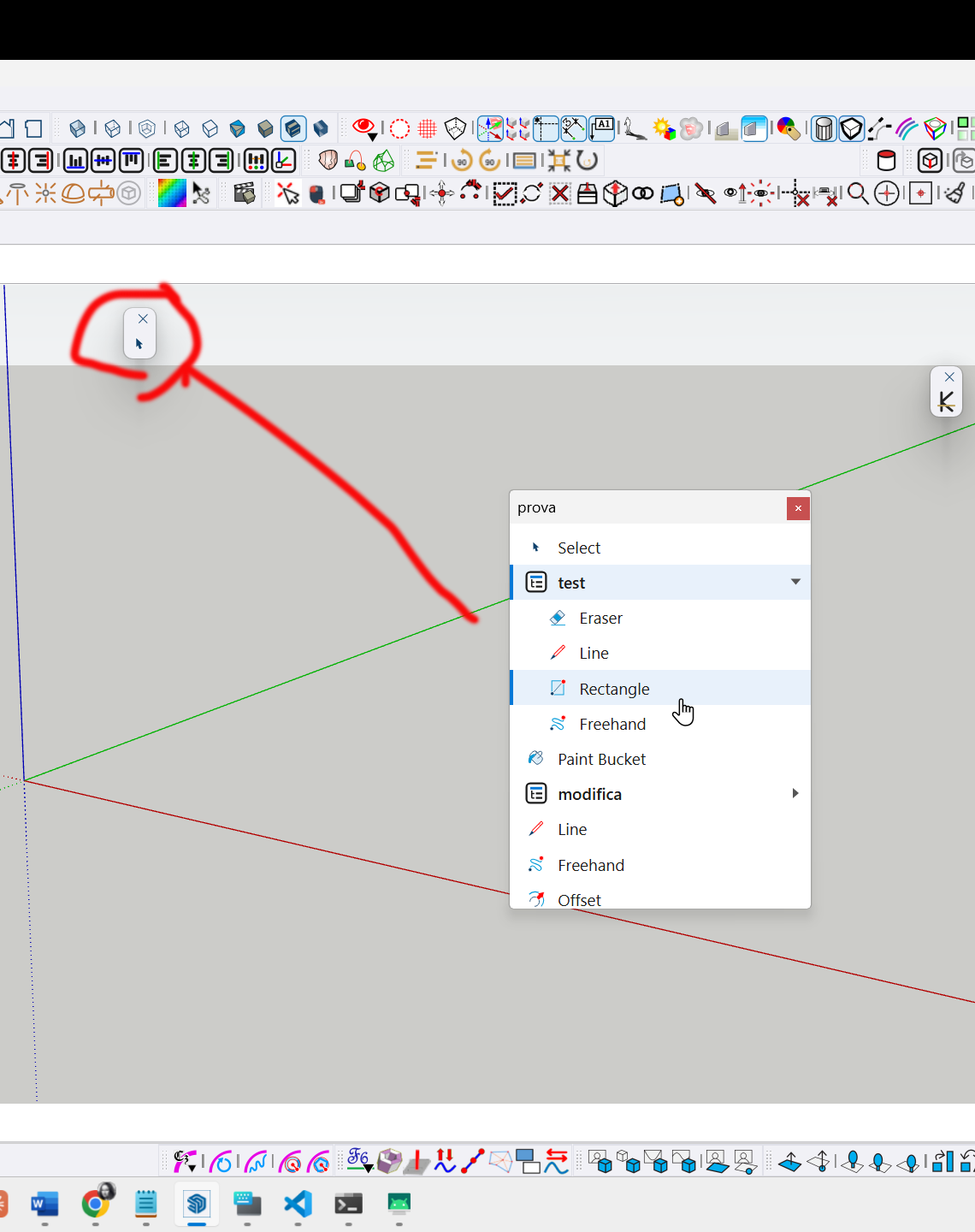
This is a good idea, but it’s also an issue related to SketchUp’s limitations, as it doesn’t support this. It doesn’t allow toolbar animations, so, as others have done, we could create a kind of drop-down or expandable menu. It wouldn’t be a proper toolbar, but rather a standalone element. I can work on it and see what’s possible. Take a look at the attached image and let me know if you had something like this in mind: clicking a button opens a menu, which can then contain submenus organized by topic—or whatever you prefer.
-
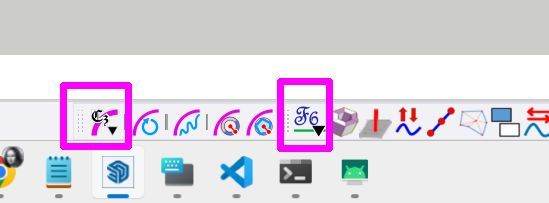
These extensions from Fredo makes use of some sort of drop down menu system, something similar to that could also work if it is customisable.




Hello! It looks like you're interested in this conversation, but you don't have an account yet.
Getting fed up of having to scroll through the same posts each visit? When you register for an account, you'll always come back to exactly where you were before, and choose to be notified of new replies (either via email, or push notification). You'll also be able to save bookmarks and upvote posts to show your appreciation to other community members.
With your input, this post could be even better 💗
Register Login


Advertisement