NnC SurfGen Pro - Procedural Terrain & Contours (Seeking Feedback)
-
Hi everyone,
First time posting here! I’m a civil engineer and I’ve always found manual terrain modeling in SketchUp to be a major bottleneck for site planning and preliminary infrastructure layouts. The native sandbox tools are great, but I needed something faster and strictly parametric.
To solve this in my own workflow, I decided to dive into Ruby and code my own solution: NnC SurfGen Pro.
Here is a quick look at the logic I currently have programmed:
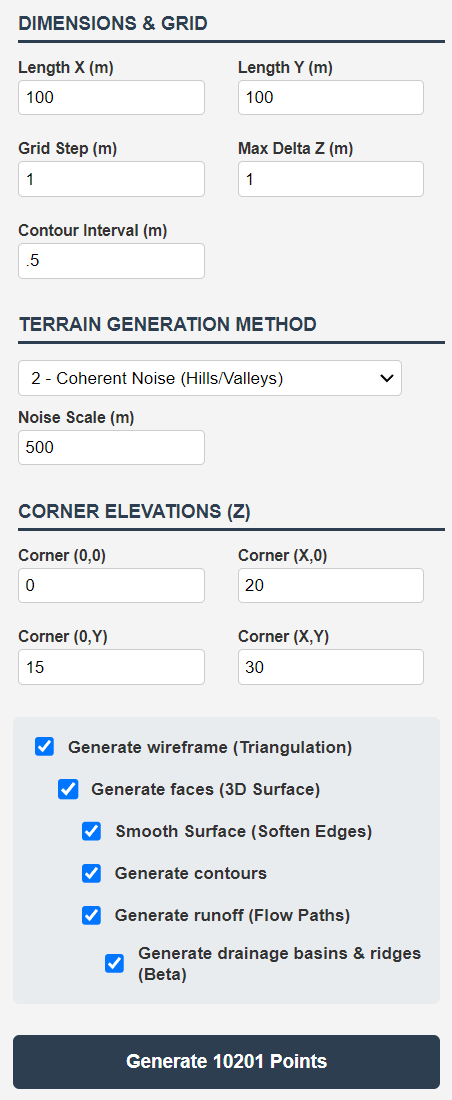
Procedural Mesh Generation: The core script generates terrain meshes from scratch using mathematical noise filters (Raw Noise, Moving Average, and Coherent Noise). It allows full control over the grid step and Z-elevation limits.
Parametric Contours: I wrote an algorithm that slices the mesh and extracts perfectly welded contour lines at any exact Z-interval defined by the user.
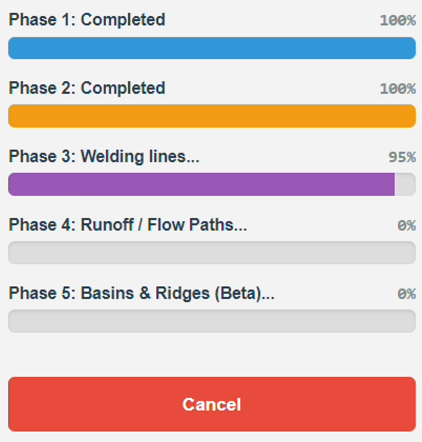
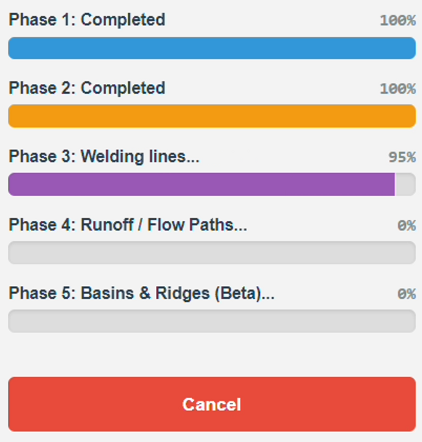
Hydrological Runoff (Beta): A feature that reads the slope of each generated face and maps water flow vectors directly onto the geometry to simulate natural drainage catchments.
I uploaded a quick YouTube Short showing the procedural generation examples:
Since I'm relatively new to sharing extensions with the public, I would absolutely love to hear some technical feedback from the veteran Ruby developers and power users in this community.
What do you think of this approach? Are there any specific features, optimization tricks, or contour tools you usually miss when dealing with topography in SketchUp? Any suggestions to improve the script would be greatly appreciated.
Looking forward to your thoughts. Cheers!
-
-
Welcome!
Based on the video it looks like this is already possible with existing extensions. Math based surface generation is possible with extensions like Raylectron Tools.
TIG also has a Contour Maker extension that works a treat.
For more bespoke surface generation based on height maps there's Thomthom's Bitmap to Height.
Looks interesting though.
-
Thanks for the warm welcome and the feedback!
You are absolutely right. Those extensions by TIG, Thomthom, and the Raylectron tools are fantastic and essentially cover all these bases. They are classics for a reason.
My main motivation for writing NnC SurfGen Pro wasn't to reinvent the wheel, but rather to create something entirely standalone, extremely easy to learn, and focused purely on speed for rapid conceptual work.
As a civil engineer, there are many times when I open SketchUp and just need a quick, realistic terrain to start testing a layout or doing a preliminary study, without having to import external heightmaps or navigate complex toolbars. I wanted a "plug-and-play" tool: you open a simple UI, click a button, and instantly get a surface and its contours ready to work on.
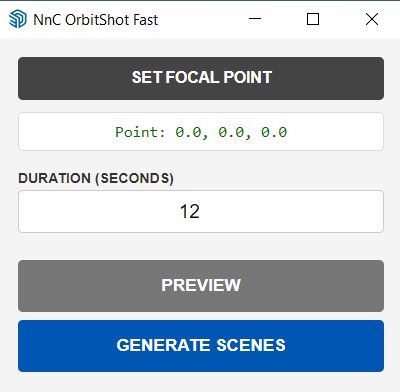
Also, I've programmed a small additional workflow feature: the birds-eye-view animation you see in the video is generated entirely within the extension. I wrote an automation tool called NnC OrbitShot Fast, which allows me to set the focal point and duration of the movement. It then creates the necessary scenes, allowing me to use SketchUp's native animation feature to generate that smooth orbiting effect in a single step.
It is built exactly for those moments when you need quick context to start a job fast and friction-free.
Since you know the plugin landscape so well, do you think there is still an appetite in the community for this kind of "quick-start / all-in-one" approach?
Thanks again for taking the time to take a look!
-
There is always room for more tools. The video doesn't really show much other than some procedural generation results with some topo lines.
I think from an artistic point of view a procedural surface generator has value. Especially if it has World Machine type features. Not sure how nice SketchUp would play with your tool. To get high resolution detail in a terrain mesh may bottleneck SketchUp.
Can your tool run Runoff/Flow Paths on existing real world terrain imports? If it does and it can preserve material UVs on meshes you would have a very useful tool.
So someone in the Landscape Evolution space could run some type of preliminary simulation to show wind/rain/water erosion over time.
Regardless, it costs you nothing to put your body of work out into ecosystem and see how it goes. Feedback is the best judge and it looks like you already have viable tool.

Hello! It looks like you're interested in this conversation, but you don't have an account yet.
Getting fed up of having to scroll through the same posts each visit? When you register for an account, you'll always come back to exactly where you were before, and choose to be notified of new replies (either via email, or push notification). You'll also be able to save bookmarks and upvote posts to show your appreciation to other community members.
With your input, this post could be even better 💗
Register Login


Advertisement