@roger said:
All power is nuclear if you trace it back to its source. I just don't see the advantage of centralized power generation, when solar, wind and tidal are so abundant.
Solar is not expensive, it is just over-priced while we go through the dark ages of nuclear-based petroleum.
It's only inexpensive if you can afford it. Those on high incomes, or with lots of savings can, perhaps those who've vested in property too? Many however, can't. And only those who are loaded would be happy to invest the £12,000 or so to have the thing installed on their roof! And for what? 4kW of power at best- when it's sunny that is (not at night- and less…….)
@roger said:
Have you ever heard the argument about overcast days and it being dark at night as an argument against solar.
Yes, and it's a sound as well as valid argument. Where do you store nightime electricity? 'Eco-batteries' do exist, but in order to power hospitals and city centres, you need an awful lot of them, all which still come as a great cost to the environment. Batteries also need replacing, even if they are later recycled for less energy intensive use.
@roger said:
What is petroleum other than decayed plant material. Those plants were grown by solar energy and that energy was stored in the oil. And that solar energy came from our primary nuclear generating station which is the sun. So oil is a battery made of nuclear/solar generated biomass.
That's a very strange way of looking at it. Only someone from an alternative energy background would come up with an argument like that! This argument would be fine if your heart would beat at the speed of light and 1 year would equal one second. Then we could perhaps reap the benefits of plants and animals that have decayed over millions of years. But life, as you know doesn't travel at that pace, and we need to be realistic, and certainly not backward thinking. Personally I'd rather have a controlled nuclear reaction that will produce enough heat to power my stove to cook my morning bacon, eggs, brew my tea and heat my shower, and everybody else's breakfast and shower down the remainder of my avenue, not to mention the rest of the city!
@roger said:
In ten years we will go from 12 to 20 percent solar efficiency to near 80 percent efficiency. We have the knowledge and basic technology and the time lag is just a function of going through the phase of engineering refinement.
But scientists were saying this 40 years ago! The technology is still only about 20% efficient. Where is this 'wonder technology'? I grew up on a steady diet of Practical Electronics, Elektor and Electronics Today International. I read them religiously! Sure, when PV technology reaches 80+%, I'll be more interested, but until then, what are we supposed to do in the meantime? Freeze? Take a step back into the dark ages? No thanks!
@roger said:
The length of the lag will be moderated by the roadblocks raised by political conservatism. However, conservatism will fall harder than the Berlin wall as the floodgates of pent up energy demand and the rising price of oil collide. May not happen in my life time, but it could also happen in less than 10 years.
The price of oil hasn't risen because of the lack of oil. The price of oil is rising because of price speculation, just like the rise in the value of property, and more recently, food. Oil sits in tankers in the docks and is drip fed to us until the demand becomes so great, the price has to rise, and rise further. Another barrel is released and the price goes up again.
As for Conservatism? I consider the current shift to environmentalism 'the new conservatism'. Conservatism is about wanting to regress, not progress. If going forward means a short but serious impact on the environment, because essentially I put humanity before the environment, this would be a good thing. We've done this before. Why not do it again? Essentially conservatism doesn't really exist any more. There is only progression or regression (however you see it; making furniture from plastic bottles, or doing it properly by manufacturing products on a large scale for the use of everyone, so we don't need to 'roll our own', freeing up more time to spend with our children and families). Putting solar panels on top of one's house is not only elitist (a bit like wearing the Burqa), it's also regressive, because essentially it is just another excuse for energy companies not to invest in new technology, to build better and safer plants using technology discovered during 'the dark ages' of nuclear development, and to pass any profits, reaped from government subsidy handouts to be shared with its shareholders. Putting money before humanity is just plain wrong, and environmentalism plays right into the arms of this strategy.
This article from Spiked.org is written by Professor Colin McInnes of Strathclyde University who has written imo, a very convincing argument;
@unknownuser said:
While growing energy use and global trade have led to rapidly improving standards of living across much of the planet, some now advocate a return to localism as the means of production. For example, growing more of our own food in gardens, generating our own energy through roof-top wind turbines and crafting our own material goods are seen as the solution to a range of contemporary economic and environmental problems. Unfortunately, the result would be a socially regressive slide back towards subsistence and poverty. Subsistence, doing everything for oneself, is the very definition of poverty.
Regression to local modes of production is nothing new. During the Great Leap Forward in late-1950s China, individuals were required to produce steel in small community furnaces. The result was useless, poor-quality steel and a massive misallocation of economic resources. Even when failure was accepted by Mao himself, the scheme continued in order to raise awareness of national need.
The UK energy and climate change secretary, Chris Huhne, harks back to such self-sufficiency when he invites us to return to localism in energy production. Big energy companies are the enemy, while home generation will apparently allow us to escape their tyranny. The idea of local energy production is superficially appealing. Like Mao’s backyard furnaces, it is widely seen as a means of raising awareness by connecting us personally to the means of production. While Huhne’s own department recognises that local energy production makes little economic sense, it notes that it can ‘empower individuals’ and be ‘used as a lever for behavioural change’. Some may well feel empowered, but the rest of us will be poorer for it.
For example, small domestic roof-mounted wind turbines at present enjoy a so-called ‘feed-in tariff’ of 34.5 pence per unit of electricity produced, guaranteed and index-linked against inflation for 25 years. However, the average spot-price for electricity production in 2009 was 3.8 pence per unit (for base load), so aspiring wind-turbine owners can in principle sell their spare energy to the rest of us for up to 10 times what it is actually worth. Even as a means of displacing carbon from energy production, this is as outrageously expensive as it is ineffective.
Read the remainder of the article here. It's a well written article, and worth reading


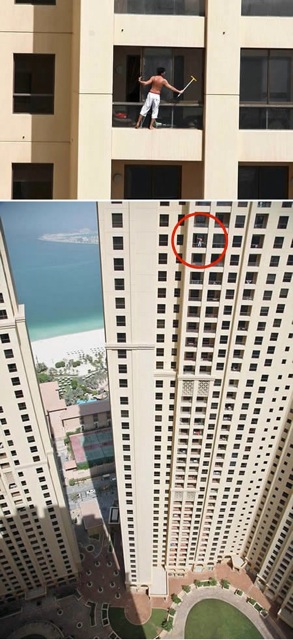
 what an absurd analogy! Where's the connection?
 ), what do you honestly expect?