Thanks, all.
Oops, your profile's looking a bit empty! To help us tailor your experience, please fill in key details like your SketchUp version, skill level, operating system, and more. Update and save your info on your profile page today!
⚠️ Important | Libfredo 15.6b introduces important bugfixes for Fredo's Extensions Update
D
Offline
Posts
-
Work in progress
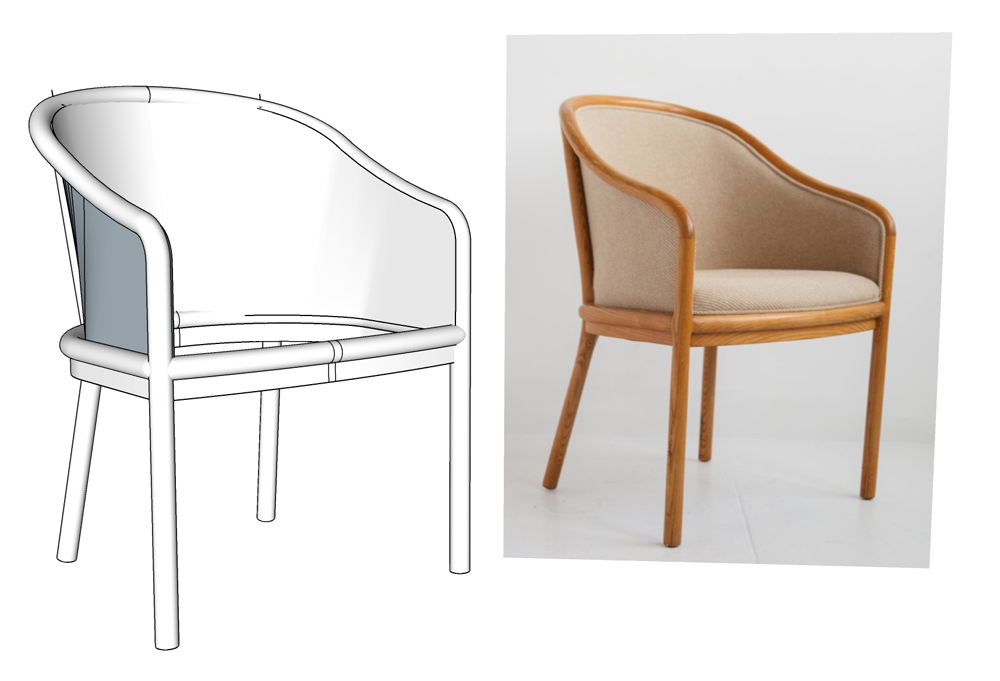 I've been working on a model of a bentwood armchair designed by Ward Bennett in the 1960s. The original is a nice piece of design that would look good in a corporate conference room or an elegant private dining room.
I still need to model the seat cushion, of course, and fiddle with the back upholstery. I might also fiddle with the shape of the arm and back piece.
Enjoy.
dh -
RE: Evolution of a Chair
Good lesson in modifying components rather than starting from scratch. I seem to recall that you also did a Design.Click.Build blog post on finewoodworking.com that covered the same ground. There, if memory serves, you stretched a coffee table.
-
Saturday morning exercise
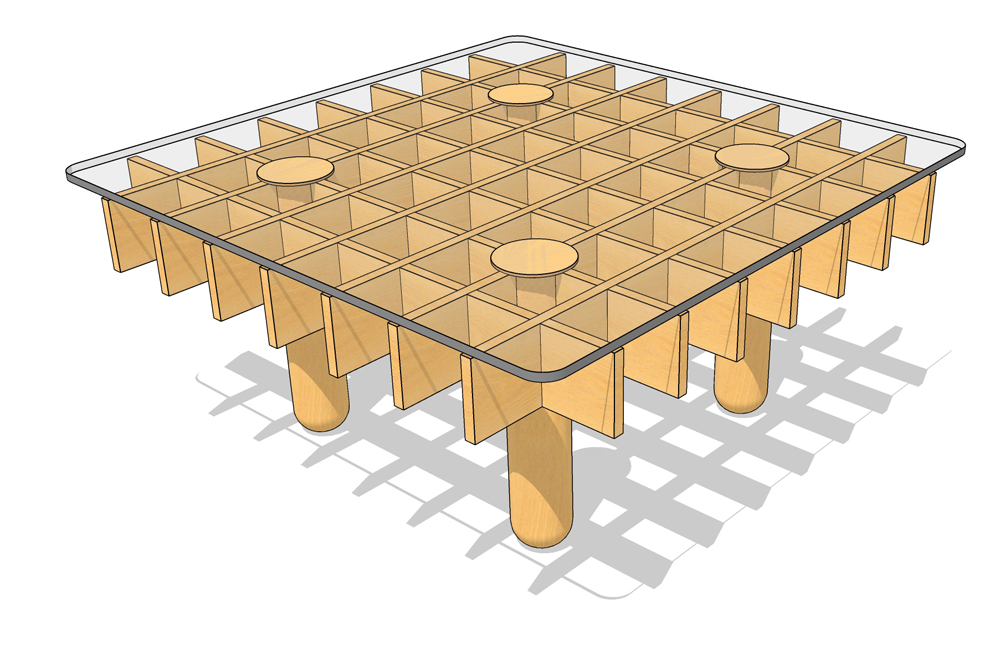 Modeled this coffee table by Gianfranco Frattini this morning, to postpone some inevitable yard work. Frattini has also done a larger and more complex version of this table. For some reason, both tables are named "Kyoto." Go figure.
Half-lap joints hold the gridwork together, and the turned legs are slotted to fit into the grid. The disc atop each leg is a piece of leather to protect the glass top.
Enjoy.
dh -
RE: [WIP] A Doweling Jig
Great detail, and a good use of the new dashed lines. The image looks almost like an isometric view. Or is that must my aged eyes?
-
RE: Just something old to play with
Very nice model. Was the original a school desk? Something for a legislature?
-
Another mashup
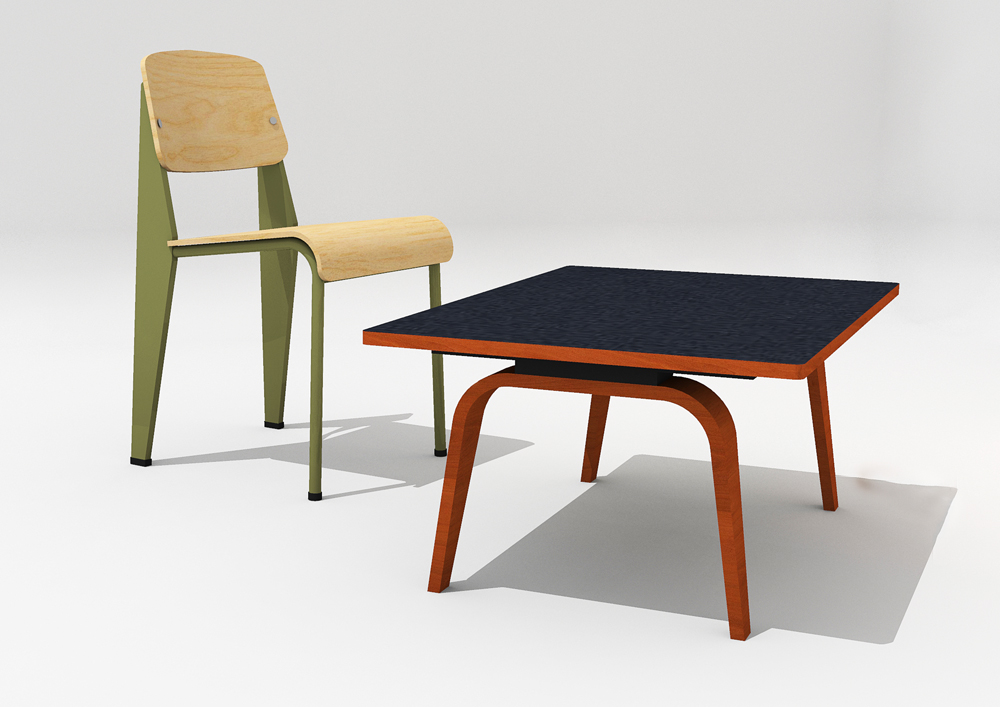 I recently made a model of the Jean Prouve "Standard" chair. The original dates from the early 1930s; Prouve was a metalworker and self-taught architect who frequently collaborated with Charlotte Perriand and Le Corbusier. For the render, I decided to pair it with a coffee table designed by Charles and Ray Eames in the early 1950s. To my eye, the curve of the table legs complements the shape of sheet-metal rear legs on the chair.
Enjoy.
dh -
Furniture mashup
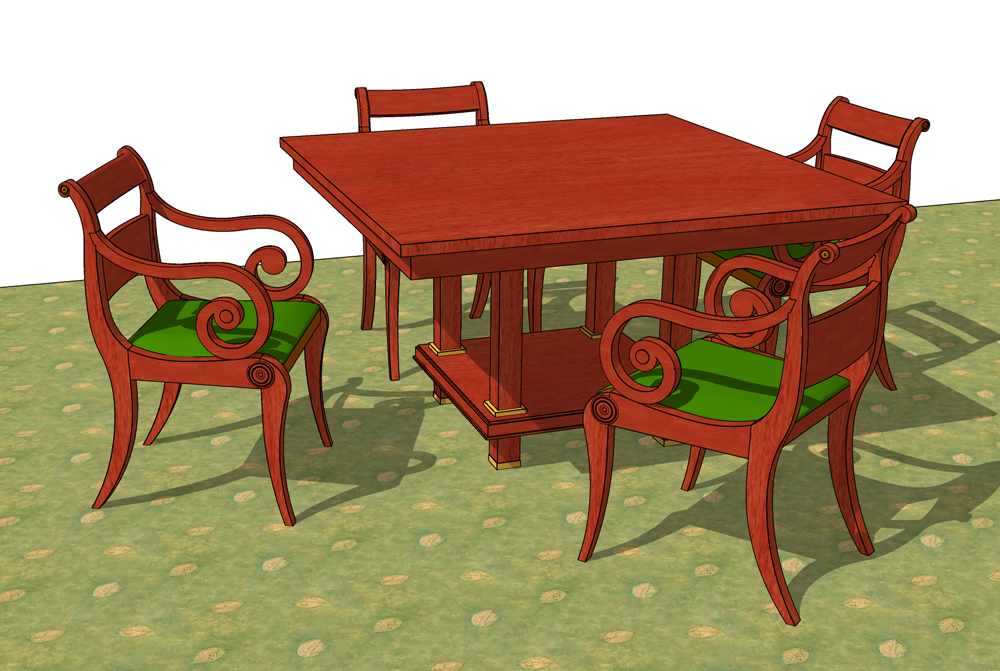 The table is a new model, based on a piece that the French designer Jacques Adnet did in 1955. The original is a library table, but it's big enough to function as a dining table, too. So I added some chairs--Empire-style armchairs from the early 19th century. (The model is years old, but I updated the texture.) I've always liked this chair, with its swooping curved arms. I think the table and chairs make a dandy combination, even though they're generations apart sylistically.
Enjoy.
dh -
RE: Josef Hoffmann chairs
Thanks, cj.
Yes, the caning is a texture. A technique I picked up from Dave Richards (who will correct me if I get something wrong). Here's the basic idea: Find an image of a cane seat that you like and save it as a .png file. This allows you to make the background transparent. Save one little section of the image. In an image editing program like Photoshop, remove the background. Now you can import the image into SketchUp as a texture. Position the texture as needed so the cane fills the space and looks to be the correct size.
Best,
dh -
RE: Josef Hoffmann chairs
Good advice, Dave. Thanks. And thanks for the compliment, tuna.
Best,
dh -
Josef Hoffmann chairs
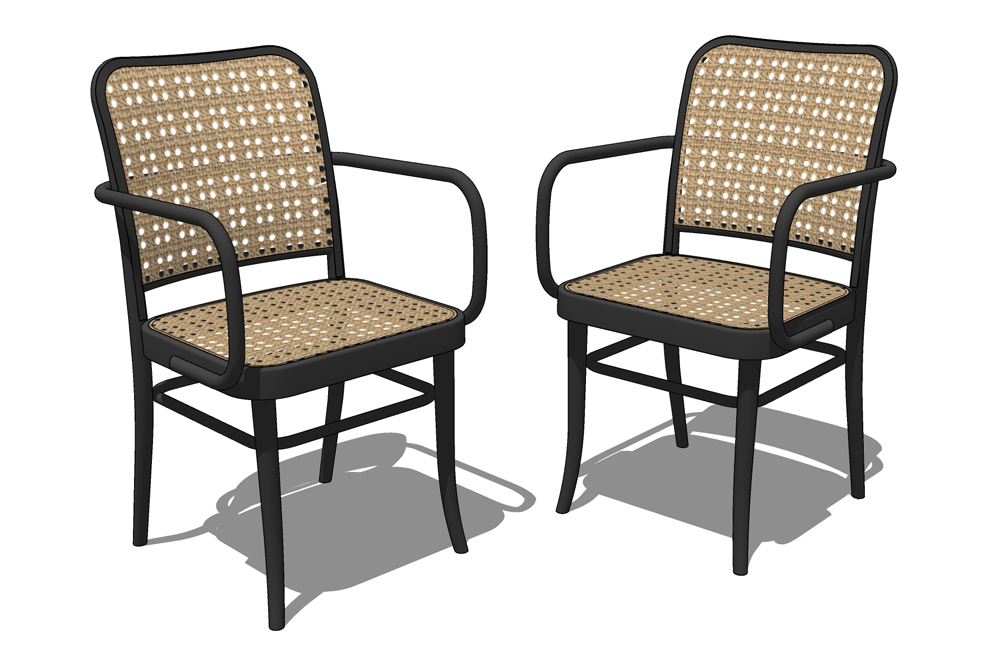 Been working on this model off and on for a few days. It's the No. 811 chair by Josef Hoffmann, a very influential Viennese designer from the Arts & Crafts period. He designed this chair in 1930. The original, made in beech by Thonet, is still in production.
The hardest part of the model was creating a curved face for the cane seatback. For some reason, I couldn't get any of my lofting plugins to work, so I had to stitch the face together by hand.
Enjoy.
dh -
RE: Garden benches
CJ,
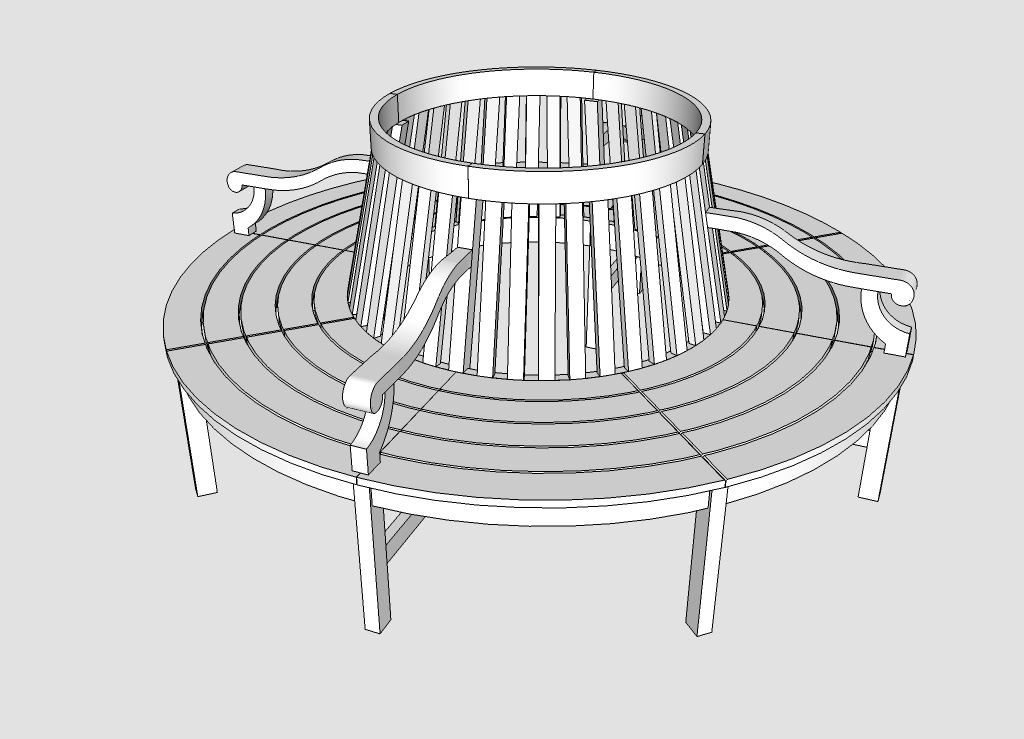
If I were to build these pieces, I think I'd opt for the bandsaw route. That would certainly work for the seat slats, front and rear stringers, and the armrests on the Weatherend piece. However, for the crest rail on my benches, I might have to laminate a blank. Same goes for the circular piece at the top of the Weatherend back. There are commercial adhesives that will work for outdoor applications; I've never used them, though.
Hope this helps.
Best,
dh -
RE: Garden benches
Thanks, everyone. As for Tuna's suggestion to bend the benches the other way, Weatherend beat me to it years ago. One of the company's signature pieces is a 4-section curved bench.
-
Garden benches
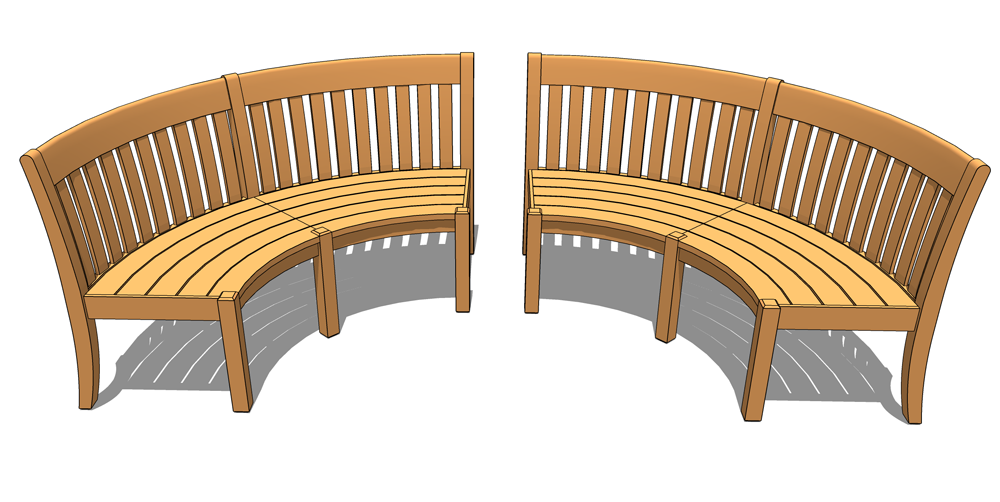 I had some time to kill today while I waited for a mechanic to fix the power steering on my car. So I took a model I did a few years ago, of a garden bench, and bashed it to create these quarter-circle benches. The back legs and back slats are holdovers from the old model; the rest is new.
Enjoy.
dh